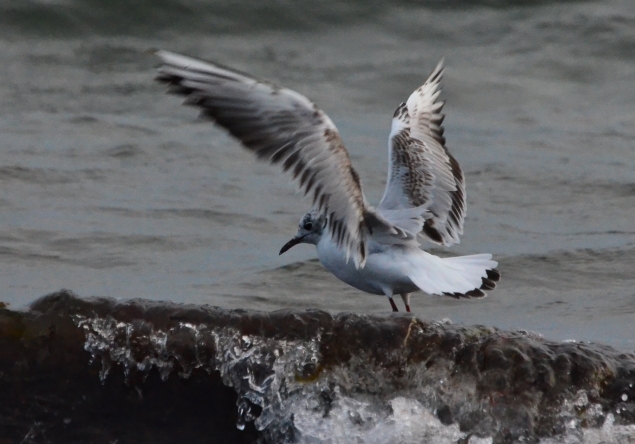
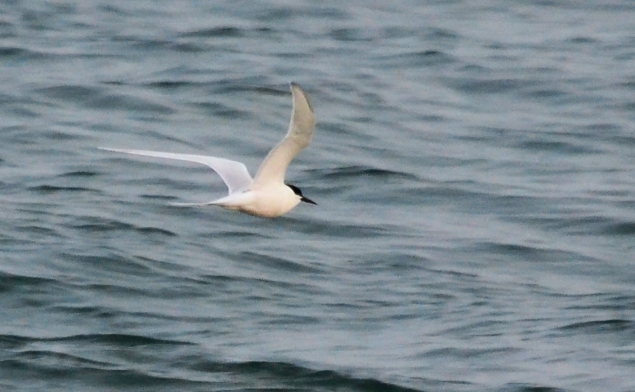
Showing posts with label Bonaparte's Gull. Show all posts

Thursday, January 26, 2017

Multiple Birdgasms: The Ventura Little Gull


Before I was #7, before I was Seagull Steve, I was the Ventura County Kid. I began birding in Ventura, California, when I was 12 years old. My dad and I wandered into the Ventura Settling Ponds, and I saw a shitload of ducks that I'd never seen before...I was already bird-curious, so this was a tipping point...I had no chance, and it was too late to go back. I got a lot of life birds at the Ventura Settling Ponds back in those days and have seen a couple rarities there, so when Billy and I were down in Ventura for Thanksgiving with nothing better to do, we lurked into the ponds for a check up. No one thinks of this place as an amazing vague runt trap, but these are the sewage ponds of my heart.

This site is not quite as birdy as it used to be, in part because it used to have some additional ponds that were entirely removed. As we walked out, I lamented the loss of these ponds, which always used to have a flock of Bonaparte's Gulls...which are mellow, entertaining and elegant birds in and of themselves, but when you have Bonaparte's Gulls, there is always hope for rarities like Black-headed and Little Gulls. Bonaparte's Gulls were a thing of the past at this location though (and practically anywhere in the county, in numbers anyway), and so was almost all hope of ever getting Black-headed and Little Gulls again.


I pitifully bemoaned the loss of the Bonaparte's ponds to Billy as we walked out...and within 30 seconds, lo and behold, there was a flock of Bonaparte's feeding in front of us. Not 30 seconds after that, a small gull zipped by with a neat black cap and a giant black "M" across its wings...could it be? No...it was too good to be true...

I continued to watch the bird as it flew back and forth. Surely I was having a brain aneurysm and was hallucinating some field marks...no, they are real, this was no mutant Bonaparte's...maybe this is a young Black-legged Kittiwake then, because surely it can't be what I think it is...no...it is a juvenile Little Gull. What the fuck? Not only was this a self-found state bird, more importantly I knew it was the first Little Gull to be found in Ventura County since the 80's!


I couldn't believe it...a sweet sweet Ventura County bird, and a sweet sweet California bird...those milestones are not supposed to intersect anymore. It was also only the fourth Little Gull I'd seen anywhere...brilliant. Once my mind finally accepted what my eyes were seeing, my body was rocked with multiple birdgasms. I'm not afraid to admit it. This wasn't a crippler, not a facemelting bird, but it was absolutly stunning...once again, I was reminded of the true power The Economy of Style can unleash on a hapless birder.

Little Gull is a Bird Police review species in California; while there are a small handful of sites where they have shown up multiple times, in most of the state they are considered a MEGUH, at least on a county level. In Ventura County, this bird has long been thought of a major blocker...if you were not one of the few birders to see the first two birds back in the day, you were probably never going to see one in the county at all...they are just absurdly rare anywhere on the California Coast.


What are they doing in California at all? They aren't "Sibes" in the traditional sense; you won't find them along Russia's Bering Sea coastline, or in Japan for that matter. They have a tiny breeding population in North America, so there is a possibility that most (all?) of California's records are from misoriented migrants bravely barging their way east from the interior East Asian population.


Here is a first-cycle Bonaparte's Gull in comparison. Bonaparte's molt out of juvenile plumage very quickly, and by the time young birds reach California in fall almost all of them are well into their first pre-basic molt. The dark trailing edge of the underwing is not present on Little Gull in any plumage.


I found my hands were shaking as I went to text some local nerds about this bird. That's not hyperbole, that's just embarrassing. It's been some years since a rarity has so readily disabled me.


Luckily, the bird stayed put in the same pond for the entire day, and as far as I know everyone who looked for it that afternoon got good looks. Even Officer Searcy made it in time, all the way from Edwards Air Force Base. It was good to Share The Rare with old birder friends, and to find one of Ventura's top birds of the year during a brief incursion to my ancestral county...comparisons to Douglas MacArthur were made, and understandably so.


The Little Gull fueled up on hapless bait fish all afternoon. The next day, Thanksgiving, it had vanished, and many birders who ditched family to make the chase left empty-eyed and broken-hearted...their sacrifices and family betrayals were all in vain.  Indeed, for the birders who were seeking the Little Gull as a substitute for friends and family, it was truly a tragic day...but to be fair, spending time with a vague runt Little Gull could be a lot more appealing than being trapped with ornery relatives.

What a bird! Hopefully it will not take another twenty-seven (27) (!) years for one to grace the shores of Ventura County again.

Wednesday, November 30, 2016

Decemberance


2010. After ditching a camera for a great many years, by December of 2010 I was back into photography again and always birded with a camera on hand. At the time, that put me in the minority of birders...the boom in bird photography since then wasn't something I expected. This male Allen's Hummingbird had taken up residence in the backyard of where I grew up, in Ventura, CA, and is still the best place I know of see Allen's at point-blank crushing range.

December...we're almost there. The year is almost over, and it's been a doozy. It all started being sick to death in Oakland and doing no partying whatsoever on New Year's Eve for the second year in a row (SHAME), dragging my sick ass to Lake Merritt on January 1 to get some year birds, then heading down to Mexico for a fucking ace birding trip that will go down in the history books. Now, on the other end of the year, I live in a different city, preparing myself to become a father next month...holy shit! Is this really happening? This was not another boring year, by any stretch of the imagination.

Before I grab fatherhood by the balls though, I have one last trip to get out of my system...tonight I will be on my way to a DADCHELOR PARTY birding trip to the one part of the country where I could get the most lifers, which just happens to be in...Puerto Rico! I've never been to any of the Caribbean islands before, so this is a whole new part of the world for me.

So nerds, unfortunately I will be busy birding so won't be posting for a couple weeks. To tide you over, I thought I would revisit some birds from previous Decembers that may have not gotten the attention they deserve recently. I will be back soon with many reviews of all the Puerto Rican strip clubs and quality of cocai...oops hahahaha by that I mean a crop of crushed lifers. Thanks Billy for letting me loose to look at a shitload of birds one more time before (human) nesting season arrives!


2011. By this time I had finally settled on a lens I was happy with (the underperforming Sigma I had purchased recently was stolen by a Mexican cartel, which turned out to be kind of a favor because I went out and got a better lens). Shooting birds like American Pipits was hella more fun than it used to be. Sacramento NWR, CA. 


2012. By now I had quite a few ABA Area and Mexican birds under my belt so it was time to go to that special place where all birders must visit eventually, Costa Rica. This Gray-capped Flycatcher was one of many ridiculous lifers we got at Hotel Gavilan (near La Selva), where we stayed a few nights. I definitely recommend staying there...there is geri birding, after all.


Sarapiqui Eco-Observatory (not sure if the name has changed since then) has an awesome setup for geri birding and overall good birding on the property...I'm sure we would have seen more if it hadn't been raining almost the entire time. The $20 birding/crushing fee did seem ultimately worth it. This Bronze-tailed Plumeleteer was a clutch bird to see up close.


La Selva and birding with Haynor was fucking great. This low-flying King Vulture, a bird I'd always drooled over, was an immense lifer. I definitely want to go back and rebird the shit out of that place.


La Cinchona has some of the best geri birding I've ever experienced. Prong-billed Barbets await.


2013. I went back up to Humboldt County to see the Little Bunting (great success, very nice). Will Humboldt or Del Norte be home to another MEGUH this winter? Highly likely. But if that doesn't happen, just remember Bonaparte's Gulls are fucking cool. Photographed at Arcata Marsh.


2014. California is blessed with a pleasant number of Eurasian Wigeon during the winter months, and every now and then they turn up someplace where they are practically fearless. This drake was getting all pastoral at a small park in Thousand Oaks.


That winter Don Mastwell and I had a sector for the Salton Sea (south end) CBC. We totally failed in taking care of our main responsibility (getting Least Bittern), but at least there were hella Yuma Ridgway's Rails. Fortunately we bagged a Horned Grebe, the only one of the count.


Considering the ridiculous number of rarities that had been seen in the area over past winters, the Salton Sea vague runt situation at the time of the CBC was pretty dull. A Varied Thrush was a great county bird though, and as usual there were Vermilion Flycatchers around. Vermilion Flycatchers are synonymous with good birding if you ask me, and I am the Global Birder Ranking System's #7 U.S. birder, in case you didn't know...so take that to heart.


LeConte's Sparrow is a deeply underappreciated bird. This skulker is intricately patterned and make my eyes bulge painfully and my tongue engorge whenever I see one. Talk about an eye-feast. This easygoing bird wintered at Abbott's Lagoon in Marin County and didn't put much effort into staying hidden, thankfully.


California is arguably the best place in the world for sapsuckery; I haven't done it myself, but there are birders who have achieved the vaunted SAPSUCKER SLAM, getting all four species in the same day....the mind reels. This is the weirdest sapsucker I have ever seen, a reported Red-naped near Inverness Park in Marin County that ostensibly doesn't have any blatant hybrid traits (Red-breasted X Red-naped are regular in the state) but it bizarrely lacks any white behind the eye and has an unusually dark breast. Hypermelanistic?


2015. I pulled into Fields Landing, Humboldt County, during a rainstorm to find a flock of Red Knots feeding in a puddle next to the parking lot. The knots must have been starving because I parked next to them and crushed them with reckless abandon and total disregard to all the knot souls I was stealing. It was brilliant. 

Thanks for jumping into the BB&B time machine today! If all goes well, soon there will be posts littered with Antillean Crested Hummingbirds and Red-legged Thrushes.

Sunday, June 14, 2015

Maynerayge Day 3.5: Slipping The Clutch


It was late in the afternoon, and Nate and I decided to head out to the beach at Pine Point to try our luck with the continuing Little Gull and for more looks at Roseate Terns.  It was sadly dark when we got out to the jetty...a big cloud bank was blotting out the sun and Maine was cold again, and any photos to be taken were to come out dark and grainy.  But there they were...the Bonaparte's Gulls, frolicking in the surf, just where they were supposed to be.  Where was the Little Gull?  Scanning the flock repeatedly brought no such thing...in fact it only brought Roseate Terns, which Nate always informed me were flying very close by behind me whenever I got too distracted by the gulls.  It was agonizing.

Since it did not seem to be around, the thought occurred to me that I should do something other than focus on finding the Little Gull that I thought I had previously found...I should really find my own Little Gull. So I stopped looking for the tiny black-headed wonder and kept scanning the Bonaparte's flock. It wasn't long before a bird lifted off the beach with a really bizarre wing pattern...could it be? My redemption? My destiny? It landed out next to the end of the jetty, so I Nate and I troglodyted out to where another group of Bony's was feeding. Within a few minutes...we had our reward. Another Little Gull!  I love it when a Vague Runt plan comes together.


Due to the awful light conditions, essentially none of the birds around were crushable, but we had good looks at this bird as it foraged and flew around the tip of the jetty. This being only the third Little Gull that I've ever seen, I wasn't going to complain.


This is a young bird in first-summer plumage, overall pretty shabby-looking but it really stood out both on the water and in flight. With such a bold wing pattern, it was impossible to miss when it was on the wing.

While we were out on the jetty, we noticed another birder had shown up back on the beach, and he was clearly on the hunt for the other Little Gull. After our young bird disappeared, we saw him running down the beach toward another Bonaparte's flock, clearly in hot pursuit of the adult Little Gull that he had just relocated. Nate and I decided to parasitize him, and he led us right to the bird.


There it was, our other little buddy.  We had seen it three days in a row now...Vague Runts are good birds to know, especially in this case where it is especially runty.  It gave good looks in the fading light, and eventually flew out to the river mouth to feed.

I thought the day was at an end.  I was mentally packing up and getting ready to go, and did the prerequisite last scan of the flock of birds in front of me...and then all time stopped. My heart paused between beats.  Gulls were frozen in mid-air.  What the fuck is that bird standing there?  Holy shit, it's a Black-headed Gull!!!!


For the last several minutes, this Black-headed Gull had been standing right in front of us, just a few feet away from the Little Gull, without anyone noticing! Indeed, in one of the last Litttle Gull pics I took that day, I can see the Black-headed standing in the corner of the frame. Compared to the Bonaparte's, it was huge, and after spending so much time looking at Little and Bonaparte's Gulls the last few days, it was instantly recognizable. Like the first Little Gull of the day, it was a first-summer bird, a life plumage for me. Check out the leg color (and girth!) compared to the Bonaparte's standing behind it.


Nate and I couldn't believe our luck. We summoned the other birder we had previously been parasitizing, Josh Fecteau, and were able to pay him back handsomely with this ace Vague Runt. The bird moved off the beach and foraged in the little breaking waves, giving great comparisons to Bonaparte's Gulls. Check out the different wing patterns between the Vague Runt and a Bonaparte's of the same age. Remarkably, Dipper Dan and Flycatcher Jen had stayed back at the vacay house the entire time, seeing none of these birds. Even sadder/funnier, Nate and I had taken the rental car, so if they wanted to see this bird they would have to hoof it all the way from the house before it was too dark to see. Is that fucked or what?


Dipper Dan and Flycatcher Jen eventually showed up in time, while the Black-headed continued to be hella cooperative. All was well in the world. Note the extensive black in the inner primaries.


The bird was clearly larger than a Bonaparte's with a longer bill (reddish in good light) and traces of a hood that came up much higher on the head than a Bonaparte's, and way way higher than on a Little Gull.  A field mark that I did not remember on basic-plumage birds (I've only seen one of those, cut me some slack) was how white the bird was on the hindneck compared to a Boney.  That was one of the first things I noticed about the bird, back when it was standing on the beach.


The Black-headed also was pretty dark on the underwings.  As with Little Gull, I've only seen Black-headed a handful of times before, so this was a victorious find.  According eBird, this is only the second recorded in Maine this year, and the only one other folks were able to chase successfully.


As I mentioned earlier, I somehow managed to not photograph every single Roseate Tern that flew by closely, and the shots I did get made me wince when I looked at them.  At least you can actually see the roseate hue and strikingly pale upperwing in this photo.  This was one of my top target birds of the trip (I've now seen every expected tern species in North America and the Hawaiian Islands except Blue-gray Noddy...don't know how I'll bump into one of those things), and it was nice to see a number of them flying around off the Pine Point jetty. Looking forward to the next time I get to meet this tern.


Common Terns really are common in Maine, no shocker there.  It's been a long time since I've seen so many. Being a decidedly uncommon bird in California, it was great to spend some more time with this species, all of which were in alternate plumage.  Solid.


The typical pot-bellied, short-tailed look of a Common Tern.


It wasn't so long ago (though it seems like it now) that I was in the Least Tern business, down in the whale's vagina. Since we are no longer business partners I am no longer afforded the chance to see them every day of the week, so I was pleased to see so many Least Terns around Scarborough Marsh and Pine Point. It's crazy to think that some of the birds I've seen on Midway Atoll I've also now seen in Maine...along with Least Tern, Ruddy Turnstone and Green-winged Teal are the others. Least Terns even breed on Midway...the mind reels.


Least Terns are gray in the uppertail and rump, whereas Little Terns are white. Remember that, and you might be a birding hero someday.


Just offshore from the jetty and the mouth of the Scarborough River, a large flock of terns and Bonaparte's Gulls were feeding the entire evening.  No doubt the abundance of food right next to the beach was behind the number of quality birds present.  Considering the warbler show earlier in the morning, this was probably my best day of birding for the entire year. Birding in Maine is good birding.

Monday, November 17, 2014

Birding Is Hard: Return of the Gulls


Glaucous-winged Gulls, and their associated hybrids, are abundant in the bay area during the winter months. The most straightforward ones to ID look something like this; dark eye, pale bill, dark/barred (as opposed to streaked) hood, and pleasantly pale primaries. All photos from this post were taken at Oyster Bay Regional Shoreline, San Leandro, CA.

Here in the bay area, November is typically the month where birders begin looking at gulls again. I never look forward to this. By this time, I typically have not been obsessively looking at gulls since March, and my Larid skills have gotten a bit rusty. Luckily, November is generally not a great month for vagrant gulls (although Slaty-backed has shown up this early), so it's good to get my inner Gull Machine (a large part of my brain that is devoted to doing nothing but process gull identifications) firing on all cylinders again.

I hate gulls, but I just can't help myself. I must look at them. They demand my attention. I want the glory, the fame, and the sex of finding the state's second Great Black-backed Gull, or another precious Black-tailed Gull. I want to be able to competently discuss such obscure identification features that if I try to describe them to another birder, their eyes will just glaze over in utter horror and confusion...and you know what? I'm well on my way there, but unfortunately many birders are still able to understand what I am talking about, gulls are still frustrating to identify, and birding is still hard...and that is why I fail.


Thayer's Gulls are back; this is the first adult I've seen this year. Note how tiny it is compared to the big hybrid gull in the background. Speaking of the hybrid (note the almost-but-not-quite black primaries), it's clearly part Glaucous-winged, but I'm not sure who the other parent is. It's shaped like a classic Glaucous-winged X Western but the way the mottling/streaking (strottling?) looks on the head makes me wonder if Herring genes are in there. I don't know, you tell me...isn't birding hard?


Check out the massive white apical spots on this bird. Lookin' sharp.


My, what an appealing wing pattern you have Thayer's Gull. This is a pale-eyed Thayer's Gull, which are not uncommon locally.


The adult gulls here are still molting in their new primaries; check out p10 coming in on the leading edge of the wing, and how far it has to go before it's fully grown in. Wonderfully vivid feet on this bird, which is to be expected.

For more on Thayer's Gull ID, or if seeing a bunch of Thayer's Gull pictures is what gets you going, be sure to check out my sprawling Thayer's Gull post from earlier this year.


Shortly after the adult Thayer's Gull flew off, I spied this bird bathing in the same area. It looked rather similar...pale eye, heavily-marked head (not streaky like a Herring), relatively small...another Thayer's?


Hmm...there's no mirror on p9, which is highly indicative of Herring Gulls in the western U.S. And the mottled head is starting to look crosshatched, a very Glaucous-winged trait.


And now the bird seems pretty pale on the underwings...not dissimilar to a Thayer's. So if a gull has a wing pattern that looks like a Thayer's from below but a Herring Gull from above, what is it?


If you guessed that this bird was a Glaucous-winged X Herring Gull hybrid, I would wager that you are correct. If you ask me, this hybrid combination resembles Thayer's Gull more than any other. Fortunately, the "Cook Inlet Gull" is common here during the winter and provide ample opportunities for study. Unfortunately, the "Cook Inlet Gull" is common here during the winter months and I am forced to waste countless hours looking at them trying to figure out what the hell they are.


I only got to look at this bird very briefly in flight, and even more briefly on the water. At first glance I assumed this would be a 2nd-cycle Glaucous-winged X Herring Gull, but with my short look at the bird on the water and looking at these photos now, it appears to be Glaucous X Herring. Nelson's Gulls can be challenging to track down around here (for me, anyway), so this turned out to be a pretty nice bird.


Though a bit dark, I think if you took off this bird's head and attached it to a Glaucous Gull torso, it would look right at home.


Luckily, Bonaparte's Gulls are attractive and don't want to grind cloacas with all their closest relatives. And for that, Bonaparte's Gulls, I thank you.

Monday, December 2, 2013

My Head Is Filled With Bonaparte's Gulls


Birders. Just thought I'd drop by and check in on everyone. As you may have heard, BB&B has not been performing at maximum output recently due to a tragic and catastrophic act of gravity that left both lens and camera body crippled. Not much to post without visual aids, you know what I'm saying? At least I have unused goodness like this Bonaparte's Gull (photographed in Monterey, CA) to fall back on.

So for the last couple of weeks I've been birding without a camera. It's less stressful to not worry about missing a good crush or getting up in a bird's face in order to steal its soul. I've been focusing on getting shit eBirded more. And for good or ill, I haven't found any rare birds that require photo documenting. And so I've been able to roll cameraless and see Tufted Duck, Barrow's Goldeneyes, Painted Redstart (three times now for this bird), Marbled and Ancient Murrelets...not too bad for the down time, eh?

Of course, the huge problem is that I won't have a birdcrusher available for use as I sweep across the northeastern part of the state, which is where I am now. If we are lucky enough to encounter rare swans, Bohemian Waxwings, Northern Shrikes, etc., the only person in our party who will have crushing abilities will be Dipper Dan (Officer Searcy's CBRC-issued photography equipment is out of commission as well). The good news is that my lens will be ready for action when I get back to Oakland, and I gotta admit it will be a big relief.

Cool story, I know. More on this potentially epic/legendary trip when I get back. Keep it positive my friends.

Monday, April 30, 2012

Ode to the Drab Gray Birds of the Pacific Northwest

Good day to you bird addicts. Today's post is contributed by no other than the infamously bizarre Cass Grattan, who has told BB&B about how birdwatching has brought about his complete financial ruin and social castration, as well as what exactly he thinks about other birders. Aside from coping with the constant state of terminal Fear and Loathing that a lifetime of birdwatching has reaped, Cass is a master communicator and unrelenting flogger of words. He writes to us from the grim recesses of Washington's Olympic Peninsula, amid short breaks between Northern Spotted Owl surveys. Photo of Drab Gray Northern Fulmar and Crisping Bonaparte's Gull by Seagull Steve.


Welcome. To the Realm of Fog and mist-choked fjords. Home to behemoth gymnosperms that drip moss onto their felled parents that perished millenia ago, only to have a variety of taxa sprout from, and consume, their rotting and vital corpses. Here, the line between Life and Oblivion is blurred, and one is hard pressed to articulate either concept in this environment of elemental fluidity.

Behold. The Gray and its oppressive weight on the observer’s senses. Early explorers of the area felt it. Our peaks and waterways bear names such as Deception, Disappointment, Destruction. Lewis and Clark spent an unbearable winter here. It is certain that visions of the Dismal Niche on the Lower Columbia accompanied Lewis in his final hours before he auto-delivered himself from this world. You, like him, can feel its power and fear its depth, for this is only the beginning of an unspeakable horror that lies westward; the pelagic of the North Pacific.


It is here that the elegant simplicity of the Gull and Fulmar is fully realized.  When these birds wheel against an ashen storm front, stacked cumulus wedged into the dome above, their simplicity and banality are transformed into a subtle and seamless weave of element and beast. Their blueprint is understood in these waters. And it is here that the power and magnitude of that titan of fashion that we know as the Economy of Style reaches its most refined expressions.  

Here our Picoides are smudged, our sparrows darkened, and our Merlin the blackest. All these regional variations in plumage are in accordance, and reverence, to the perpetual desolation of their environs.

Hutton’s Vireo, gluttonous miracle. Unwavering in its quest of woodland sustenance, its attire represents the zenith of neo-Bauhaus refinement.

Pacfic Wren, the tireless troglodyte. Its song a tangle of roots, its rags a humble assemblage of shadows and earth.

The Creeper, or as its known locally, Vermiculated Woodsprite; its get-up a perfect confluence of land and light.  

The ouzel, river god cloaked in shale blue, the color of waterworked rock. It wears its feathers in obvious defiance of the garish and wasteful wardrobe of other deities.  Carved and behaving like a miniature inland auklet, the ouzel's opulence lies not in its plumage, but in its throat. Its song, like the river itself, is endless in its dexterity and imagination.

Soon though, the Western Tanager with its fire-in-the-head, will arrive. As will the Black-headed Grosbeak in all its neotropical anti-glory. The various warblers will return in their whorish clownsuits.  Northwest birders, scorched retinas and all, will sing these tramps and transients endless praises while the clouds of Bushtits that have kept us company all winter long with their cheery industry and immaculately balanced feather toning, will pass unnoticed.  People will suddenly see a Black-bellied Plover in their haughty breeding duds, not realizing they have been here all through our darkest hours, haunting the intertidal with their wraith-like cries and plumage the color of sand and time.


So it goes. I will let the flamboyant and ephemeral excitement of migration, with its promise of imported facemelt, and its band of gaudy breeders pass me by. I will stick to the understory and its understatments. I will seek out the peninsulas, turn seaward and let the megavagrants pass by and boggle another’s mind while I consider the crisping of the gulls, watching them wind the gears of time and ride the wind that has shaped them.