Showing posts with label Summer Tanager. Show all posts

Wednesday, March 13, 2019

Radius Rarities, Glaucous Glory, Springing


Hey, an uncropped photo! Mourning Dove with a rainbow for a backdrop...MODOBOW. Photographed at the legendary and singular Rancho de Bastardos.

Aside from Belize, the vast majority of the birding I've done this year has been in the 5MR. My sweet, sweet radius, the radius that shelters me. Nourishes me. Asserts its dominance on me...after all, I am but the learner now, not the radial master. I've been checking out new spots, hitting up places I typically neglect, getting a better idea of where to go at the very edges of the radius ("the outer rim"), and of course looking for both new and 5MR year birds for the 5MR Challenge. As with birding in general, there have been ups, like getting my first self found rarity of the year, and downs, like actually exerting effort to find Brewer's Blackbirds...and failing. My radius is neither glorious, nor does it suck...I actually get a fair amount of habitat diversity that I'm pretty stoked about. I also benefit from a moderate amount of coverage from other birders...


Prior to going to Belize, I had dipped a couple of different times on a wintering Summer Tanager that I had seen before the new year...and when I came back, someone had found a new Summer Tanager somewhere else! It was a particularly confiding one too. Photographed at Vasona Lake County Park.


In January, I got three sapscucker species in the radius, Red-breasted, Red-naped and this Yellow-bellied Sapsucker, which has been present since last fall and is probably still present as of this writing. There can't be many other radii out there with triple sapsuckers on the year (none outside California?). Photographed at the Santa Clara Water District.


Clark's Grebe was a new radius bird, one of only a handful so far in 2019. Aechmophorus grebes are plenty common in the county, but noteworthy birds here in my zone. Photographed at Almaden Lake.


Almaden Lake has also hosted some American White Pelicans recently (first these two, now up to four), which are also rare in the area and not something I thought I would see in the radius this year...I was prescient enough to be out checking for grebes, but these illustrious fishlords took me by surprise.


Shorebirds are extremely hard in my 5MR, but at least I have gulls! A great many gulls. Shitloads of gulls on good days, about 98% of which are California, Herring, Glaucous-winged, Herring X Glaucous-winged and Iceland. Like last winter, I've spent a lot of time combing through flocks in the hopes of finding a proper rarity. Photographed at Almaden Lake...again...which is turning out to be more interesting than I thought it was.


Perseverance (agony?) finally rewarded me with a Glaucous Gull. It's been a great many years since I found one of these on my own, I was due, and after so much local gulling I am chuffed that it was here in my radius. It was a really nice looking one, slightly darker than the average first cycle but with heaps of white on the wings and some very delicate covert patterning. Photographed at Almaden Lake.


This is definitely my favorite 5MR bird of the year so far. The gull window will be closing soon, but after seeing this pasty wonder I am sated.

It is odd to have seen a Glaucous Gull down the street this year, but not a Mew or a Western. Yes, I live in a county with salt water and can get find flocks of thousands of gulls in my radius, but Western Gulls are somehow elusive....what gives? Why are Brewer's Blackbirds and Western Gulls so hard to find? Is the fast food in our mall parking lots not savory enough? I don't get it. I've also failed to find an Allen's Hummingbird at all, which is confounding. But it's all part of the still-nascent 5MR experience, you get a better sense of what is found here regularly, and a better sense of what birds are actually as difficult as you think they are. For example, I have recently come to the conclusion that there are no easily accessible native conifers accessible in my radius, which is pretty crushing and has dire implications.


I'm lucky enough to have some grasslands in my 5MR, which isn't exactly a common habitat in most of California. I was recently turned on to an extensive secret-not-secret piece of private property that contains a lot of grassland and could provide some great radius birding and potentially produce some species I've yet to record here, as this Western Meadowlark can attest to. Photographed at secret-not-secret spot.

So where do I stand? This time last year, I was at 114 species. Right now I'm at 119. Not a big difference considering I have 5MR tunnel vision in 2019, and not an increase that fills my heart with hubris and joy...but not bad either since I lost a lot of potential radius time to Belize (which, not gonna lie, was way way better) and bad weather. I've missed a number of winter birds that I mostly won't have a chance again with until next fall, which vary from radius rare (American Bittern, Ferruginous Hawk, Prairie Falcon) to readily findable with minimal effort (American Wigeon). What is also apparent is that this fall/winter was very poor locally for irruptive species like Red-breasted Nuthatch, Golden-crowned Kinglet, Varied Thrush and Pine Siskin, so I'll have to hope that next fall and winter is better for them. The window is closing now for a lot of species, but opening for others.

So here we are in March...March. Most years, unless I have a trip to the desert planned, its not a month that is super exciting. The chance of finding rarities plummets in most places and, here in the bay area, until the last week the number of northbound migrants is a slow trickle compared to the big April push that is going to be featuring all the FOY birds you got in March plus a whole lot more.

But this year is different. This is the year of the 5MR, and there is work to be done. Not only are there radius year birds to track down, there are a whole bunch of potentially new species I should be looking for this spring. To wit:

Allen's Hummingbird - I'm holding out for one to show up in my yard...I do have a geri birding situation in effect, after all. According to eBird data, ALHU are very uncommon in my 5MR but March is a great time to pick one up. Looking at the region on a larger scale, they are more abundant in every other bay area county....what gives?

Western Screech-Owl - Probably fairly common in the southern part of my radius, just need to go owling. This month should be as good of a time as any to get one.

Olive-sided Flycatcher - Decent chance of getting one in the mountainish part of my radius later in the spring.

Western Kingbird - You show me grass and I will show you a Western Kingbird. I have grass. They may start arriving/passing through any day now.

Swainson's Thrush - These are surprisingly uncommon in Santa Clara County but my 5MR has the riparian to lure in some migrants.

Nashville, Hermit, and MacGillivray's Warblers - All are uncommon in the county, but at the same time I think they are most likely all annual migrants in my radius...MacGillivray's could be easier in fall than spring though?

Other potentially new 5MR birds I'll be keeping an eye out for in the next couple months, in no particular order, are Hammond's Flycatcher, Bank Swallow, Purple Martin, Lawrence's Goldfinch, and Swainson's Hawk. I don't expect any of those, but I am the Global Birder Ranking System's #7 birder in the country, so it's not like I am exactly incapable of finding them either.


Of course, since I am a raging nerd, I suffer from pretty crazy pollen allergies, and March marks the first month of suffering those, which lasts into summer. It's total bullshit...not pleased about being allergic to my own radius. How embarrassing right? Well I may be in for allergies but March also means wildflowers finally. Since my radius is more than just bleak agricultural hellscape or urban climax dystopia, I am lucky enough to get some cool native plants in the spring. I think this is white fairy lantern, Calochortus albus, photographed last year along Hicks Road.


The Rancho de Bastardos 5MR is not going to win any awards for wren diversity, but at least we have an abundance of Bewick's Wrens throughout the year. I don't see anyone singing their praises (or just saying praises normally), but living here has increased my fondness for them, as there is a pair that lives in the yard and I can actually see one on the suet feeder - maybe the same one on this picture - as I type this. They are very curious and confiding, bordering on friendly. Familiarity does not always breed contempt.


Yeah, yeah, making fun of ICP is so ten years ago...BUT...apparently there is at least one juggalo or juggalette in my radius?!! I was shocked to find this conclusive evidence of juggalism, I haven't even seen "genuine, dee-licious" Faygo in stores here. We are not within core ninja range here...a remarkable find.

That sums up recent events in the 5MR. For those of you who have been toiling in your radius these past few months in colder climes, new birds are on their way! The myopathic birding atmosphere that can be early March will soon melt away, and birding...at least in your radius...may never be the same.

p.s. have any of you tried Faygo?

Friday, May 4, 2018

Withering Waves of Migrants Pummel The Gulf Coast: A Brief Dispatch From Max Rebo and Friends


Most of the Philadelphia Vireos I've come across in Texas are very confiding for some reason. This one is showing me the spider it just caught, because that is what they do there. Photographed at Anahuac National Wildlife Refuge.

The Upper Texas Coast. The place where birding legends are made. Where a birder's skills are constantly tested. Where a birder's tolerance for being around other birders is also constantly tested. Where the quality of birding can exceed the highest of expectations, or equally likely, be so disappointing that a birder may just have to take the next year off from birding and work on cultivating their Facebook personality while completely relying on Arby's for sustenance.

No point in trying to build any more suspense...the trip is done, and the birding was fantastic. At times, the number of migrants present were just flabbergasting. I'm not talking about mixed flocks, I mean swaths of woods just saturated with migrants...the never-ending flock that we all have been searching for. Most days I found myself being absolutely drunk on birds at one point or another. We arrived at pretty much the perfect time, and left at pretty much the perfect time; for those unfamiliar with birding out that way, the number and diversity of migrants is highly dependent on which direction the wind is blowing, the presence/absence of cold fronts and stormy weather, etc. We began birding High Island as soon as a cold front from the north had blown through (April 22), and the woods were jammed with birds. One day of moderate south winds mid-week meant a lot of turnover and new birds dropping in, as the winds reversed a day later and deposited the heap of new birds right on the coast, instead of allowing them to cruise inland on a comfy tailwind.

I'll do some more thorough posts highlighting specific areas, but wanted to get something out into the Birdosphere post haste while the sweet taste of birding victory is still fresh in the mind. 


This exhausted Prothonotary Warbler passing out on the ground in a small garden was absurdly tired and had just successfully fought through the storm that passed us earlier that morning. If there is such a thing as a poignant bird, this is one of them. I have never seen anything quite like it...it was plain old pooped. Crossing the Gulf of Mexico is hard. Photographed near Boy Scout Woods on High Island.


I knew there would be an opportunity to see spoonbills up close, but getting to hang out next to a huge rookery was, as Geri would say, just lovely. Photographed at the Smith Oaks rookery on High Island.


Bay-breasted Warbler was one of the most common warbler species in the second half of the trip...didn't exactly expect that. Their bretheren, the Blackpoll, was comparatively uncommon while we were there. Photographed at Smith Oaks.


You may have thought little of me before, but now I will stoop even lower and post a picture of a grackle. Three species of grackle are common in this area, which I don't think is something I've experienced before. This Boat-tailed Grackle dropped into a pond to a grab a little shrimpy. Very enterprising. Photographed at Sea Rim State Park.


Lots and lots and lots of tanagers were moving through while we were there, especially in the first half of the trip. Scarlet Tanagers outnumbered Summer (above), but not by much. I made the mistake of parking the car under a mulberry tree on the first morning, and later found it coated in droppings and berry residue from numerous tanagers, thrushes, grosbeaks, catbirds, Tennessee Warblers, etc. How embarrassing. Later I got mulberry butt (locally known as "butt period" apparently) from sitting on the "grandstand" seats at Boy Scout...thwarted again by tanagers and trees!

Oh! And if you were hoping to hear about a nice Geri moment, Officer Shaw assisted a Geri with a Summer Tanager he was struggling with. No, Geri didn't think it was a Scarlet Tanager...he thought it was a Blackburnian Warbler. Just another day birding the Texas coast. Photographed near Boy Scout Woods on High Island.

Friends of the blog, Dipper Dan, This Machine Nate, and Officer Shaw all got in on the sweet sweet migrant action multiple days, and MAX REBO was more than pleased about how the tour went...MAX might decide to run it again next year, especially if folks inquire about it now! That's right, you may get another chance to get completely humbled by migrants! Stay tuned for more highlights from the trip, I assure you these posts won't be of the "make lemons into lemonade" variety, more like "make opium into heroin". And who doesn't like metaphorical avian heroin?

Sunday, November 8, 2015

San Francisco Runts and Grunts


Fall is slipping away, my fiends and friends. Where has it gone? Though gulls (goddammit), raptors and fowl of water will still be pouring in for the next few weeks, most my grunts have passed us by, bound for Central and South America. Gone are the days where I can head out to Point Reyes and expect to see a warbler rarer than the dreaded-but-still-appreciated Palm Warbler. Nor can I sort through a flock of peeps, grinding my teeth in anticipation of a stint to pop out. No...those days have passed, and we are hurtling toward winter faster than we would like to admit. Before we know it we will be donning our armor and diving into hectic internet battles, trying to diffuse bombs...meaning convincing people that a certain bird is just a damn Herring Gull, not a backcross Yellow-legged X Iceland or some similar nonsense. Gulls...they are coming...will you be ready this winter?

The sudden passing of fall is particularly sad for me in Y2K15, as I've had the pleasure of nabbing a couple of lifers, a state bird, and a healthy number of rarities as birds are heading south. September was almost a dud until the last week of the month, but the momentum of rarities was strong for quite a while, and October was seemingly raging with Vague Runts. I would have seen more of them if I was still living The Perpetual Weekend (White Wagtail immediately comes to mind)...but alas, I am not.

Here are some assorted runts and grunts from San Francisco earlier in the fall. Some are rare, some are typical, but they are all Good Birds.


I had just seen the Painted Bunting in Golden Gate Park, and was walking around in a euphoric, blissed-out state...but the sky was overcast, and it was the end of September for Christ's sake, and I would be an idiot to not keep birding...so it was off to North Lake, which seemingly always has migrants, and has the added bonus of being popular with Western Tanagers. Why does that matter? Because I've never seen a Scarlet Tanager in the state, and North Lake seems like a perfectly reasonable place to find one. So I lurked around, looking through migrants, when I met this bird. At first, I had only a head-on view, seeing a short bill, gray wings contrasting against a yellow breast...could this be the bird? But quickly the bird turned and showed a decidedly reddish tail, and Scarlet Tanager was quickly shot down.


It was a bizarre bird, a female-type Summer Tanager, but decidedly duller than any one I (or most birders, for that matter) have ever seen. So, not the tanager I was looking for, but a satisfying self-found rarity nonetheless. Though it was too dark for crushing, it sat out in the open for quite some time, dismantling this yellowjacket. I seem to recall the last Summer Tanager I saw in SF was also feasting on meat bees.


As hoped, there were obscene numbers of Western Tanagers at North Lake that morning, so it made sense that something different was lurking in their midst.


I thought this shot came out pretty well. It was good to see so many of you this fall, Western Tanager, I fear we may not meet again until next year.


This is the best American Robin I've ever seen...talk about a rarity. What a cool bird.


Townsend's Warblers have been holding down the bay area for a couple months now, they love it here.


When an adult male Townsend's Warbler dangles itself in front of you, it is impossible to look away.


On the contrary, there are no shortage of birders who would gladly look away when an Orange-crowned Warbler dangles itself similarly. Beginners hate Orange-crowned Warblers because they are drab and resemble half a dozen other warblers. Power birders hate them because not only are they abundant, they are insultingly dull to look at. Even their song is boring. But I am not most birders; I am #7. And goddammit, I will look at Orange-crowned Warblers.


There was a time, a long time ago, when I would post a picture of a bird and write some kind of caption for what the bird might be thinking, if said bird had a full grasp of the English language and also had the exact same values, worldview, and sense of humor as myself. What a coincidence! But I stopped doing that when I suddenly noticed EVERYONE was doing this, both in blogs and on Facebook, and 99% of these captions made me wince, they were so bad. This has nothing to do with this Orange-crowned Warbler, just an observation.

Ok, fine, for old time's sake, I'll give it a shot. I might be a bit rusty, but here goes..."Oh fuck look at this spider web! There's go to be one of those tasty fuckers in here! I am going to find that little shit and fucking kill it, even though it might be the size of my goddamn head. I don't give a fuck. Christ I'm hungry."

How was that? Was that ok?


Have I even posted a Chestnut-backed Chickadee on BB&B? I don't know, I may not have, although that seems weird. In case I have not, here is one. They are cute and super common and mellow and I like them.


In early October, a Mourning Warbler showed up at Ferry Park in San Francisco. You easterners reading this do not care, but locally, this is a hell of a bird. In a bizarre twist of county listing and geography, there have been dozens of records of Mourning Warbler in San Francisco County...but until now, all of these birds have been found on Southeast Farallon Island. Not a single one had ever been seen in mainland San Francisco, so when this bird was found it brought widespread panic among local birders. In typical fashion, a hilarious majority of my attempted photos of it looked something like this. Mourning Warblers do not want to be photographed, it is known.


Here is a highly pixelated, but ultimately acceptable portrait of the bird. I've only seen one of these in California before (almost 20 years ago!), so this was a great rarity to be able to catch up with here on the west coast.


My, what a heavy bill you have, Mourning Warbler. The bird spent a lot of its time scurrying around some short, knee-high plantings, but eventually was foraging 20 feet high in a poplar with a mixed flock. Bizarre. Great bird, stoked I got to see it.

Blogger is still giving me formatting trouble, so I'll go back to my old school photo layout for the time being, we'll see how it goes. Hope you all had a good weekend, and enjoy fall while you still can.

Monday, April 28, 2014

Birding Is Really Hard


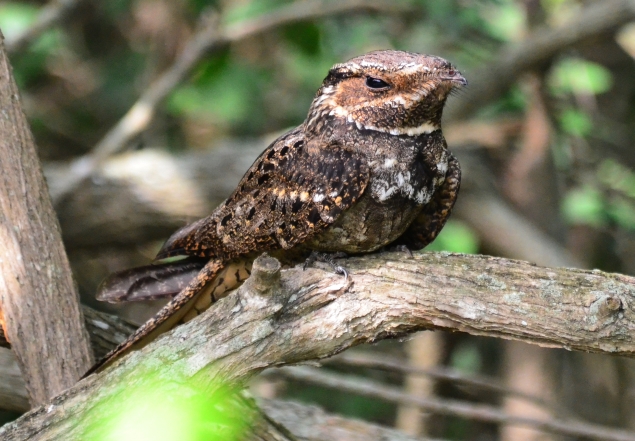
Chuck-will's-widow, a long-awaited LIFE BIRD. I had no idea how freaking big these things were. Blucher Park, Corpus Christi, TX.

Despite the title of this post, I'm not about to pat myself on the back for being a legendary birder, or ramble on about the years of self-inflicted emotional damage birding has brought, or give all the gory details of the various life-threatening situations I've found myself in while in the pursuit of birds. When I tell you that birding is really hard, I mean it in an entirely different context.

Earlier this month I broke out of my habitual South Padre Island weekend routine to head a couple hours north to Corpus Christi, to bird with Nate of This Machine Watches Birds. The ABA just had a rally there, and specifically banned The Great Ornithologist Felonious Jive from attending because, in the words of a representative, "His birding skills make our leaders look like noobs, he smells like sardines, and people tend to get blackout drunk around him". Which is neither here nor there, but if the ABA is going to have a meeting there, you know the area has potential.

Wasted potential in this case. The birding was...mediocre...well, somewhere between mediocre and shitty. We hit a bunch of different migrant traps and other spots, but it was windy and the wind had been blowing the wrong direction for several days. On the Gulf Coast in the spring, that means only one thing...

Life is pain.

But is it really? No. Aside from getting to hang out with some people besides my coworkers for a change (refreshing as hell), I got a life bird. And not just any life bird...a gigantic nightjar. So all in all, the weekend was GREAT SUCCESS.


Pardon my grain, but I think you can still infer some of this bird's sickness from this unworthy image. Truly bizarre. I can't get over the birds structure, let alone the crazy immaculate camo the bird is rocking. Blucher Park is known for being a good spot to track this species and Eastern Whip-poor-will (which we dipped on).


This was the first of many Summer Tanagers I would see this spring. Paradise Pond, Port Aransas, TX.


California can have great shorebirding, but what we get in rockpipers and Sibe vagrants, we lose in charismatic eastern species. Stilt Sandpipers is one of those birds that is usually missing from any given shorebird flock on the west coast, and it's great getting to see so many (often in full-blown alternate plumage) here in Texas. Hazel Bazemore Park, Corpus Christi, TX.


Migrating makes Stilt Sandpiper so sleepy.


Blue-winged Teal are common down this way, and are capable of inducing their own brand of facemelt when they feel like it. Just let them whip out a wing. Turnbull Birding Center, Port Aransas, TX.


American Oystercatcher. It's so refreshing to see a black and white oystercatcher and not have to double check that it is a hybrid...that gets a bit old after a while. Jehl must have gone mad. Photographed at Indian Point, Corpus Christi (?).


The American Oystercatcher: a creature cursed with cankles.


Eastern Willets are plentiful along the coast here. Those with higher GBRS rankings than myself have suggested that the Willets will be split one day. Californians have ignored the existence of this subspecies for many years, but any birder who finds themselves near the Atlantic Ocean should get familiar with telling the two apart. Photographed at Indian Point.

"Kedek kidirk kedeek kerdek." - Least Tern. The sound of Least Terns talking to themselves is music to my ears. They are small and seemingly prone to poor reproductive success, but they are energetic and bring life to any beach or wetland they visit. Photographed at Indian Point.


The humble Sandwich Tern is dwarfed by it's orange-billed relative of royalty. Photographed on Mustang Island.


Pollywog Pond was one of many boring/disappointing places we birded. "Birding is really hard", I told Nate during our stroll through some great but lifeless habitat, and I meant it. One of the few birds of interest there was this low-flying Swainson's Hawk, which repeatedly coursed back and forth low over the treetops.


Despite the regrettable lighting, I got a few shots that I like. Swainson's Hawk is one of my favorite raptors, and it's been nice getting to see so many again this spring. Wish I could say that about Mississippi Kites...birding is really hard.

Sunday, November 10, 2013

Cerro Lodge: Hella Recommended


What's better than seeing wild Scarlet Macaws? Seeing them while you are eating breakfast.

One of the things I tell birders who are planning their first Costa Rica trip is to stay at the lodges that cater to birders, at least sometimes. Are some of them astronomically expensive? Yes (I did not visit any of those). Are a lot of them reasonably priced? Definitely. Will they offer great birding/geri birding/crushing opportunities? You know this.

One such place is Cerro Lodge, just north of Tarcoles and Carara National Park, both of which are very popular birding destinations. El Cerro has very clean and comfortable rooms, a pool, fruit feeders, decent food, and good birding on and near the property...what more could you ask for?


The Scarlet Macaws completely blew me away. Absolutely crippling. I don't care how many I've seen in zoos or as pets, the real deal is awesome. These are humongous, deafeningly loud birds. Scarlet Macaws are very common around Cerro Lodge, I can't imagine birding the area for a day and not seeing them.


Many other parrots and parakeets can be found in the area of course, although more often than not you will find yourself having to identify them as they fly by. I think these are Red-lored Parrots.


Nutting's Flycatcher is one of a number of "dry forest" species found at El Cerro. With rumors of this bird being split in the future, I'm not sure what subspecies this bird belongs to (apparently both are in Costa Rica).

One of the main benefits of birding the Carara National Park area is that it sits right on the edge of the dry forests to the north, wet lowland forests to the south, and mangroves along the Tarcoles River...all of this creates a soup of amazing birding. While hanging out around Cerro, bird along the road back towards the highway and down into grassy ranchland to the southwest, where the road dead ends. And of course, you will want to bird legendary Carara National Park and near the mouth of the Tarcoles River. Many birders do a guided boat ride along the river for waterbirds and mangrove specialties.

I should also mention that if you look to the forest west of the lodge early in the morning, it is possible to see Yellow-billed Cotinga (!!!) in the forest canopy, which we managed to see at great distance. It is a distant speck to be sure, but a highly sought-after speck. You'll need a scope though.


Yellow-throated Vireo is one of a number of neotropical migrants that spend the winter in the area. As a westerner, I was pretty stoked to connect with these birds down south.


Summer Tanager is one of the most abundant North American migrants that winter in Costa Rica; you can find them just about anywhere. Like most tanager species in the country, they are enthusiastic visitors of fruit feeders.


Gotta post another Fiery-billed Aracari pic: we had better looks at this bird at El Cerro than anywhere else.


Rufous-naped Wren is one of the more conspicuous birds at the lodge; this one has a beakful of nest material. Obvi.


Non-traditional Turqoise-browed Motmot shot. This species is one of the most crippling birds I have ever seen...in sunlight, that is.


I'm not entirely sure what this thing is. Steely-vented Hummingbird? I don't have my Costa Rica field guide available...how embarrassing. Among other hummingbirds at El Cerro were Cinnamon, Ruby-throated and Blue-throated Goldentail.


Frog buddy clinging to the wall of one of the cabinas.


Just down the highway from Cerro Lodge is the Tarcoles River, and the famous bridge that runs over it. Huge crowds of people gather here in order to watch the Northern Jacanas American Crocodiles that congregate directly beneath the bridge.


How many crocodiles lurk under the bridge? Hella.


They are truly affectionate creatures. The bridge is also a good place to scan for shorebirds, wading birds, whistling-ducks, kingfishers and raptors, but you will have to put up with throngs of annoying people unless you get there early.


What's going on here? No clue. Pretty sure I was just drinking coffee at that point, not cuba libres. The humidity gets to you down there. These are some of the rooms at Cerro Lodge, with good habitat right outside the front door.

Some other birds we had at the lodge and along the access road include Orange-fronted Parakeet, Yellow-naped Parrot, Lesser Nighthawk, Blue Grosbeak, Prothonotary Warbler, Purple Gallinule, Southern Lapwing, Streak-backed Oriole, Streaked Flycatcher, Stripe-headed Sparrow...not to mention the owls. If you plan to bird the area, this is the place to stay as far as I'm concerned.

PS the day we checked out, Frank realized hours later that he had left his binoculars behind...they were still there when we made it back later that night. Good people.