Showing posts with label Chestnut-sided Warbler. Show all posts

Tuesday, May 22, 2018

Smith Oaks, Hooks Woods, Eubanks Woods Sanctuaries


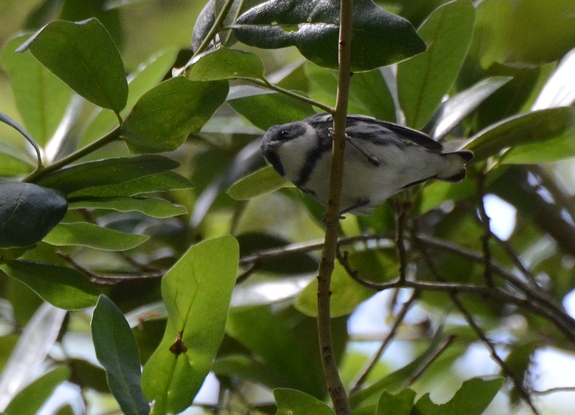
Smith Oaks was extremely productive for us on multiple days and hella fun to bird, generally better than Boy Scout overall. Smith was consistently somewhere between "moderately birdy" and "guhhhhhh birds everywhere" throughout the week...eBird checklists were best characterized as "corpulent". Here are a few of the hundreds of migrants we met there, starting with this Chestnut-sided Warbler.


As expected, the always becoming CSWA was a fairly common migrant throughout the week at all the migrant traps we visited.


A female Blackburnian Warbler with a trophy-sized worm of inches.


This is the same male Blackburnian that was hanging out next to the egret rookery in the last post. I'm still suffering from heart palpitations from seeing so many of these crippling heart-stoppers that week, which were one of the most common warbler species. So many glowing Blackburnians everywhere were difficult to cope with, physically, emotionally and spiritually.


Another crippling gasper, Golden-winged Warbler was certainly not a common migrant, but we did connect with more than I thought we would. We didn't come across any particularly confiding birds unfortunately, but who is complaining? Not me. A couple of them were singing, which is the first time I've ever heard them.

Though not a lifer, Cerulean Warbler was one of the main target birds of the trip for Yours Truly, #7. We had great success, and pleasantly saw a modest number of them.


Also like Golden-wingeds, they were hard as fuck to photograph/see well. Fitting, I suppose, for such a sought-after gem of a bird.


Female Cerulean, showing off her distinct long undertail coverts and almost stub-like tail.


Hella Wood Thrushes that week; we saw hundreds of them. This is not something I expected or have experienced before. Stoked.


When one encounters This Machine Nate on a trail, only one thing can be said for sure: you are in for a treat.


Nate's treat was met by a mix of intrigue and revulsion.


We also spent a lot of time at Hooks Woods. It's a lot smaller than Boy Scout and Smith, but it's the closest patch of trees to the coast, the habitat is good, and the concentrations of Geri there seem to vary between "low" and "bearable". This was the first Blue-headed Vireo of the trip; we would go on to see a handful spread out over the week.

I should mention that birding the road in front of the sanctuary can also be productive; this is where This Machine lifered Black-billed Cuckoo.


Here it is, your friend and mine, SWAINSON'S WARBLER, THE BROWN WONDER. This one was Dipper Dan's lifer. This was a good spring for these skulkers on the UTC apparently.


A surprise to one, Eastern Wood-Pewees adorned the migrant traps in large numbers. Lord knows how many of them were misidentified by Geri and friends.


Veeries were uncommon but dependable throughout our trip. Hooks Woods, and the lawn directly across the street from the entrance, was spilling over with Catharus the entire week. Thrushes were just littering the ground. We even saw some poor completely black thrush that had clearly just taken a bath in an oil pan someone had left out.

What a fucking bummer.


Where there are mulberries, there are Rose-breasted Grosbeaks. Mulberry trees are magic.


On our last day of birding the coast (April 27), Officer Shaw picked out this Olive-sided Flycatcher up in the canopy at Smith Oaks. Though not a late migrant on the west coast, it is in the eastern half of the country. It would be the only classic "late" migrant we would end up seeing; we did not connect with Alder, Willow or Yellow-bellied Flycatchers, or Mourning Warbler. We somehow dipped on Least Flycatcher as well, which seemed bizarre to me. I don't know if they are just not abundant on the UTC, or if they simply weren't moving through the area that week for whatever reason. We had several days with tons of Acadians...migration is weird.

Wrapping up High Island...Dipper Dan and I birded the High Island Historical Park (walking back to Guirdy Road) during the one very brief "slow" period we encountered....it was predictably slow, but I could see it being good when there are migrants around. We checked out Eubanks Sanctuary (mostly because we kept driving by it) on a birdy day and found it to be rewarding, although the habitat is overgrown and pretty much the same throughout the patch. Here is our eBird checklist; of note were Cerulean, Golden-winged and Canada Warblers (a new bird for the trip at the time). There is a pond in the back of the sanctuary that attracts a lot of birds, it is worth loitering around there for a bit. And amazingly, there were no other birders there! So if there are birds around and you want to take shelter from Geri, it is worth taking a look. We never did make it to the Crawford or Gast sanctuaries.

That wraps up our High Island coverage; in summary, it was as advertised. Absolutely ace birding, hordes of Geri, rampant misidentifications, and worthy of revisiting repeatedly.

Anahuac is up next!

Thursday, April 19, 2018

MAX REBO BIRDING TOURS: UTCY2K18


A person can only endure so many Yellow-rumped Warblers before they break, and I am about 11 Yellow-rumped Warblers away from breaking. Time for some Chestnut-sided Warblers to make everything better. Photographed at South Padre Island, Texas.

Yard birding, 5MRs and county listing are well and good...but sometimes you need to get the fuck out of Dodge, know what I mean? And I have been spending a lot of time in Dodge lately, being very loyal to a small territory, much like a California Towhee.

Despite my resemblance to a California Towhee, I am no more of a California Towhee than you are. I am not confined to the same patch of oak woodland-coastal scrub-suburbia for my entire life..always looking down at my feet, shunning mixed flocks, knowing not what lies beyond a particular bay laurel shrub or fenceline. I am not a California Towhee, but a neotropical migrant...and so my instincts tell me it is time to descend from upon a life-giving migrant trap, and a few in particular come to mind this time of year.

Spring has been very kind to me so far, mostly in the form of a lot of county birds and wildflowers. No complaints about what Santa Clara County has produced in the last few weeks, and I'm sure I'll be paying the price and missing some other county birds while I'm gone...but these are prices I am willing to pay! For most often the truly great birding does not come to you, you must seek it out.

With that in mind, I have been asked to once again lead a trip for MAX REBO BIRDING TOURS, this time to that bastion of geri birding, the Upper Texas Coast! I have even been told that MAX REBO himself may join our group as a coleader for a couple of days...wow, our participants will be in for a treat! He could even bring out the famous red ball jet organ, but you may have to buy him a couple of drinks to get him to play, ho ho!  MAX will leave most of the scouting and leading to me though, and I am happy to oblige. 

Check right here for more details, in case you missed it. BB&B will be back in May with a full trip report! Happy April!

Thursday, September 18, 2014

September Birding: My Grunts and Vague Runts


A Vague Runt Chestnut-sided Warbler abides and confides. Ferry Park/Sue Bierman Park, San Francisco, CA.

The first half of September has come and gone. I've done pretty well for myself...no MEGAS or state birds, but enough to keep me happy. Fall migration seems to be going a lot better than last year in northern California. Humboldt County had a Ruby-throated Hummingbird, which is a big deal here. Point Reyes and Bodega Bay have been good, and the Farallones have hosted a number of decent passerines, along with the goddamn gannet. I dipped on a one-day-one-observer-wonder Sulphur-bellied Flycatcher, which sucked but at least I didn't have to cope with getting gripped off by dozens of other birders.

Not bad at all so far, although of course many of us are waiting with baited breath for something Siberian to show up. How I long to meet a wheatear, how I would coddle a dotterel, how I would warble to a Dusky Warbler...but the season is young! Of course, there are still a number of pelagic trips I plan on leading (starting with Bodega Bay tomorrow), so there will be lots of upcoming opportunities to meet Vague Runts with or without tubes attached to their faces.


This was a nice county bird, which allowed some brutal crushings. Ferry Park is an awful, disgusting place to bird but it gets Vague Runts and is hella close to BART. I'm sure I'll be back again this fall.


Here is a more typical photo of a Vague Runt. I was shocked to find this Laughing Gull loafing with Elegant Terns and California Gulls at Point Reyes earlier this month. Before this bird, I've previously only seen one in northern California. I don't think it was ever refound. Drake's Beach, Point Reyes, CA.


Back to crushier fare. Hutton's Vireos are the bravest of all vireos....there, I said it. I've been holding in this news for years, but it feels good to finally get it out. Like their lookalike relatives the Ruby-crowned Kinglets (and unlike most of humanity), Hutton's Vireos are not afraid to snuggle up with a birder. Golden Gate Park, San Francisco, CA.


Depending on their posture and plumage, Hutton's can passingly resemble Hammond's Flycatcher, Cassin's Vireo and Ruby-crowned Kinglet (this one is in kinglet mode). I have distant memories of actually struggling to tell apart Ruby-crowned Kinglets and Hutton's Vireos. Now, I can look back and laugh.


If anyone is aware of a more interesting Hutton's Vireo photo, please notify the authorities. The Global Birder Ranking System has heaped praise upon me for capturing this image. The bellow was aimed directly at me, and I was immediately knocked to the ground by the force of it. I think I am still bleeding internally.


A pair of Peregrine Falcons overlook their migrant-ridden domain. Point Reyes, CA.


I wonder how many bird species this one has consumed. Maybe she keeps a list.


Pomarine Jaegers will frequently come check out the chum line off the stern during pelagic trips. Photographed off Half Moon By, CA.

As you may have read about on other blogs, some nerds from the Birdosphere recently convened on the bay area for a pelagic trip. Flycatcher Jen came from Portland, This Machine Nate from Austin, and Laurence from Phoenix (we need a nickname for you Laurence). We got excellent weather but inexplicably few birds, unfortunately...oh well, pelagic trips are always a gamble, and unlike last year it seems there are very few Buller's Shearwaters offshore this fall. At least Nate didn't miss Black-footed Albatross for the second year in a row, and they all got lifers.


We had only one Sabine's Gull that day, but it came straight in to the stern for great looks.


Few other birds have been so wildly successful in turning the Economy of Style into something truly special.


Common Murres bellow loudly in northern California waters this time of year. 


Who know how many Pygmy Nuthatches I have crossed paths with. 3,256? That is my guess. Anyways, I finally got a decent photo of one. El Polin Spring, San Francisco, CA.


If you happen to live in a region lacking in small, hyperactive nuthatches, I would also suspect that you are living in a region of despair.


I know you easterners scoff when I talk about eastern birds here, so I'll end this post on a very Californian note. Here is a shitty Tricolored Blackbird picture. It's pure rubbish, I know...the light is rubbish, the color is rubbish, and even the bird is rubbish because it's freshly molted so it doesn't have that sharp look birders typically expect. But it's a pretty good bird, and also one that is declining rapidly. Photographed at Point Reyes, which is an excellent place to see them.

Friday, June 20, 2014

A Warbler of Unrivaled Facemelt...Imvireoation...An Unabominable Oriole

Blackburnian Warbler resides in a league of it's own. It's particular brand of facemelt is unrivaled by any other bird on the continent, and that includes all the fancy tropical stuff. It borrows the colors of the classic oriole palate (orange, black, white) and mixes them with brilliance. It is a bird of Great Success.

Hi birders. Welcome to summer. Migration in the hemisphere has ground to a standstill, and birds have gotten down to the business of grinding something else...cloacas. How does that grab you?

I haven't seen any migrants oscar mike for quite some time now, and that's ok. South Texas was very rewarding this year. I don't even require a fallout experience to say that. Hell, I didn't even realize how consistently good South Padre Island could be until I got out there for the first time. Anyways, I am grateful for getting the chance to flog the migrant-laden shrubbery so much, and so I offer you another glut of migrants. 

Sadly, I only saw a handful of Blackburnian Warblers this spring, which may not be enough to hold me over for very long. It's an addicting bird.


In contrast, Blue-winged Warblers were much easier to come by. They are fidgety little bastards though...the ratio of Blue-winged Warblers seen to Blue-winged Warblers crushed is heavily skewed toward photographic failure. This bird was a bottlebrush junkie though, and it's nectar-lust quickly overrode any misgivings about having to lurk too closely to a human being. 


I was left rather chuffed in the aftermath of this observation.


Chestnut-sided Warbler anyone? This bird has furnished many cherished memories for me over the years, from Humboldt County's Patrick's Point to the talons of a Pearl Kite on a Costa Rican coast; from the bucolic Berkshires to the migrant traps of South Padre Island. It is the Warbler of Nostalgia.


Only the most anesthetized birder, bloated with hubris, can ignore such a bird...even one in sub-crippling plumage such as this one. 

The very first time I came out to South Padre Island, a blooming bottlebrush was completely surrounded by a phalanx of photogs, who were standing guard around the tree and generally being in everyone's way. The mood of a major twitch was in the air. I thought that there absolutely had to be something facemelty in that tree, or something rare. As you can see, I was wrong. They were in heat over Ruby-throated Hummingbirds...not that there is anything wrong with that, but when I am in heat over Ruby-throated Hummingbirds I prefer to ride it out in privacy.

Ah, the Solitary Vireo. It is a variable bird. Plumbeous and Cassin's get mistaken for each other. So do Cassin's and Blue-headed. This is a dull Blue-headed, which is doing a convincing impersonation (imvireoation?) of a bright Cassin's. How many Cassin's Vireos get passed off as uninspiring Blue-headeds? How many dismal Blue-headeds get passed off as bright Cassin's? It is an ongoing tragedy to be sure.


Here is what a Blue-headed is supposed to look like...allegedly.

Bullock's Oriole is a western species, no doubt. In south Texas, their distribution in the Lower Rio Grande Valley is solidly clinal...the further east you go, the more uncommon they become. In the Falcon Reservoir area they are fairly common, but it's a rare bird on the coast. This female is one of two Bullock's I saw at South Padre Island.


In California, vagrant-hunting birders aren't overly concerned about telling apart female Bullock's from female Baltimore (female/imm. Hooded vs. Orchard is a more frequent dilemma). However, I get the impression that birders in the eastern U.S. seem to struggle with this ID...they get more intermediate-looking Baltimores than we do, I reckon. At any rate, this a typical female Bullock's...a dull, almost lifeless yellow is confined to the upper breast, head and tail, dark "tooth marks" extend into the top of the white wing bars, and relatively pale wings do not contrast sharply with the white wing bar and edgings of flight feathers. For the record, I did see my lifer Bullock's X Baltimore Oriole there this May (an adult male), which was an abomination and not actually very spiffy.


A male Bullock's Oriole, on the other hand, is an unabominable oriole. It's one of those spring arrivals that makes you think, "Shit. I forgot that birds look like this. It's amazing". Shortly afterward, your knees buckle and you collapse to the ground in an awesome agony. Then two weeks later they are practically invisible because you are a jaded birder and cannot appreciate beauty.


Oranges upon brilliant oranges with this bird.


This is the one and only Prothonotary Warbler that I met this spring. She hung around the convention center for quite a while, feasting on oranges with reckless abandon.


Look at the heavy bill of this bird. Compared to the bill of something like a Wilson's Warbler, this thing is like a fucking toucan. Also, the fact that this bird has managed to appear pear-shaped is yet another amazing accomplishment.


Did someone say Wilson's Warbler? Behold one here, in all it's mellow glory. All photos in today's post were taken on South Padre Island, TX.

Wednesday, May 7, 2014

Migrants Oscar Mike


We are just past the peak of spring migration down here, but the migrants are still Oscar Mike and should be for a while. They say that May means empids in the LRGV...I've fared poorly so far...some Least Flycatchers and a "Traill's", and that's it. EBird is lighting up with Alder and Acadian reports, which I prefer to just think of as mostly misidentified Least Flycatchers and Eastern Wood-Pewees. This may be wishful thinking, but if you want to see some astounding feats of bird identification failure, this is a good place for it. The best one I've seen so far was a lady who identified a Black-bellied Whistling-Duck as a woodpecker.

As you know, I've been birding South Padre Island relentlessly this spring. I have major FOMO when it comes to missing interesting migrants on the coast, although by now I have seen many of them, and it is getting late for the one I am still really lusting after (Swainson's Warbler...there is a reliable eBird report from there this year...life is pain). So now I'm basically just going out to find some new Empids for the year, hang out with the expected migrants, and hopefully find a fantastic rarity like Black-whiskered Vireo or something that boggles the mind in a similar manner.

Mostly, I'm just enjoying eastern flavored spring migration, and seeing birds I don't normally get to crush or otherwise bump into very often. Newly-arrived birds drop in throughout the day, so the longer you spend on island, the more you will see. Just when you are ready to call it quits something fancy will show up, and after an hour, the process tends to repeat itself until you wonder how you managed to spend all day at two or three tiny spots.


Canada Warblers should be more regular this month, I only saw one in April. This bird is a real, honest-to-god crippler. The face pattern face melts. I mean, the eyering is two different colors...intricacies abound within the blinding goodness.


Thankfully, Chestnut-sided Warblers have become easy to find on SPI. They are very crushable. I find their plumage to be quite innovative.


It's like they have a moustache that goes all the way down their flanks. Pretty sick.


The Blue-winged Warbler photos I have now have improved since the last couple I posted. Like many warblers, this is a species that frequently is feeding only a foot or two off the ground here. Not what I would expect, but I'm not complaining.


I struggle to think of a caption for this. Not the crushiest shot, but you get the general impression of the bird. How do I go years at a time without seeing them? It can't be healthy.


After the scourge of Yellow-rumped Warblers departed (mercifully early), Tennessee Warbler quickly became the most abundant migrant warbler. Being nectar junkies, they are often quite confiding (see crush above). As of this writing, it still is the most abundant warbler out there. I have seen far more TEWAs in the last month than in all my life leading up to this spring. There sure are a lot of Tennessee Warblers out there.


Of course one of the downsides of having so many TEWAs around is that A) people misidentify them as Philadelphia Vireos and B) if you hear about a Philadelphia Vireo, you instantly become overly suspicious that this "vireo" is actually a Tennessee Warbler.

Rose-breasted Grosbeaks are often around in good numbers, although they don't seem to be quite as predictably abundant as the orioles. I think I like them better than Black-headed Grosbeaks. Sorry Black-headed Grosbeaks.


This one lacked the black breast streaking of the above bird. Younger individual?


Migrant sparrows are few and far between on the coast...Savannah and Lincoln's Sparrows, and some Clay-colored Sparrows (above), and not much else. Ever since my time working for Lostwood National Wildlife Refuge, I think of North Dakota whenever I see a Clay-colored. Their style is economical but I am a proponent of all the humble prairie birds.


Oops...not a migrant. Even Mottled Ducks come in to the bird seed that is scattered at the convention center. This is a bird that will never get anyone's pulse racing, but then again I'm happy to see one up close for once.


For some reason it seems immature and female Painted Buntings not only far outnumber adult males, they are also much more fearless. This is unfortunate. Can't say the same for Indigo Buntings.


Here's one of the few cooperative male Painted Buntings I've seen recently. Why does this exist? It's too much.


I have had the misfortune of seeing several mildly rare, western birds on South Padre Island. Of course a male Townsend's Warbler is certainly a crippler, but I would much rather see mildly rare eastern birds. Cape May Warbler? Yes please. I have no doubt that in the blink of an eye I will be knee deep in Townsend's Warblers again and longing for Black-throated Green Warblers.