Showing posts with label burrowing owl. Show all posts

Tuesday, January 2, 2018

Risky and Embarrassing: Ten Years of BB&B


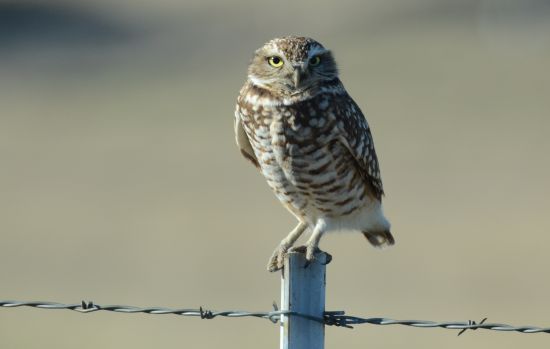
This is a 2008-quality photo. Clearly, it leaves a lot to be desired...but it's a Burrowing Owl that lives under a big shoe! Burrowing Owls are great. Taken somewhere in the Imperial Valley, CA.

In July of 2008, one strange and humble birder began a blog. A blog that was meant for birders, yes, but aspired to be something different. Now this wasn't the birder's first blog, he had actually blogged successfully before, and was told by more than one person that he was actually a decent writer. But he wrote about friends, about music, about politics, about gossip, about raging...the exact sorts of things that bird bloggers not only don't write about, the majority of them don't even seem to have any personal experience with these concepts. Well, to be fair, birders gossip ceaselessly, but the human element was (and is) largely absent from both birders and their blogs.

The birder was acutely aware that he didn't fit in with most of the birders he had met over the years. How many other birders had to regularly cancel birding plans due to hangovers? How many other birders found themselves constantly annoyed by other birders? How come 90% of bird blogs he came across seemed like they were written by the same person? Did any other birders worship Greg Graffin as much as he did? Were there other birders out there in the Birdosphere that he would like to get to know? To find both a love of birding and a sense of the absurd cohabitating within a single soul was rare then, and it still is now. These are some of the notions that the birder had running through his head when he embarked on the saga that is BB&B. The birder had an angle on things that he felt was shared by few others of his nerdy ilk. He would blog birds, but he would do it differently. It was a risky venture, not to mention embarrassing. Would anyone ever notice? Would anyone care? On his deathbed, a wise ancient with great tufts of ear hair had warned him..."Once you start down the dark path, forever will it dominate your destiny".

And so, in July of 2008, Bourbon, Bastards and Birds quietly hatched. For years the birder toiled in relative solitude, with only a couple dozen regular readers and some unremarkable camera gear to help illustrate his posts with. It was rough going, but rewarding. The birding got better as time went on...he took bird jobs at Midway Atoll, Pennsylvania, southeast Arizona, the Aleutian Islands, Mexico, North Dakota...he had a lot of good material to work with. He was getting a lot of lifers. He only had to work half the year; the rest of the year was spent on a Perpetual Weekend. That left a lot of time for both birding and blogging.


In the winter and spring of 2010, the birder spent a lot of time in eastern Mexico, where Aplomado Falcons still have a stronghold. He still didn't have great camera equipment to work with, but birding there changed everything for him. Things have never been the same. Photographed in Alvarado, Veracruz, Mexico.

Eventually, at a point he cannot identify (2012-2013 maybe?), the birder and his blog went from obscurity to...to whatever is slightly more noticeable than obscurity. Semi-opaqueness? He befriended other bird bloggers. Random birders he would run into while in the field would recognize him from his blog (which the birder has never gotten used to, but that doesn't mean you shouldn't talk to him). A couple years after that, it all finally came together...when Dipper Dan the Global Birder Ranking System upgraded his status to #7 birder in the whole country, the glory and fame peaked, along with the drug abuse (not use, definitely abuse), outbursts of violence, sexcapades, general depravity, attempts at becoming an artist, etc. Eventually, he was committing acts so bizarre and vile that the birder himself could not deny the fact that he had become morally bankrupt and rotten to the core. This carried on for quite some time, though he managed to keep birding and blogging through it all.

The BB&B saga took a couple of dramatic turns in April of 2016, when the birder impregnated someone named Billy, and in the same week (the same day?) officially brought his famously fertile friend (and vastly superior writer) Cassidy Grattan in to the BB&B fold. Coincidence? Impossible. Slightly over 9 months later, the birder found himself to be a father. Though no longer a surprise at this point, it was still an extremely interesting turn of events.

And here we are, at the dawn of 2018. If you are wondering, the birder is not Felonious Jive, it's me, Seagull Steve. The Great Ornithologist Felonious Jive is now our only staff writer who is not a father, which is probably for the best considering he still does big fat rails of white stuff off his scope this time of year, and I'm not talking about snow! I don't think Annabelle will be doing Christmas Bird Counts with him any time soon.


Ah, the Iceland Gull...in 2017 we said goodbye to Thayer's Gull, effectively retiring one of the continent's most vexing ID problems. More than a few birders were unhappy about this lump made by the AOS, and the world's smallest violin got a lot of use for a few weeks. Lump or no lump, it's a bummer to not be close to the bay's classic herring run sites any more, but now I've got a huge gull roost within walking distance of Rancho de Bastardos.  Fingers crossed for a good gull at my patch in the next few months. Photographed at the Los Capitancillos Ponds, San Jose, CA.

Now on the other side of 2017, I'm happy to report that I'm somewhat settled into my role as a father. The constant exhaustion of the early months of raising Annie has morphed into constant distraction instead. Bourbon, Bastards, and Birds really does sum up much of my life now. Well, it always has, but now the definition of "bastard" has switched from the informal use to the strictest sense of the word...I spend most of his time with my lovely bastard girlfriend and our wonderful bastard daughter, and several times a week see my old friend Whiskey. My 2017 year list finished at 350 species (320 in California), which I figure to be the lowest total I've had since 2006, or some other year in the pre-blog daily binge-drinking era...The Ashtray is gone, but not forgotten.

Why such a low and embarrassing total? I had a baby, obvi. But on top of that, I saw almost no mountain birds (no Sierra trip this year), and had only a handful of dedicated birding days outside of California. That said, 2017's Lower 48 list (aka the whole year list) was actually better than 2016's Lower 48 list, and I got each and every expected "local" California species that I humiliatingly did not see in 2016 - Tundra Swan, White-winged Scoter, Sandhill Crane, Glaucous Gull, Prairie Falcon, Blackpoll Warbler. Eight new birds for the California list was a fantastic total though, and matched 2016's total of additions to the precious state list. I'm not optimistic that I'll be able to match that pace of state birds this year, or ever again.


Lifers were few and far between in 2017, but Great Cormorant finally ended up in the proverbial bag after all these years. This wasn't a nemesis bird by any means, but it was my easiest remaining Lower 48 bird. To me, Great Cormorant has one of the strangest distributions of any North American species...they are a cold water seabird on the east coast, but you can also see them in equatorial Africa, hundreds of miles from the coast. Weird. Photographed at Bass Rocks, Rockport, MA.

2017 will go down in my personal history book as the year Annabelle was born, and the year of the Ross's Gull - what is dead may never die! I could do a nice post to wrap up all my birding from this year, but let's face it...I'm hopelessly behind and time is of the essence. So we must look ahead. Cherish the birds of 2017, but don't cling to them. Try to process the daily horrors of a president that makes George W. Bush seem meek and innocent in comparison, of a soulless and revolting congress, of the tragedies wrought by the hurricanes in the Caribbean, of the catastrophic Thomas Fire that ran amok in my home county and is now the largest fire in California's history. To top it off, December saw a return of grim, drought-like conditions to the state...but will things turn around? How will 2018 be different?

How about this for starters...BB&B will be turning TEN YEARS OLD. Can you believe it? I can't. We will be celebrating. We will be birding. We plan on bringing you lots of special content...more interviews, more features from The Human Birdwatcher Project (the original birding project), and plenty of the classic birding and birder coverage that has kept you coming back all this time. I may not be able to effortlessly churn out 1-2 posts a week anymore, but BB&B intends to not finish 2018 with a swan song and a death rattle, but with the violent and victorious bellow of a well-oiled blogging machine! Or something along those lines.

Thanks to everyone who has read us over all these years, see you again soon!

Thursday, July 6, 2017

The Bra Collector, A Touch of Turd, The H-Word


When you see a bra strung up on a fence, that can only mean one thing...


...a Loggerhead Shrike has been very busy. Clearly mice and sparrows are not enough for this insatiable fiend.


This fearless, woman-eating shrike (which is pooping out woman in this very photo) was in the Robinson Road area near Rio Vista in Solano County, which is a fantastic area for grassland birds. I dipped on the reliable Mountain Plovers, but it was a very successful day otherwise.


Sometimes a combo just needs to be shown, despite the rubbish photo. This Ferruginous-Swainson's Hawk combo was unexpected, and very much appreciated. Swainson's overwinter in the state in low numbers, primarily in the Delta region. I would go on to see double-digit numbers of Ferruginous Hawks here that morning, as well as several Rough-legged Hawks, one of 2016's big dips. I don't think I've had all three [lovable/amazing/inspiring/thirst-quenching] of these Buteo species in one place before, stoked.


A few Burrowing Owls were holding it down as well. Note the turd in the bottom right...much like myself, the Burrowing Owl loves decorating the entrance of its home with turds.


After giving up on the plovers, I went north for a staked out Glaucous Gull on the side of Yolo Bypass. It was pretty amazing to see the bypass being fully utilized...to the west of the dike I was on it was dry, to the east it was an inland sea out to the horizon! Yolo Bypass exists to keep Sacramento and other cities from flooding; when there is a lot of precipitation in the northern half of the state, a series of weirs upstream divert water from the Sacramento River into the bypass, which is mostly farmland. The farmland floods, the cities don't. Anyways...I was able to haynor the Glaucous Gull from an excruciating distance, and eventually it flew in a bit closer to feed on a dead coot. Not only did this end my stupid stupid 5-year drought of not seeing Glaucous Gulls, this was my lifer adult. Siiiiiiiiick.

Other highlights that day were Surf and White-winged Scoters (the latter was another bird I somehow missed in 2016) from Sherman Island, and a huge Tricolored/Yellow-headed Blackbird flock in a feedlot on the way home. Good times in The Great Valley.


In between winter storms I went out to Richmond Marina to see if anything needed crushing. This Forster's Tern did.


As did this one. That's quite the glaucous upperwing.


This female Common Goldeneye threw its feet out to help brake for landing, which made for a quick tasty crush.


I think it is time to come clean...Aechmophorus make me uncomfortable sometimes, I will admit it. You know, they are totally entitled to do what they do, but when certain individuals are around me I just want to get the hell out of there...not that I'm a Aechmorphobe.

Take this bird for example. Bright yellow-orange bill, pale flanks...solid Clark's field marks. But the black cap is sitting right on top of the bird's eye, and the dark nape stripe has a lot of girth to it. I'm inclined to call this a Clark's x Western Grebe hybrid, and you know how I feel about dropping h-bombs. Both Aechmorphorus may look different in the winter than in summer, but I don't think Clark's broaden that nape stripe when temperatures drop.


Here is a typical winter Western, with paler lores and dusky cheeks.


Aesthetically this photo has nothing to offer, but it does give you a good comparison of the broad nape stripe of a Western Grebe (left) with the narrower stripe of a Clark's (right).


When I still lived in Albany, I tried a number of times to see the Burrowing Owl that lived next to the parking area for Albany Bulb. Who does not want to see a Burrowing Owl just down the road from their house? However, I failed repeatedly, and all I got was judgement from this Say's Phoebe.


Luckily, Say's Phoebe did not go home with the "bird of the day" award. Small numbers of crecca Green-winged Teal, presumably from Siberia, make their way to California every winter; they are easier to find than Tufted Ducks, but rarer than Eurasian Wigeon. This is no crecca though...this is crecca x carolinensis. Not something you see every day. Don't let your kids look at this image, as few photos have been taken of something so impure.


A nice, clear-cut intergrade. The white lines on the face are pretty weak (carolinensis), but the bird possesses both a strong white vertical breast bar (carolinensis) and horizontal scapular bar (crecca). Cool bird. Albany Mudflats, Albany, CA.

Thursday, September 15, 2016

Bay Area Specialties


Heermann's Gull is one of the many California specialties that the bay area is home to. It's just one of our common local birds, but visiting nerds from outside the state drool over a lot of the species we get to enjoy on the regular.

The bay area. Home to millions of people, millions of birds, and several thousand birders. Nine different counties come into contact with the bay, and almost all of them offer a multitude of high quality birding spots. If you put aside the unfortunate traffic factor, it's a perfect recipe for quality birding almost year-round.

Because the bay area has so much to offer in the way of birding opportunities, and is such a population center and transportation hub, we get a lot of visiting birders here. Aside from chaseable rarities, they are usually looking for the same set of species. Since we at BB&B are here to serve you, dear sweet most loveable reader, we thought we would slap together a quick post on where to find some of the most highly sought-after local goodness.

Before we dive in, I have to get the standard disclaimer out of the way...eBird and the local listservs are invaluable resources on where your target birds and bonus rarities have been observed lately. Check them thoroughly and frequently!


Ridgway's Rail can be challenging to see, but they have multiple strongholds in the bay where they are relatively common. They vocalize frequently and loudly, so if you are into counting heard-only birds, tracking this species down should not be problematic. Far and away the easiest place to see RIRA is at Arrowhead Marsh in Alameda County. They can be seen at any tide, and during winter king tides it's not unusual to see multiple individuals at once that have been pushed out of the marsh. Black Rails, while almost impossible to see, are resident at China Camp State Park (Marin), Martinez Regional Shoreline (Contra Costa), and the saltmarsh next to Alviso Marina (Santa Clara), among other places.


Mountain Plover is exceedingly rare in the coastal counties, but are regularly found in Solano County during winter. Explore the fields east and west of Highway 113 (east of Vacaville, west of Rio Vista) during the winter. Again, eBird may be able to save you some time and point you toward the right pasture.

Pacific Golden-Plovers are very uncommon and tend to only sporadically show up within the bay, but a reliable place in fall and winter is Schollenberger Park in Petaluma (Sonoma County), where they often roost at high tide, or can be seen feeding in the adjacent mudflats if you are there with the right tide and a good amount of luck. Spaletta Plateau on Point Reyes is another reliable place for golden-plovers during the fall.


Rockpipers are consistently in high demand. Surfbirds can be found both in the bay (the little island at the San Leandro Marina (Alameda), roosting on the south side of Marina Park Pathway at high tide at the Emeryville Marina (Alameda)), and along the coast. Wandering Tattlers are much easier to find on the coast than in the bay, but are the most difficult rockpiper to track down. Check structures off Fort Mason, the rocks at Sutro Baths (both in San Francisco), and the outer breakwaters at the Pillar Point Harbor (San Mateo County). Black Oystercatchers and Black Turnstones are common and widespread.


Thayer's Gulls are typically not hard to find, but often present a significant ID challenge to those inexperienced with them. We have no shortage of confusing hybrid gulls to confuse them with. Thayer's can be tracked down in winter in San Francisco's Golden Gate Park (Stow Lake and Lloyd Lake), the mouth of Pilarcitos Creek (San Mateo County) and the north end of Oyster Bay Regional Shoreline, among many other places. Herring runs can feature impressive numbers of Thayer's and regularly lure in a Slaty-backed Gull or two every winter; check listservs for San Francisco, Marin and Contra Costa counties if you are around in January or February, it is great gulling and a great spectacle.

If you can't get on a pelagic trip, there are several good spots for seawatching - try Pigeon Point (San Mateo), the south end of Ocean Avenue (San Francisco), Sutro Baths (San Francisco), or Bodega Head (Sonoma). Depending on the time of year, you can find sea ducks, loons, shearwaters, jaegers, alcids (including Ancient and Marbled Murrelets in winter), etc. Of course, a scope is a requirement and the earlier in the morning you go the better.


Burrowing Owls have lost much of their habitat around the bay to urbanization, but thankfully are still holding on in a few areas, especially down in Santa Clara County (i.e. Azino Ranch), near the east shore of Cesar Chavez Park (Alameda) and the access road to Arrowhead Marsh (Alameda). Fall and winter is typically best for finding these cute little bastards.


Yellow-billed Magpie is an endemic, and rightfully one of the most sought-after species in the entire state...luckily we get them along the western edge of their range. Try Mines Road, just south of Livermore (Alameda), where a little effort should reward you.


California Thrasher is widely distributed, but uncommon in patches of chaparral in many bay area counties. They are resident and can be found year round, but are easiest to find in spring when they are singing the most frequently. Mount Diablo and Claremont Canyon (Contra Costa County), and Mines Road come to mind as reliable areas...this species is relatively widespread in the bay area, but many of their strongholds aren't places that get besieged by birders.

If you are new to West Coast birding, you may not know how tricky (to put it nicely) it can be to find many western migrants here that are not as difficult in other parts of the state, both in terms of quantity and diversity. For example, spring birding in Kern County will easily bag you migrant Gray, Hammond's and Dusky Flycatchers...but those birds all come with a *rarity* tag here in the bay. Actually, I've never even seen a Dusky Flycatcher here, now that I think about it. I've seen more American Redstarts on the coast than I have MacGillivray's Warblers...migration is a bizarre and wonderful thing.


Despite how uncommon a lot of western migrants are here at any given season, I would be remiss to neglect mentioning Point Reyes, one of the best migrant traps on the entire west coast, best birded from late August to early November. While known as a magnet for eastern birds, the Outer Point patches will give you a better shot at bagging species like Hermit and Black-throated Gray Warblers than other coastal migrant traps through the fall. The patches at Bodega Bay (Sonoma) can also be very productive in fall. During spring migration, Mount Diablo (Contra Costa) can offer a nice variety of western migrants and breeders, including the drab but ever-popular Cassin's Vireo.


Tricolored Blackbird is a near-endemic, sought by many out of state birders. Luckily, a significant proportion of the population hangs out at Point Reyes during the fall. A quick look at the blackbird flocks at "B" Ranch or "C" Ranch always rewards birders. Rush Ranch Open Space (Solano) and Del Puerto Canyon Road (Santa Clara) are also good bets.

Lawrence's Goldfinches are a tough customer...you may just have to grind and grind to find one of these little cripplers. Sometimes they are present throughout the year, sometimes they don't linger so long, but spring and summer is your best bet, though you have a legitimate chance of getting them in the fall. Try Mines Road (in both Alameda and Santa Clara counties) and Del Puerto Canyon Road (Santa Clara County).

I know, I know, I probably didn't mention one of the birds you are looking for and you're pretty bummed about it, but life goes on. Some birds are just really tough to connect with (i.e. Northern Pygmy-Owl) and others are so common that you should have no trouble tracking them down (Allen's Hummingbird in season, Nuttall's Woodpecker, Wrentit, etc.). At any rate, hopefully this post will come in handy for a few people and some wanton lifering will be carried out. Good luck out there!

Wednesday, September 7, 2016

Pawnee National Grasslands Part I


Colorado. That's what I had been blogging about before my computer died. Now that I have a new one, blogging can resume! Of course it's September now, so there is a great deal to catch up on, but BB&B does not quit. Especially now that there are so few of us left, and very few of us remain to carry the blogging torch, we must persevere...

Which is not important for our purposes...not today at least. So back in July, after a great victory with the White-tailed Ptarmigan, we quit the Rockies for flatter ground. I had heard about the expansive prairies of Pawnee National Grassland for my entire birding life, and I finally got to bird it. After assisting a jackrabbit with its suicide (second lagomorph species I killed on this trip, the first without using a rock) with the wheel of our rental car, we were out on the auto tour route of the grasslands. Billy immediately found this Solitary Sandpiper, one of the few shorebirds we saw on the whole trip.


The first prairie dog town we came up on had a number of Burrowing Owls, which were pleasantly common on this day. Here are a couple of juveniles checking us out from the safety of a burrow entrance. I've heard much about how Burrowing Owls love prairie dog towns, so it was pretty cool to finally see this relationship in action.


Slowly we began to see more and more birds along the road. In many parts of the Grasshopper Sparrow's range, it requires much effort to actually see them. That is not true at Pawnee, where they were also pleasantly common. Here is a streaky (by Grasshopper Sparrow standards) juvenile.


Another juvenile, though it looks a bit older than the above bird.


The abundance of Grasshopper Sparrows was definitely due, in part, to the crop of juvenile birds littering the roadsides. Here is an adult bird, with bright yellow lores.


It did not take long for Lark Buntings to start popping up. Lark Bunting is Colorado's state bird, and a very good one at that. Adult females like this one can be very striking, though they lack the crippling effect adult males can often have on an observer.


Juvenile Lark Bunting, a life plumage. Pink legs...I didn't know that color belonged on a Lark Bunting...but even the #7 U.S. birder may be surprised. The birder who is no longer surprised is not an experienced birder, no...it is a dead birder.


Though it was late July and juvenile birds were out in force, we did see plenty of males owning the Economy of Style. A couple were even doing display flights, which I had only seen once before. Prairie birding is so fucking good...


This Common Nighthawk chose a photogenic roosting site. Thank you, nighthawk.


All these other birds were great, but I was frothing at the mouth to see some longspurs. Longspurs, lonspurs, longspurs...as a Californian, we get a taste of them, but all too often it is just a tease. Laplands are always a good bird, albeit expected in certain areas, but Chestnut-collareds are extremely erratic, McCown's is a great bird, and Smith's is a MEGUH. Even if we do get to see 'spurs here, all too often we are forced to settle with absolute bullshit looks. I hadn't seen a McCown's in years, and never outside of California, so this was pretty much my main target bird of the day, even though they are relatively common at Pawnee. Eventually we found an area thick with them, and had a flock on the road next to the car, with a couple females (above) and a bunch of juveniles.


Juvenile longspurs are not a strong suit for most birders. The first time I saw a juvenile Lapland (in the western Aleutians), it caused complete and total brainfreeze. If someone would have asked me what it was right after I got on the bird, I probably would have responded with "Durrrrrrrr". A couple of these juveniles brought that Durrrrrr feeling back, but this is indeed a juvenile McCown's, another life plumage.


Seeing a flock of these charismatic (and probably rapidly declining) birds flopping around in the road in front of me was like plunging a syringe full of heroin into my arm for the first time really cool. The birding gods smiled upon me. But the day was not over yet...more to come in the next post.

Sunday, February 14, 2016

Owls of The Ground, Owls of The Pine, and Stroking of The Robin


A Belted Kingfisher hunts at Middle Harbor Shoreline Park, Oakland, CA. This is a great birding place where I see the same common species over and over again, which is in high demand these days.

BB&B has been very focused on exotic birds so far this year. I know it. And I know what you really want to be seeing are incredibly common, run-of-the-mill birds that anyone can see without even trying! Am I right? Or amirite? That's what the birding (or perhaps the bird photographing public) seems to crave these days I think, so if that's what the public wants, that is indeed what they shall get! Also, my GLOBAL BIRDER RANKING SYSTEM rank in Mexico isn't anything worth bragging about (Felonious Jive, The Great Ornithologist, has a much better standing than I do), so while posting about Mexico has been fun, it's not a good platform for touting where the GBRS puts me. However, as you may recall, I can totally brag about my GBRS score for U.S. ranked birders.  That would be #7, in case you have forgotten...but how could you? Anyways, lets take a look at some abundant, widespread birds.


Here is a Snowy Egret! Oh, joyous day! How pretty!


My goodness! A fish is pursued!


Ok, I'm not knocking Snowy Egrets and Belted Kingfishers or beginning birders (well...I am a little bit), I just thought I would change things up. I've got a big backlog of pre-Mexico photos to deal with, you know? I wasn't seeing many rarities in late fall/early winter so this is what we are stuck with. And if you are not happy about that, how do you think I feel? For good or ill, any kind of wader is fun to photograph when it gets giddy about catching fish. I'm still waiting for my epic, point-blank Reddish Egret photo session, so until I get spoiled with that we will have Snowy Egrets...


...and Forster's Terns! This is the one and only tern we have an abundance in the bay area in winter. It's a sad state of affairs. We don't even have many tern species in the summer. I miss living in places where seeing Black Terns is a normal thing. Ballena Bay, Alameda, CA.


At high tide, this bird was roosting on a little floating piece of driftwood, and drift it did until it was crushed into oblivion.


Ok, I reckon you have had enough of all the robin-stroking. Here is a Ferruginous Hawk, a bird superior to most birds. Salt Springs Valley, CA.


Judging by the extensive amount of white on the underwing and underparts (including the shaggy legs), this is a young bird. According to Dipper Dan, famed Calaveras County birder, Salt Springs Valley is the best winter birding the county has to offer. I reckon he is probably correct on that account. While we dipped on Rough-legged Hawks (this hasn't been a good winter for them), there was an abundance of Ferruginous Hawks and Lewis's Woodpeckers, and Tricolored Blackbirds and Bald Eagles were refreshing birds as well.


Refreshing birds are nice and all, but certain species reside on a higher plain of perception and enjoyment. I have a special place in my cold, nerdy little heart for Burrowing Owls.


This is the other half of the pair, presumably the male based on the paler coloration (or colouration, if you are so inclined). Shortly after this, while I was attempting the most epic photo anyone has ever taken of a Lewis's Woodpecker, my SD card took a shit and it was hell trying to get the photos off of it...not that you care, but it was a relief to rescue some decent owl shots.


Sometimes I post things photos of things like Black Phoebes, which is not a momentous achievement but it seems to drive the easterners crazy. In that vein, I offer you this California Towhee. Back in December, I went on a ragey camping trip that happened to take place where a few birds live. This brown beauty belongs to a breathtakingly common species, and it also happens to be disgraced former Bird Policeman Adam Searcy's favorite bird...and lets face it, he needs some cheering up. Only a month ago, The Bird Police relegated the besmirched Mr. Searcy to a boring subcommittee and stripped him of his former power. Will he ever rise again, like the phoenix, to become a voting member? We may not know for years. In an apparent snub to Mr. Searcy, Officer John Garrett celebrated Mr. Searcy's demotion by finding a briefly-chaseable Kelp Gull. It rained on Officer Garrett that night...droplets of Glory soaked him for hours. Pinnacles National Park, CA.


While northern California has a deficit of winter terns, we at least have a couple species of quail. California Quail is a fine state bird I reckon, delicious both to the eyes and mouth. Such plumpness and fine patterning is a thing best beheld in person, and behold I did.


Fantastic patterning on these birds, though their roundness may be even more remarkable. And no, we did not see any California Condors.


After Pinnacles, it was out to Mercey Hot Springs in Fresno County. Everyone in the group was excited about soaking in the hot springs...which was fun and led to exacerbated inebriation, but I was looking forward to Long-eared Owls a lot more. I had heard this place was the best place in the state to see LEOWs, and I had also heard that birders can't just show up there anymore without paying (which I cannot confirm or deny to be true at the moment), but I didn't care since we were paying to camp. The owls were easy, really easy to see, thankfully, and my nonbirder roommate Arrison found them before I even arrived.


While I was there, all the day-roosting birds I saw were all in a single pine tree. They were used to people, so it was no problem walking under them and getting a good look. Now this is a bird I will never get tired of seeing.


Incredibly, there were TEN Long-eared Owls roosting in this tree! Here are five of them, looking like oversized pine cones. I never thought I would see a flock of them, but you know what? I have seen a flock of Long-eared Owls. Imagine that. Shortly after this photo was taken, I became completely incapacitated with a hangover. As Flycatcher Jen says, good times!

p.s. #7