Showing posts with label Palm Warbler. Show all posts

Wednesday, December 28, 2016

Puerto Rico Winter Tour Y2K16: Comerio to Guanica


Our time in Ceiba was done, so the nerds got up early for making the Kessel Run trip to get the final east side target bird, none other than the rare, legendary and highly-localized endemic subspecies of Plain Pigeon. This is not a bird you will blunder into while birding in Puerto Rico; you definitely need to make a targeted effort to see them. Google Maps was highly ineffective in getting us to the right spot (again, beware the app's suggestions for shortcuts in Puerto Rico), but eventually we made it. It was a weird place...basically, you look for the birds from a baseball field. Lifer situation.

Adam and I immediately had a Plain Pigeon fly directly overhead when we arrived, basically looking down the first base line, though better views were definitely desired. Looking at the trees beyond the outfield was unproductive after the initial flyover, so I turned the scope around and started scanning the hillside beyond home plate....BINGO. We had distant but prolonged looks at two Plain Pigeons feeding in the blooming African tulip trees (local photogs call them tulipans)...fuck yes. A scope was essential here, so if you plan on seeing Plain Pigeon in any satisfactory way, do bring a scope or you run the risk of stringing a Scaly-naped Pigeon. We ran into some local bird photogs who were about to head up a road to the general area where we had seen the birds, so if you want to try and get closer to the birds you can walk up the small road at 18.222429°, -66.201390°.


Ground Zero in the valley of the Plain Pigeon.


Gray Kingbirds seem to run things in any remotely open habitat on the island.


The most conspicuous reptiles of Puerto Rico are the introduced green igaunas. They are everywhere. Any loud, crazy thrashing sounds you hear coming from shrubbery, plopping into ponds or falling out of trees are iguanas.

After the pigeon victory we headed down to the south coast, hoping to check out some random spots between Jobos and Guanica, where we sould be spending the night. This stretch of the island is seemingly unbirded by anyone who doesn't live in Puerto Rico, as this large area is completely absent from any trip reports I've found. Dipper Dan worked on trying to find some places to bird switching between eBird and Google Maps with mixed success...we managed to get to 2/4 spots we attempted to bird. Again, Google Maps on the island is not your best friend, but it's not worthless either.

Playita-Vertedero Salinas was a totally random spot Dan found on eBird that was not hard to access (17.955920, -66.286848). Just drive down the dirt road and park in the obvious dirt parking area next to the lagoon; scope the lagoon and bird further on down the road. The lagoon and salt flats were not overly birdy but did net us a number of trip birds (most notably the one and only Gull-billed Tern of the trip), and the mangroves along the road held Black-faced Grassquits (common and widespread on the island) and a smattering of warblers.


By far the best bird here (for me anyways) was this cooperative Green-throated Carib, which we got much better looks at than back at Humacao. Caribs appear to have their eyes set further back in their heads than other hummingbirds, which gives them a unique facial expression.


The deep blue belly contrasting with the emerald throat is a nice touch. This would be the last carib we would see on our trip, and we never saw Antillean Crested away from Humacao and the Fajardo Inn.


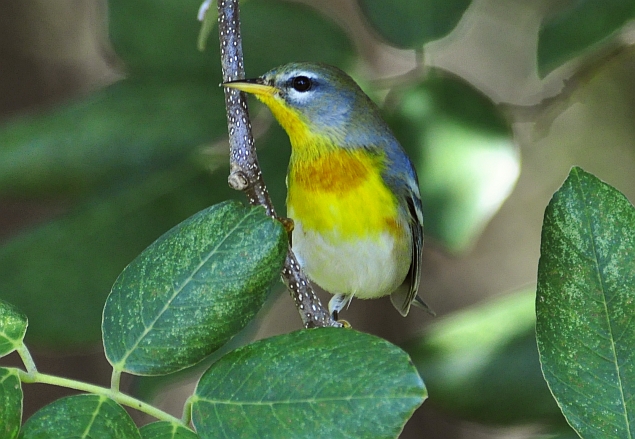
Palm Warbler was a new trip bird; we finally got our first Yellow Warblers of the trip here as well. The local Yellow Warbler subspecies turned out to be much more uncommon than we thought they would be.

Dipper Dan worked furiously on eBird, trying to figure out how to access other hotspots...attempts to access a couple bird areas east of here were met with abject failure (thanks Google Maps), but we did successfully reach Laguna Salinas (yes, another Salinas) after an awesome lunch at the Oasis Cafe and Bakery in Santa Isabel. Their coffee was unlike anything I've ever had...hot damn!

Accessing this site is interesting...you have to get on an eastbound onramp to Hwy 2 and then make a sharp right turn onto a dirt road directly off the highway. The dropoff between the highway and the road is pretty big, so I'm not sure how well this would work with a sedan (we had a jeep, so it was mellow). At any rate, the turnoff to the laguna is at 17.974407, -66.673697. The birding here was decent (in other words, more trip birds), with close looks at a Clapper Rail being one of the highlights. Lifer subspecies!
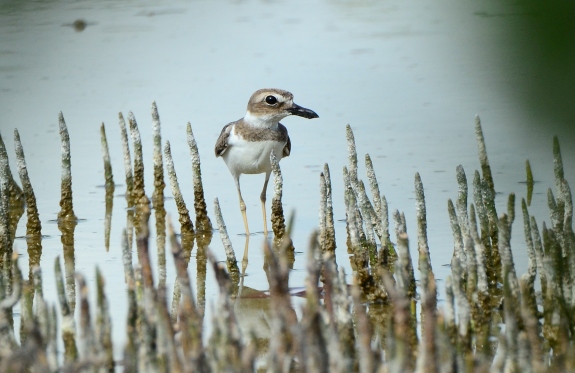

I hadn't seen Wilson's Plover since I was working in Texas a couple years ago...this bird was standing in the middle of the road, a niche typically occupied by Killdeer. Lifer situation. I had forgotten what a massive bill is attached to that cute little plover face.

At the end of the day we finally pulled in to our Airbnb, a few minutes southeast of Guanica. As we had hoped, the area had some decent birding to offer...a big semi-birdy (genuinely birdy places are apparently rare in Puerto Rico) lagoon was right next to our place. Venezuelan Troupial was a facemelting but reluctant lifer (they are an introduced species), and were very common here. This would be home base for the next four nights. One of the beds smelled like piss and the tap water was burly (not the owner's fault obvi, but tap water in other parts of the island was excellent), but otherwise it worked out really well. Lots of great birding within an hour's drive!


The view from the balcony, a mellow mangrove-lined lagoon with the famous Guanica Dry Forest cloaking the hills in the background. Tranquilo, though the mosquitoes got annoying. This was one of the best views of any Airbnb I've ever stayed at, though I still think "The Edge" in Lubec, Maine, still has...an edge.


These amazing/terrifying lobster-tailed things were crawling all over the place. You never know what is waiting in the bushes of love.


The lagoon was filled with Lesser Yellowlegs and Stilt Sandpipers; more than 400 Stilt Sandpipers could be seen roosting from our balcony every day, which is hella to a California birder. The only place we can see that (well, maybe not anymore 😓) is down at the Salton Sea.


White-cheeked Pintails were the commonest ducks here, which were always visible in some numbers. Fantastic. I no longer need to feel the pain of a stinging gripoff whenever one is seen in Florida.

The next day we would bird a lifer habitat in the Guanica Dry Forest, which was very kind to us. Spoiler alert: lifers.

Tuesday, February 19, 2013

Taking a Gull Siesta With Bay Area Warblers


Ah, the crispy Black-throated Blue Warbler. Rare but regular during fall migration, this is the first bird I've seen that is actually wintering in the state. Pescadero, CA.

Birding for the last few weeks in the bay area has largely been dominated by gulls and waterfowl. That's fine and everything, but there are other birds worthy of our attention as well, particularly ones that aren't gull-like in any way, shape or form. Today I've posted a few of the warblers currently wintering in the area, rare and otherwise...they provide a more than welcome reprieve from the birds that wield nothing but whites, browns, grays and blacks.

BB&B is excited to be making several other announcements today as well...the much-maligned BB&B interns have been hard at work churning out high-quality content since the return from Costa Rica, and we are bringing you, the nerd, some good stuff in the near future.

- The Human Birdwatcher Project is finally bringing you the next installment in its scandalous birder interview series soon, featuring Johnny "in the middle of some twisted Real World Field Biologists nonsense" Nutcase, whose blog is here. Check the Human Birdwatcher Project tab above for previous coverage.

- It's gull season. You are painfully aware of this, despite the emotions you may or may not have for them. If you are wondering why people even bother looking at gulls, you will soon find it all explained in grisly and dorky detail.

- Have you noticed that vagrants who cross international lines are frequently being considered escaped pets by unwitting birders? Its been nagging at me, and I think there is something we can do to clear this up. Expect TOTAL COVERAGE on this subject in the next week or two.

- If you haven't found it yet, BB&B has a Facebook page that ridicules birders even more than we do here. Some exclusive bird porn is provided as well...come join us!

The bird is largely dependent on a particular tree that is owned and operated by a Red-breasted Sapsucker. The sapsucker drills wells in the bark, the warbler steals the sap. The sapsucker knows what the warbler is up to and will chase it off if it sees that the warbler is up to its tricks. Thanks go out to the property owner who has not tried to stop all the visiting birders from staring into his front yard.


As Black-throated Blue Warblers are prone to be, this bird has been pretty cooperative and confiding.


It's not a warbler, but BB&B would like to finally welcome Red-breasted Sapsucker to its hallowed halls. This is the bird that is making the Black-throated Blue's winter visit possible. Thank you Red-breasted Sapsucker, thank you.


Easterners who yawn at the sight of a Black-throated Blue Warbler may better appreciate this Towsend's Warbler instead. Despite their abundance here this time of year, they never wear out their welcome. Cascade Ranch, Santa Cruz County, CA.


Cape May Warbler is a very good bird in California (I believe it's still a state review species), especially in winter...please excuse the photo quality and instead wallow in the warbler's greatness. This bird's winter territory ostensibly consists of a single eucalyptus tree in Palo Alto, CA.


It's nice to see an adult male, rather than one of those staggeringly drab hatch year birds. If you are wondering what the black shit on this bird's face is, its gunk from Eucalyptus flowers. Just to see what was so amazing about this tree that could attract (and keep) a vagrant warbler that belongs thousands of miles away, I drank some nectar from one of the flowers...it was delicious! If I could live in that tree and drink its succulent nectar all day, I would do it in a heartbeat.


Common Yellowthroat. They don't make it onto this blog often, so here is a reminder that they are out there and you should love them. Cascade Ranch, Santa Cruz County, CA.


Palm Warblers occur regularly on the West Coast in fall and winter. I found this bird amongst rocks lining a sidewalk...they are not too picky about habitat. Sausalito, CA.

Friday, November 30, 2012

Mas Tortugas


White-eyed Vireos were one of the commoner migrants, with at least one anchoring almost every mixed flock I came across...which was frequent, considering I was *ahem* not on a birding trip.

Since I didn't go snorkeling while I was at the Dry Tortugas (land team), I mostly did loops around Garden Key for four days straight, although I did eventually end up swimming for a while on the last day. It was legit, and I didn't even get any jellyfish stings.

As you can expect, I took a lot of pictures, the best of which you will be seeing on here on and off for the next several weeks. Maybe they will compel you to make a trip out there, spring or fall. The birds on this trip left me a bit weak in the knees, which is a feeling any birder lives for. Come to think of it, they will die for it too.


Bay-breasted Warbler (year bird). I only saw 2-3, which is not enough but will have to do for now. I typically go years at a time without seeing these buffy-flanked beasts, they are not easy to come by in California. 


Another shot of the Hooded Warbler that appeared in the first Tortugan blog post. A snazzy bird, which has been documented to cause birders to stutter and foam disgustingly from the mouth.


Normal people on Garden Key would not be happy about this, but ominous skies are a good sign for birders....rain is likely to bring migrating birds down to the islands. 


The seas surrounding Garden Key have the classic hue that any island paradise should.


Mmmmmm, Palm Warbler. There was no shortage of them on Garden Key, but strangely I only saw a couple on my first day, when there were the most birds around.


Brown Boobies aren't very abundant in the Tortugas, but they are really easy to see, since they favor perching on the channel markers that are scattered around Garden Key. As is the case with their bigger, more exotic Masked relatives, the Tortugas is the best place in the continental U.S. to see this species. This is as close as I got to one on this trip.


A number of Great Blue Herons were on Garden Key and Bush Key. This one was relishing having some fresh water after a storm...getting all your water from just eating salty fish probably gets old after a while.


If herons could slurp, this one would be slurping.


See? Here is a fish. If I was birding all the time, I would not have seen this fish. This is some kind of awesome parrotfish. We saw a lot of these around Garden Key and in Key West. They get much bigger than this one. Aside from their brilliant colors that can melt a human face in the blink of an eye, they are known for eating coral and having sandy poop. Can you imagine eating a bunch of coral and then having to pass it? Ouch though.


Warblers aren't the only weary birds that need to take a mid-migration rest, raptors do too. Lots of Accipiters stopped in Garden Key, although I didn't see any Buteos. I'm not sure, but this Sharp-shinned Hawk may be the first one to make it on BB&B.

I lost count of the number of catbirds I saw meet their fate in the talons of Accipiters and Merlins while I was there. The death-squeal of a catbird is not a pleasant sound. The grassy roof of Fort Jefferson is in the background; it's a good place to watch raptors, frigatebirds, and other migrants come in off the ocean.

Tuesday, October 30, 2012

Fully Warblered


This Worm-eating Warbler was working on an insect on the other side of the leaf. It appears that the warbler removed the leaf and wedged it in the bark of the branch, which is pretty wild and crazy. Key West Botanical Gardens, Stock Island, FL.

I didn't see any mythical fallout events in South Florida, but I did pretty good with migrants on my trip. 24 warbler species were more than I hoped for, with a lot of those being year birds. I ran into good flocks at Zachary Taylor State Park, Indigenous Park, the botanical gardens, and of course on the Dry Tortugas, where birding reached a crescendo. Dipped on Cape May and Kentucky, but I am in no position to complain. Again, for any birders who have not had the fortune of birding the east coast during migration...you are really missing out. Landbird migration is significantly more pronounced than it is in the west, and an average-sized (for an easterner) accumulation of migrants can seem staggering to a westerner.

For northeastern birders, good luck with "storm waifs" this week, but of course staying safe and making good decisions takes precedence. A birder I knew lost his life while seawatching on a jetty, and that wasn't even in a hurricane...don't do anything stupid!


Worm-eating Warbler. Looking inside dead leaves is more of their thing...I kind of like this weird perspective. Key West Botanical Gardens.


Palm Warblers were literally everywhere. The amount of tail-wagging I witnessed was mesmerizing. Little Hamaca City Park, Key West, FL.


Ah, the Ovenbird. I would say that this is one of the best warblers, given their stylish strut, thrussish markings and unmistakable attempts to summon the attention of nearby teachers. Indigenous Park, Key West, FL.


My best herp siting of the trip was this Florida Box Turtle that was scuffling through the leaf litter, which is what they spend most of their lives doing. I dig the carapace markings. Thanks to JK of Camera Trapping Campus for providing the correct identification. Key West Botanical Gardens.


I don't know what this is, but I like it. Key West Botanical Gardens.


Northern Parulas were plentiful. Looking at too many may cause the pupils to dilate...so I recommend welder's goggles to shield yourself from harmful parula-watching effects. Key West Botanical Gardens.


I only saw a handful of Red-eyed Vireos, I reckon most of them probably move through a little earlier in the fall. Key West Botanical Gardens.


You don't have to be the Number 7 birder in the nation to know that Prairie Warblers are not hard to come by in South Florida. They are very sharp birds, and one of the few year round resident warblers. Key West Botanical Gardens.


Brown Anole. It's no doubt bummed that it's replacement tail growing in makes it look like it is perpetually pooping. Key West Cemetery, Key West, FL.


Yet another sunset picture, which is further evidence that this was not a birding vacation. I enjoyed this birdless sunset very much. I swear.

Thursday, October 25, 2012

Birding The Conch Republic


While walking through the streets of Key West on our first day, I heard a loud unfamiliar flycatcher call above me. Shock and awe overcame me as I looked up to see my lifer Gray Kingbird. Key West, FL.

I have to say, if you are looking to go birding on your nonbirding vacation, Key West is a good place to be. Even frequent consumption of excessive drink and living on a sailboat anchored offshore (that's how we roll) were not able to get in the way of birding. The fact that the island is so small and that there are only a handful of places to bird (all easily accessed) make for very convenient birding.

Of course, in the first couple days I was completely slammed with year birds, and the bonus life bird was just extra frosting on the proverbial birding cake. My first afternoon birding there happened to fall on a very good day for migrants, and Zachary Taylor State Park was littered with birds. Another positive aspect of being there in the fall (and waking up late because you are raging all the time) is that there are tons of raptors flying around throughout the day; this is a major migration corridor and the numbers of falcons, accipiters, and Broad-winged Hawks streamed, kettled and puddled (?) overhead were impressive to say the least.

Here's some shots from my first couple days there.


Look at the size of that bill! This bird was right on Duvall Street, known more for its puddles of tourist vomit than its lingering South Florida specialties.


This Blackburnian Warbler (year bird) was one of the first birds I laid eyes on at Zachary Taylor State Park. The ABA birding guide recommends birding the native veg that grows near the Fort, but I had equal numbers of migrants (if not more) in the Australian Pines that grow near the beach.


Look at that stubby tail. For whatever reason, our west coast warblers are all relatively long-tailed in comparison.


A female Blue-winged Teal in the moat by the fort. Predictably, I didn't see much else in the way of waterfowl on this trip. Zachary Taylor State Park, Key West, FL.

You can still photograph Laughing Gulls while you are busy Not Birding. Key West Bight Marina, Key West, FL.


I love birding cemeteries, I'm not sure why. Key West Cemetery is worth checking out, although it doesn't offer the same level of birding that Zach Taylor or the botanical gardens do. It does have some pretty cool headstones though. Here is a Palm Warbler, the most abundant passerine I saw over the last two weeks. Key West Cemetery, Key West, FL.


Blue-gray Gnatcatchers are always suckers for a good pish (or even a "spish"). Key West Cemetery.


The long, thin bill of gnatcatchers are perfect for the emotionless crushing of hapless, stupid insects.


While hanging out in the bush with the gnatcatchers, my first Northern Parula of the trip popped in as well.

If Tennessee Warblers (year bird) always sat like this, people would not have such a hard time identifying them. Zachary Taylor State Park.


This sunset shot proves I was not on a birding trip. I was enjoying the sunset, like a normal person. Zachary Taylor State Park.