Showing posts with label Yellow-headed Blackbird. Show all posts

Monday, August 31, 2020

2020: The Dawn of The Geri Birding Renaissance


California Scrub-Jays were daily yard visitors for a good part of the summer but are currently all but undetectable from the yard, although they are certainly still nearby. It is fascinating getting to learn some of the habits and vagaries of local common shit that you thought you knew like the back of your hand already. All photos in this post were taken at Rancho de Bastardos.

Geri Birding. Now, more than ever, it matters. BB&B readers know that we have always been staunch proponents of Geri Birding, whether you are doing it in your own backyard or at some lodge buried deep in a rainforest. But with the arrival of Covid-19, Geri Birding went from a pastime to somewhat of a necessity, at least for a while.

Do you remember those days in early spring? Here in Santa Clara County, California, we went straight from business-as-usual 😎to shelter-in-place 😷practically overnight, pretty much before the rest of the country. Fear and confusion and anger reigned supreme...and I guess that really hasn't changed, though the shock has certainly worn off. But I digress...it was a gut punch any way you look at it.

Back then, "wear a fucking mask" was not a thing. The thing was "don't leave your fucking house"...although no one was actually saying it quite like that then, or now, because that's not something anyone can tolerate for very long, potential life saving action be damned. There is a reason house arrest is a thing. However, that was indeed the message being sent by some birders for a little while. Birders were taking to listservs and social media, courageously proclaiming to all that would listen that they refused to chase mega rarities 15 minutes away and bashing all who did.


A big change in the yard this year was the Nuttall's Woodpeckers finally getting hooked on the suet. After being very occasional visitors to the feeding station they now visit on the regular. I've seen a great many of these in my life but can now say the best looks I've ever had of them were in my own yard. Here is a juvenile showing its distinctive red forecrown.

You may think I am cusp of delivering some harsh judgement, one way or the other, or am on the verge of launching into a long and rambling self-righteous screed on how birders should now conduct themselves in The Age of Coronavirus...but I am not. I am just setting the stage to tell you that I sure as shit have spent a lot more time at home than usual this year, and the best part of that has been GERI BIRDING.

As soon as things went south in March, I began geri birding with renewed vigor and have not stopped...never stop geri birding, you know what I'm saying? Can't stop won't stop geri birding. The results have been very rewarding, and Rancho de Bastardos has performed as advertised. I geri birded so hard this spring that I suspect I may actually now be geri. I catch myself doing stuff like complaining about my back, unironically yelling dad cliches at my daughter, and asking basic, embarrassing questions like "Honey, have you seen my keys?" or "What the fuck is Tiktok?"

I know right? It's a bad scene, but I am not ashamed. Geri birding makes hanging out at home a much more enjoyable, perhaps even more gripping experience than normal, especially in semi-normal weather conditions (i.e. under 100 degrees and without a megafire raging nearby) and in spite of things happening in the rest of the world that are trying their best to send you spiraling into a state of catatonic depression that you will never climb out of ever again.


Another major yard upgrade this year was the addition of this little oriole feeder. I wasn't sure how birds would take to it but the neighborhood Hooded Orioles love it. I even saw chickadees and a Song Sparrow or two using it.


The Hooded Orioles here have always been skittish, especially males. It's like they know how facemelting they are and don't want to hurt anyone by letting them get too good of a look. I got some deec pics this summer though. They have all departed now and are southbound, but we had some good hangs this year.


How about some more babies? Here is a juv Oak Titmouse. They are much more confiding than adults, usually look a touch spiffier and have more of a cowlick than a very prominent crest.


A young Northern Mockingbird can do a very convincing Sage Thrasher impersonation.


One afternoon we had a big family group of Tree Swallows perched above the backyard with a bunch of fresh brown and white juvs still getting fed by parents. This is a local breeder that disappears very early in the year - I have no eBird records of them from the yard past June. Like the jays that opened up this post, they are certainly in the area longer than that but I do find it interesting that they are dependably absent from my microzone by July.


This was a big year for Song Sparrows in the yard, the local breeders produced some bumper crops of youngsters like this one. On some days there would be an actual double-digit pure flock of Song Sparrows in the yard, which I am not accustomed to seeing anywhere.


This Cooper's Hawk is not a baby at all anymore but not a grownup either. In fact, it doesn't get much more intermediate than this, look at all those adult feathers coming in and that orange eye. Raptor highlights so far this year include more Sharp-shinneds than ever before, both eagle species (annual but always appreciated), and a banded Peregrine Falcon trying to kill Forster's Terns (after failing, killed a passerine instead).

As of this writing I am up to 113 species seen or heard from Rancho de Bastardos this year - my single year record of 126 species, set in 2018, seems well within reach but topping it is not a certainty either. El Rancho has been endowed with 7 new species in 2020: Scaly-breasted Munia (expected and disappointing), Willet (a calling nocturnal spring migrant, astonishing and rather rare in the county away from South San Francisco Bay/salt ponds), Swainson's Thrush (overdue, finally heard some nocturnal flight calls this spring), Western Kingbird (spring migrant, a pleasant surprise), Western Wood-Pewee (a not unexpected but very appreciated spring migrant), and Wrentit. The Wrentit is something I might hear sing from the riparian along the nearby creek at some point, but I was amazed to both hear and see a pair in my actual yard one midsummer day. My yard is decidedly terrible Wrentit habitat, but perhaps better than I thought? That leaves one more new yard bird... 


Red-winged Blackbirds have always nested in the pond behind my house but this year they decided to get real familiar with my yard in 2020, possibly because of a newish feeder that they could be more comfortable on. In previous summers they would disappear by the end of June but this year they have stuck around, and in greater numbers. Not only was it nice to have them linger and loiter longer, they helped lure in my newest yard bird.


I was astonished to look outside one day and see this thing going to seed town (Seed Town?) on the platform feeder one day with the local Red-winged flock. I'd only ever seen one in the county before, and here was a bright male right in the yard...in July! THIS IS WHY I GERI BIRD. This was both a new yard bird (obvi) and a new 5MR bird too, which made it that much sweeter.


The Yellow-headed Blackbird made itself at home very quickly and visited the yard a number of times a day, bossing around other birds, calling frequently and settling in near the top of the yard bird hierarchy. So, so sick. This is not the rarest bird that has been in the yard, but I am left wondering if things will ever be the same.


A surprising number of birders came out to the Los Capitancillos Ponds to chase it, most of which eventually had success. Apparently, scoping into my yard from the other side of the ponds became a thing people were actually doing.

If you don't already geri bird with zeal, I do recommend giving it a shot. I know not everyone has a living situation where this is possible, or your shitty apartment is simply too urban to be conducive to this...I have lived in those situations for most of my adult life. Trust me, I've skipped a lot of articles and posts about yard birding over the years, had my eyes glaze over when yard birding makes its way into conversation, but we must face the music...the time for geri birding is now. Have you felt The Long Shadow of Senescence slowly creeping over you? Let go of your fears, of your wasted youth, and your journey towards the Geri Side will be complete. Birders everywhere have finally made some effort to really bird their yards for the first time this year and have reaped the rewards. What better time to start than September? 

To you grizzled veteran geri birders out there, I hope your yards have brought you similar good fortune in 2020. This has been the year to really cement our geri birding legacies, right? As much as I look forward to having property of my own so I can go crazy with planting natives and installing an imposing state-of-the-art Vague Magnet Water Feature like Flycatcher Jen, Rancho de Bastardos continues to produce surprises and helps soothe some of the daily angst that comes with the territory this year. September is now upon us, the window is open and anything can happen, so good luck to everybody this month, Geri or otherwise.

Wednesday, October 16, 2013

The East and The West


Virginia Lakes, between Lee Vining and Bridgeport. If you want to find Gray-crowned Rosy-finch here, I suggest not going in October...some nice views though.

Nerds! I am overdue for a post. I've been away on a not-birding trip, but due to my incurable and dangerous addiction, I managed to fit some in.

Whether birding or not, coming back from the eastern Sierras to West Oakland is strange. In Lee Vining, no one locks their doors...my buddy doesn't even have a key to his house. This is unlike West Oakland, where windows are barred and murders happen with regularity. On the east side, the air is clean, litter nonexistent, and birds like Clark's Nutcrackers and Townsend's Solitaries may be found around town. West Oakland? Every week the neighbors sweep their pile of garbage from the curb in front of their house over to the gutter in front of ours, which we can't do much about because our garbage and recycling cans keep getting stolen. House Sparrows and possums pass for wildlife.
Of course, I don't want to give you the idea that these places have absolutely nothing in common. Cheap, low-quality alcohol is consumed in vast quantities in both places. Whether at sea level or around 7,000 feet, I dispense withering scorn towards outdoor cats, whom are then fawned over and adored by almost everyone else. The harsh calls of Steller's Jays recall the raspy screams of old crackheads.


Even low-key birding can produce surprises...a crippling male Yellow-headed Blackbird stood out like a sore thumb on the lakeshore at South Tufa, Mono Lake.

Right...perhaps these comparisons are ultimately pointless, but I can't help but make them. Moving on, there is good news! For those of you who prefer to read BB&B instead of the news (a wise choice), it looks like the federal government shutdown is finally on the verge of ending...adjust this week's birding plans appropriately. I hope my furloughed friends enjoyed their Indefinite Weekend, but it will soon be time to get back to work...leave the vagrant hunting to me.

Wednesday, July 24, 2013

Regrets and Shorebirds Aside


This Yellow-headed Blackbird was the last interesting spring migrant I saw, back in early June. Despite the maelstrom raging around us, it begged me to crush it as it foraged passionately.

Wow. Just like that, we have plunged into rarity season. The Wood-Rail really opened the floodgates, didn't it? I have been without internet for quite a while now, and once I come back online rare shorebirds are being reported left and right. Being confined to an island that is not known for vagrant shorebirds, this shit is getting a little hard to handle...

But then I remember I just saw my state Red-necked Stint, and I can relax. While Lesser Sand-Plover is indeed a facemelting and anxiety-inducing rarity, I am happy to say that I saw one back in 1996...Greater Sand-Plover, on the other hand, is another story...a story of pain, failure, and regret.

Regrets and shorebirds aside, I am currently on my final tour of duty on Santa Cruz Island. The focal species of our studies are almost all done breeding, which makes field work go pretty quickly now that we are not checking on nests or chicks. Unfortunately, the internet gods who reign over the island have not been kind lately, so instead of enriching the Blogosphere, I've lately been going through back issues of National Geographic and spending way more time editing photos than usual. But I am sure to have pure, uncut internet access for the next few days, so I will try to do what I can while there is still time.

Here is a veritable smorgasbord of Santa Cruz Island scenes for your ocular consumption. See you soon!


I hope the bird made it off the island, rather than being eaten by a fox. It was pretty fearless, which may not been a good personality type with hungry foxes lurking everywhere.


The Peregrine Falcons no longer chide me (or try to kill me) when I get too close to their nest sites, although it's not rare to see an adult whiz by with a juvenile begging horribly close behind it.


The other day I looked up into the fog and saw 2 Peregrine Falcons (one of which was probably this bird) soaring with a kettle of 7 Red-tailed Hawks. That may not sound so strange to you, but on Santa Cruz Island in July, that was too many raptors for me to handle. I found myself kneeling in the grass, weeping into the dust. Strange sights call for strange reactions.


I have pelted my beloved and attractive readers with Island Fox photos lately, so you only get one today. This is outside the kitchen at Christy Ranch, where we are normally based.


For BB&B's very first Acorn Woodpecker photo, I thought I would make it particularly wholesome. If only the woodpeckers were storing acorns in the cross...the potential for bizarre metaphors would be endless.


Barn Swallows are one of the most abundant birds on the island. They have been raising chicks for months now. If a bird raises chicks over and over again for months, it would seem logical that they would become one of the most abundant birds, no? We all could learn a lesson from the Barn Swallow.


I take that back. I think Barn Swallows should go about creating more Barn Swallows as much as possible, but this is not a way of life I would recommend to any sane human lover of earth, life, liberty, etc. In the end, none of this has anything to do with Barn Swallows sunning themselves in ecstasy on a windowsill.


Christy Beach at sunset, with squid boats dotting the horizon. Not bad, not bad at all.


I think a lot can be learned from the social lives of Black Oystercatchers. They clearly do a lot of socializing, both in pairs and in strange group displays which remain unexplained. In this photo we see them behaving in a remarkably human way; completely ignoring each other, despite their obvious close proximity. They never did get a conversation going.


Heermann's Gulls are back in force, attempting to steal fish scraps out of the pouches of Brown Pelicans. A lot of them still have their dapper frosted heads, but they are going to start looking gray-headed and boring soon.


Fraser Point is on the west end of the island, where few lucky souls are privileged to travel. The next outcrop of land, to the left, is Santa Rosa Island. This is the view from one of my field sites (photo is blow-uppable, and taken with an iPhone).

Wednesday, June 5, 2013

Hacking My Way Through The Field Season


I'm over halfway through my field season...time flies! The Global Birder Ranking System awarded me many points when I Haynored this female Lark Bunting through a dirty truck window at Christy Ranch last month. Not only a very rare spring bird anywhere in California, it is the first one ever recorded on Santa Cruz Island! This one is especially white and neatly-marked.


This Yellow-headed Blackbird (immature male?) was around for a few days as well. In fact, I got to put it on my meat list. I realize some of you think that I'm making me dumb Farrallon joke, but the original definition of this phrase (which came into existence years before) is far more perverse...I will enlighten you all soon.


I crushed this Rock Wren back in March, but I visited its territory again recently for another round. I think it likes the attention. I wonder what singing birds think when they attract a large half-asian birder instead of a female.


California Quail are introduced on Santa Cruz Island, but they don't seem out of place. A couple feather piles I've found make me think the foxes don't mind them being there either. My inner biologist tells me to shun them, but I like them anyway.


It seems I've never posted a Pacific-slope Flycatcher before. I practically melted my camera firing off shots of this confiding individual at the Scorpion Ranch visitor center. No one will ever call this bird a facemelter, but it's hard not to like them.

This is a nesting colony of Brandt's Cormorants, one of the things I'm paid to look at. By the time I get back out there practically ever Brandt's Cormorant nest will have hatched eggs, and some will have large chicks. The nests I'm monitoring seem to be doing pretty good, but we'll see how many chicks get fledged.


One of the views at Christy Ranch, one of my temporary homes for the summer. Not bad, eh?


Gratuitous Island Fox cuteness.


They seem to constantly be squinting. Maybe their allergies are as bad as mine.


A young Barn Swallow keels over and dies. The end of days are upon us. When the swallows fall from the skies, we can expect the skies to be falling right behind them. Repent! Repent for all your misidentifications! Repent for the times you nerdily tried to one-up another birder in conversation!

Who said that? This bird is just sunbathing.


The "jay crew" reports that Island Scrub-Jays are having a terrible year. Very few young are fledging, and they are finding some birds far from where they are expected (these birds are not prone to wandering). I haven't seen any juveniles at all yet. This can probably be directly or indirectly attributed to the drought, but its hard to say whats giving them problems for sure.


I'm really hoping the drought breaks next winter. Everything needs the water...of course, this is all just going to get worse as the years go by...life is pain, unless you are looking at an Island Scrub-Jay lifting its skirt.


I have seen this Zombie Spotted Towhee a number of times. I don't know what's going on with it; the other side of its face looks even worse, with a lot more blue-gray skin...as close to an actual Terminator a Spotted Towhee can get. Luckily for us, this bird only terminates seeds and insects.

Wednesday, January 4, 2012

The Truth Is Out There


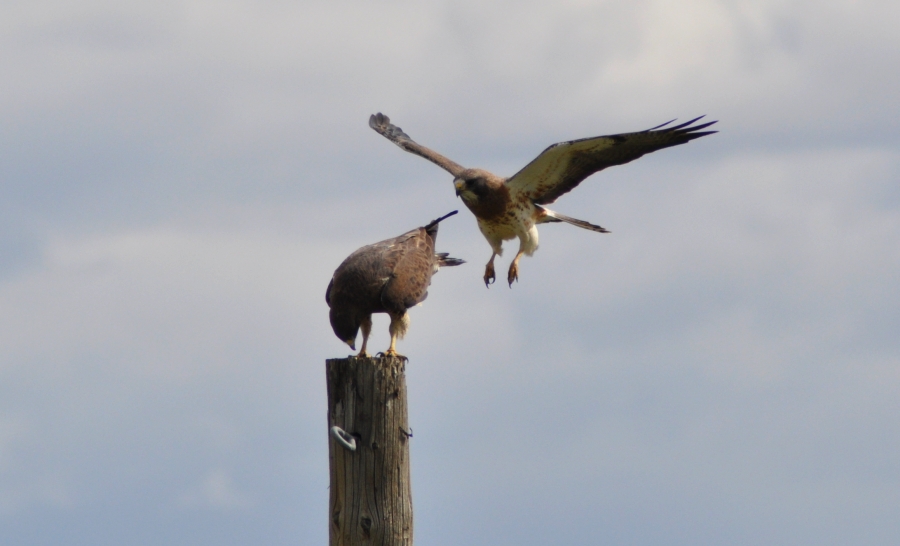
Swainson's Hawks ready to make sweet sweet love. They sexed for quite a prolonged period of time after this photo was taken, I was impressed. Near Camas National Wildlife Refuge, ID.

Everyone keeps asking me..."Seagull, where will you end up this year?". The truth is, I have absolutely no idea, but for the short term, I will go north. I seek the Snowy Owl, after all. Yesterday I began my migration that will culminate in dismal/dreary Port Angeles, WA, on the Olympic Peninsula....a place that some refer to as "where people go to die". I hope that's not true, or else I should seriously reconsider my motivations for going in the first place.

Being a Professional Crastinator, here are some more of my fav birds from last summer. Thank you, come again.

Gray Flycatcher, the baron of the sage. Mono Lake, CA.

Yellow-headed Blackbirds are obviously the best blackbirds. Camas National Wildlife Refuge, ID.


Franklin's Gull...an excellent gull. Redmond Lakes, ND.


Upland Sandpipers were a common sight for me over the summer. I guess that explains my face melting off several times a week. Redmond Lakes, ND.


Baird's Sparrow. If anyone gets a job at Lostwood National Wildlife Refuge this year, I can tell you where the magic Baird's spot is. Otherwise...just go to the Sharp-tailed Grouse blind, and don't misidentify the Grasshopper and Savannah Sparrows there. Redmond Lakes, ND.


Common Nighthawk. Peent! Peent! Peent! Redmond Lakes, ND.


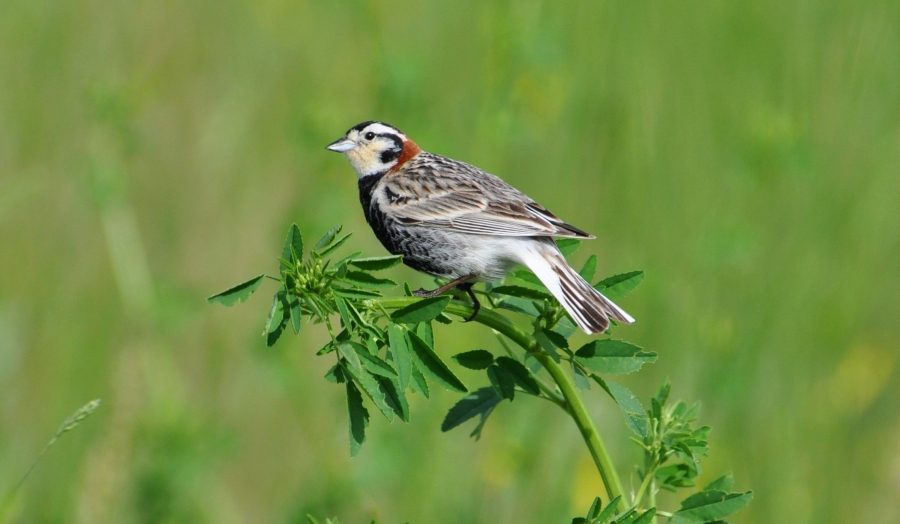
Chestnut-collared Longspur. This was the friendliest longspur I met all year, on the entrance road to Medicine Lake National Wildlife Refuge, MT. Yet another prairie bird with an awesome song and tear-jerking flight display.


Black Tern. Des Lacs National Wildlife Refuge, ND, is awash in Franklin's Gulls, Black Terns and other shorebirds in the late summer. The terns act more like swallows than seabirds there, and are easy to get good photos of.


Before last year, I have never been someplace where Vesper Sparrows plague the landscape. Now that I lived in North Dakota, that has changed. Redmond Lakes, ND.