Showing posts with label Red-footed Booby. Show all posts

Sunday, October 13, 2019

Still S.E.V.E.N./Breaking Rad(ius)


How long has it been since the last post? I'm really dropping the ball over here. Well, I've been doing a lot of crud, and quite a bit of stuff too, so it's not like I've had ample opportunities to fire up the blogerator...but still. Even though it has not been sheer, bottomless laziness that is to blame, I have let you down all the same.

I have failed you.

But I am here now. BB&B languishes no longer. Withering away into oblivion is not fait accompli...at least, not yet. Before BB&B fades away, I must pass on all that I know. A thousand blog posts will live in you. Someday, this will be your fight.

And what a fight it will be. The truth about birders must be told, even after I am gone. Although our rate of posting has dwindled, BB&B is constantly taking the temperature of the birding community, and our recent findings are disconcerting at best. Birders are still as nonsensical, annoying, petty, anal and pedantic as ever...perhaps now more than ever. They still fail to apply basic concepts of science to their bizarre, baseless theories while claiming to embrace science. They are still obsessed with making everything into a hybrids. They still spew vicious, evil lies like "there is no such thing as a bad day of birding".

Unbelievable.

Someday, dear reader, you will construct your own lightsaber and your skills will be complete. Indeed, you will be powerful. But that day has not come yet...I am still here, and my journey is not yet over. I am still here, still the Global Birder Ranking System's #7 U.S. birder, still a birding master, still capturing the birding Zeitgeist like no blog ever has.

Still rock my khakis with a cuff and a crease.

Chances are most of you readers are too old or too young to know what that means, but for the rest of you, enjoy that easter egg. Now that we have reestablished my blog wizardry, I feel comfortable admitting to you a deeply shameful fact...September was an utter failure in terms of seeing rare birds. I didn't really chase very much (going to take this opportunity to pat myself on the back here), and while that may be admirable, I also didn't find jack shit locally. I can't remember the last time I went through September without seeing a single vague runt somewhere in the bay area...how embarrassing!

Apparently, I no longer see vagrants. I no longer see uncommon birds. What has happened to me? Can I just go #FULLGERI and retire so I can go bird all the time? If only there were a way...

No, this is not where I direct you to my gofundme page so you can pay for my birding trips. You're welcome.

No matter. The rarities will return, though they may or not be within my 5MR. It hasn't been too difficult to stay in the friendly confines of the 5MR for most of the year though. I've gotten a lot of new radius birds, seen some rarities, and found a couple really good ones of my own. However, that strategy has been backfiring a bit lately, and I think one of the best ways to maintain a good relationship with your radius is to know when to break free of your radial shackles!

So with that in mind, here is some non-radial stuff from earlier this year.


Countless birders went to see this Eastern Bell's Vireo when it set up a territory for a couple of weeks in late spring. Not only was this my first Bell's Vireo of any subspecies in Santa Clara County, this was my first Eastern seen in the state. Easterns are exceptionally rare in California and practically unheard of in spring...it's worth wondering if this split will be revisited again. I've only seen one or two of these before, so this relatively cooperative vague runt gets FIVE STARS. Photographed at Don Edwards National Wildlife Refuge, Santa Clara County.


A day later, I hiked out on a trail I had previously not heard of for another county bird, an Indigo Bunting. While it wasn't very cooperative, I did appreciate that it dispensed with the suspense and appeared almost immediately upon my arrival. Photographed on the Stanford Dish Trail, Santa Clara County.


Dark-eyed Juncos isn't the slightest bit rare, but I appreciate friendly ones like this. This was photograped at New Brighton State Beach in Santa Cruz County, where I also got my lifer great white sharks! Standing on a fairly crowded beach while a bunch of (mostly small) sharks swim offshore is quite the spectacle, very Jawsish in a low intensity kind of way. Best moment: despite everyone on the beach knowing there were sharks visible just offshore, a dude on a stand up paddleboard tried to be all nonchalant and paddle around anyway, but had to frantically turn around and paddle to shore when a shark came up next to him. Golden!


The easiest, most reliable Red-footed Booby in the Lower 48 has made its home roost at the end of the Seacliff Pier in Capitola for spans of 2018 and 2019. It's still there, being awesome. Of all the booby species, this one has been the hardest to chase in California until very recently, as they had a penchant of dying immediately after being found. This one is holding it down though.


Here it is back in 2018. Back then, it looked a bit more blonde-headed and pink-billed.


I live near sea otters. They are very east to see down at Moss Landing (where this one was) and in the Monterey area. This proximity has enriched my life. Everyone would be a lot happier if they had access to sea otters. Alas, most of the world is a sea otter desert.

And so the world burns.


Unlike otters, summertime Long-tailed Ducks are not at all expected, as they are a good find even during winter. These two decided to pass their time going through gnarly molts in Moss Landing. 


After driving by it countless times without stopping, I finally checked out Moss Landing Wildlife Area. I'm glad I did, because there was a Snowy Plover nest hatching right next to the trail! Crazy timing. Look at that little chickie! It's still wet and has eggshell in its down. I spent less than 30 seconds next to the nest and then booked it out of there to make sure it was minimally disturbed...after all, I am not a photographer. Hey-oh!


Microfishing is all the rage now but Great Egrets have been doing it since there have been Great Egrets. Photographed at Shoreline Lake, Santa Clara County.


Can you imagine connecting with this microtrophy with hook and line? Oh, the stories you could tell. 


Shoreline Lake is also a popular fishing spot for Forster's Terns and a great place to see them up close, since they are very acclimated to fishing next to the well-trafficked footpath. I love me some acclimation. Too bad the Black Skimmers that nest there now aren't so prone to cruising by the shore.


It's not like I'm a photographer or anything, but one of my favorite things to shoot is terns in flight. Shooting many flying birds (swifts, hummingbirds, most passerines, almost anything on pelagic trips) often ends in nothing but crushed hopes, massive disappointments and some mediocre keepers, but terns have such nice lines, some tolerance for people and aren't obnoxiously small. Also, anything that feeds by plunge diving gets extra points from me.


Willets are underappreciated. Nice to see this confiding friend just returned from its breeding grounds...where their obnoxiousness is what is unappreciated. Being near a Willet nest is not a pleasant sensory experience. Photographed at Shoreline Lake.


Cliff Swallows are still occupying their wonderful ovenish nests in late summer. Photographed at the Palo Alto Baylands, Santa Clara County.


At the Casey Forebay pumphouse, I settled in to sort through the swallows that roost there. I don't get to see/study juvenile swallows as well or as often as I would like, and the flock here provides a good opportunity to see birds up close. Here is a somewhat bedraggled adult Cliff flanked by juveniles.


I was surprised to find this white faced juvenile Cliff Swallow. At first I thought it was an abnormality, but then I noticed several other white-faced juveniles in the flock.


This is a different individual. Bizarre. Well it's most likely not bizarre at all, but I did not expect it. Anyone know what's up with this whiteness? How long it is retained? Do only a minority of birds get this or is this a pretty typical part of their molt?


In the back of my mind, I had an alterior motive for standing there with the swallows. I wanted to find a Bank Swallow. They are a rarity in Santa Clara and I had never seen one here. You can imagine my surprise when one casually swooped in and landed on the railing 15 feet from me, allowing me to crush it through the chain link fence.


Uh....what? Finding rare birds usually does not work like that. Finding a rarity...a county bird...is always ace, but finding one in July is the icing on the cake. Having the bird come to you within scope and tripod hurling distance is the crushed up painkillers sprinkled on the icing on the cake. This business with betraying one's radius is not so bad after all, eh? Although they nest at a couple places on the coast, I don't often get to see Bank Swallows and this was my one and only of the year.


While the Bank Swallow was confiding, it did not stick around for long so I was left with the other swallow species. It was cool to have all the other brown swallows represent in the swallow roost, which made for a great comparison with the Bank and with one another. Here is a juvenile Tree Swallow.


And here it is bellowing.


Here is a juvenile Violet-green Swallow, showing just a tad bit of white above and behind the eye.


And last but for once not least, here is a juvenile Northern Rough-winged Swallow. Yes, typically this swallow is one of the absolute drabbest North American birds, but they are pretty cool looking as juveniles! So many rich colors...relatively speaking! A veritable rainbow of browns. I'm probably about done taking swallow pictures for the year, so I hope you enjoyed the brownbow!

Monday, November 19, 2018

November is Red-footed Booby Month


California is a blessed state to live in if you have an appreciation for our friendliest of friends, the Sulidae...in fact, all six species that have been observed in the ABA Area have been seen in California just this year, culminating with five booby species on a single pelagic trip. But up until 2018, things were very different. For years, the grail booby (bail grooby, if you will) in the back of everyone's mind here in California was the Red-footed. They were less than annual in the state...sometimes years would go by without any being found. Many of California's records came in 1987 alone, and after that year almost all records were restricted to San Diego, Orange and Los Angeles counties. They often featured starving/sick/otherwise dying birds (often found to have ingested fish hooks) that likely rode into harbors on ships and eventually expired or were taken into rehab. Ship-assisted dying birds, what fun rarities to go chase.

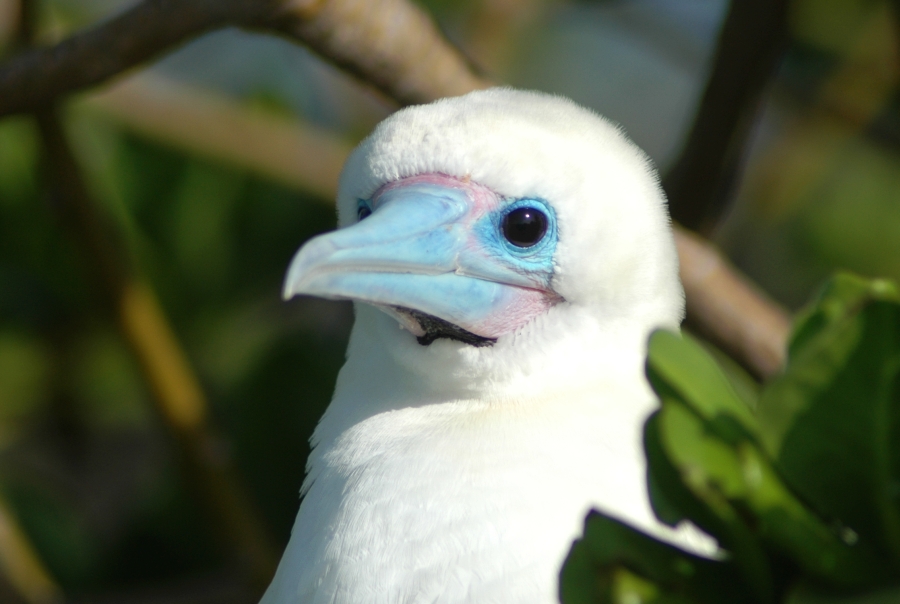
So while much of SoCal had to be content with trying to go see birds about to die, those of us further north had to be content with ABSOLUTELY NOTHING. Red-footed Boobies simply would just not show up since that great year when most of us had far better things to be doing. Personally, I was busy being 5 years old and living in Massachusetts. So while seeing a Red-footed Booby in California was something in the realm of dreams for me for many years, I could be content with having spent a lot of time with them on Midway Atoll, where the above photo was taken. At Midway, you just walk up to them and try not to get your face melted off. For those of you who have not had the pleasure, walking through a nesting colony of Red-footed Boobies is not only as cool as you think it is, it is way better.

All droughts come to an end though, and in 2017 the Northern California Red-footed Booby Drought was over! The drought-buster was an immature roosting on a breakwater in Pillar Point Harbor in San Mateo County. This regional MEGUH was the state bird I had been waiting for, so in mid-November I lurked over to the coast.


Having been up close to them previously on many occasions, I was content to watch the bird from the pier with the other schmucks instead of renting a kayak and paddling right up to it...had to settle with digiscoping for photos. I was thrilled just to see the thing though, no crushes necessary...it was the first I'd seen since Midway (2009) and it might be the first and last I would see in the state. Even in this horrendous picture you can see the long, thin bill (which was clearly pinkish IRL) with dark tip and very pale head and breast.


While there was no doubt of the bird's identity whatsoever, I was still hoping to see the underwings. Immature Brown and Red-footed Boobies are fairly similar, or at least can be when not seen well, and completely dark wing linings are a great field mark for Red-footed. The bird abided several times, showing me what I wanted to see...aside from the distance involved, a very nice walkup Vague Runt. It definitely was not the most enjoyable RFBO viewing experience I've had though, as the many other birders who were showing up were remarkably clueless and kept getting in the way of vehicles and fishermen working on the docks to the point where I was getting embarrassed to be standing with them. It was all so...typical. Anyhow, the bird stayed for weeks so was obviously able to feed itself, and hopefully left for points south on its own accord. Thanks Josiah and Ryan for the great bird.

A year later, much had changed. 2018 turned out to be THE YEAR for boobies in California. While Brown Booby and Northern Gannet numbers were average (hundreds and exactly one, respectively) and Blue-footed Boobies were slightly above average, the numbers of Nazca, Masked and Red-footed were off the charts. Nazca suddenly turned into an expected species on SoCal pelagic trips. Masked Boobies were reported from 7+ counties and Red-footed Booby from 9+...including from deep inside San Francisco Bay...just unbelievable. It's probably not a good thing they all came up here (presumably food was harder to find further south), but they sure spiced up the birding.

I did my part and found a wayward booby (which was submitted to the Bird Police as a Masked, though admittedly it may not be accepted as such), but did not get in on the Red-footed action, despite them being seen up north on multiple occasions. November had come, and I thought the booby window may have closed...but I was wrong. Thankfully a birder-camp host found one roosting at the state park she was staying at in Aptos, Santa Cruz County, just off a pier.


This was even closer to home than the previous year's booby...why not make a November trip to the coast to look for Red-footed Booby an annual event? So there I was, a year later, looking at another Red-footed Booby in Northern California. What are the odds? Strange things happen, so maybe Red-footed Boobies in California in November is not such a strange thing after all. There were already November records, but the late fall pattern of occurrence has only become bolder in the last couple of years.


Viewing conditions for this booby were much better than at Pillar Point Harbor. I woke up at a stupid early hour in the morning (not my toddler's fault, my brain's fault) so got there with plenty of time to watch it, for an extended period of time, do pretty much nothing...a behavior I have great respect for. Oh, and for you One Bird Theory fanatics, no, this is not the same bird as last year, yes, it is probably the same bird seen on two Shearwater Journeys trip earlier this fall, and I think it is unlikely it is the same bird that was seen from Pt. Pinos in late August. There was also the Moss Landing bird that was so close to death it fell off the mast of a boat and had to go to rehab (maybe it died?), and the carcass found at Moss Landing even before that...it probably isn't those. Oh, and it's not the bird on Southeast Farallon Island either.

Damn, that's a lot of Red-footed Booby sightings in a small area. That would be a lot for even San Diego, but this is no typical year.


Mmmm...dark underwings. Blonde head. Pink bill. Reddish feet! Put those field marks together and you get Great Success. Seeing the booby here was also fulfilling a prophecy to myself...I had camped up the beach earlier in the summer and was struck by how good this half-sunken ship next to the pier would be for a roosting booby...and it is!

The Year of The Booby is about to draw to a close, but there is still a month left to go. Anything can happen! More Nazcas please.

Monday, February 12, 2018

The Best Birding


Prairie birds have left a lasting, indelible mark on my soul. It didn't make the list today, but I highly recommend birding the prairies and wetlands of eastern Montana and western North Dakota during the warm months. This friendly Chestnut-collared Longspur was at Medicine Lake National Wildlife Refuge, Montana.

Great birding. Don't you love it? Is that question even necessary? I would argue that with all the different ways birders get their kicks now, it is. Now I'm not talking about watching a Black-backed Oriole of dubious origins at a Pennsylvania bird feeder, or driving 7 hours to chase a Northern Parula because it is in a county you have not seen one in before, or the time you had to elbow your way through a crowd of crazed photographers to see your first Snowy Owl...I'm talking about actual great birding. Birding that sticks with you for a lifetime, and the birding that will surface in your mind while you lie on your deathbed, if only for an instant. While some perpetually chase the rarity dragon (or the bizarre County Bird Dragon) without reprieve, others have seen the light and set aside time and resources in search of great birding. Truly great birding often means travel to faraway places and getting drenched in bucketloads of lifers, but not always! Just because familiarity breeds contempt doesn't mean some of the most monumental birding you've ever experienced could not have happened in your own state, or (if you are really lucky) your own county.

Every now and then I get asked about the best places I've birded, and that question is blog fodder without doubt. I've finally given it enough consideration, and so this post is birthed into the Birdosphere. Below, in no particular order, are the places where I've had the best birding experiences. I won't claim they are actually the best places in the world to bird or anything, but these are the places where I've had my greatest successes. It's a bit heavy on California (what do you expect?) and a bit light on Ecuador (never been there), but I had a lot of fun putting this list together. Lots of memories of good times, some bad, but without exception, fantastic birding.

El Cielo Biosphere Preserve (and environs), Mexico - Just like Justyn ("JUH-STEEN") did before me, I had my first taste of tropical birding at El Cielo Biosphere Preserve and surrounding areas in the state of Tamaulipas. The quality of the birding there was unlike anything I'd ever encountered north of the border...Singing Quail, Blue-crowned (now Blue-capped) Motmots, Blue Mockingbirds, Crimson-collared and Hooded Grosbeaks, tanagers galore, Crescent-chested and Fan-tailed Warblers, rampaging mixed flocks the size of Rhode Island, etc. Oh yeah, and this is all less than a day's drive from Texas! That's right, you can wake up in the United States, drive for a while, and be looking at Bat Falcons and Squirrel Cuckoos before the sun begins to set...for you birders wholly focused on the ABA Area, the birds of the Lower Rio Grande Valley are just the tip of the avian iceburg, if you know what I'm saying. Anyways, at some point while we were there I think my face completely melted off my head and dripped into the leaf litter; fragments were carried off into the underbrush by enterprising Spot-breasted Wrens and Gray-breasted Wood-Wrens. Birding there really messed with my priorities in life, and things have never been the same.

The ongoing war with the cartels in Tamaulipas is a huge bummer on many levels...birders essentially no longer having access to the entire state (for safety reasons) is a minor one compared to people dying and families being torn apart, but since we are birders it still sucks. I believe there are currently three cartels in the state currently warring with one another, not to mention warring with the Mexican government. I have no photos from here because one of the cartels relieved me of my camera later in the trip (not near the preserve). I'd absolutely love to come back to this place someday though, if and when things ever settle down.


Red-footed Boobies cuddle at their nest in a Naupaka bush on Eastern Island at Midway Atoll. How can you describe such faces? I suggest that they are "dreamy".

Midway Atoll -  I've blogged extensively about Midway here, so I'll keep this short and sweet. Being among the seabirds at Midway is amazing, and that is not hyperbole. The other birds there ain't bad either (i.e. Laysan Ducks, piles of Pacific Golden-Plovers, Bristle-thighed Curlews). The birding here is quality over quantity for sure - you will never rack up a huge species list, but your experiences with the birds that are here will stay with you forever. Nothing I can say really does it justice. I do hope I can go back someday, but in case I don't at least I won't miss the horrible centipedes. I hate them.

Braulio Carillo National Park (Quebrada Gonzales), Costa Rica - On my lone trip to Costa Rica (seems like it's time for another) I was able to cover a large part of the country, lifering constantly and finding great birding more days than not. With that said, the birding at this particular site really stands out in my mind still. Some of the best mixed flocks I've seen in my life have been here - they were nothing short of spectacular. I'm not even going to tell you what we saw, it won't come close to capturing the size and diversity of the flocks here. I didn't even bother trying to take photos of birds here - that's right, the birding was too good to even bother with photography. If you are going to find yourself birding the Sarapiqui region at any point, DO NOT miss this site.

Also, we totally dipped on Snowcap and Black-crested Coquette at a reliable site just down the road from there, and I'm still pretty torn up about it. Redemption and vindication on this front are much desired.


Almost everyone who has seen Buller's Shearwater well has become enamored with them, and I am no different. Can't wait to see more of these squid-fiends this year. Photographed somewhere west of Half Moon Bay.

Pelagic Trips out of Half Moon Bay, California - I've done more of these than I can remember, and some of them were pretty poor, but there have been so many good ones! We have had some truly great days out there. The seabird diversity can be fantastic, and it is one of the best places in the country to see large numbers of storm-petrels, which includes four regularly-occurring species. I've seen five murrelet species on those trips, and had the honor to be out on the water the day of the Salvin's Albatross. Looking forward to getting back out there.


Blackburnian Warbler is a big deal to a lot of people. This is totally justified. Photographed at the community center on South Padre Island.

South Padre Island, Texas - I've harped on this a lot over the years, but I cannot emphasize enough how different migration is in the western U.S. than it is in the east. There is a reason that California birders are like "oh spring will be here soon, I guess that's cool, some year birds are coming, Lazuli Buntings are pretty" and eastern birders are like "FUCK YES SPRING YES YES YES YES PLUNGE THE WARBLER SYRINGE INTO MY CHEST". Hell, the last BB&B post (RETURN OF THE GERI) was all about birding the Texas coast. Anyways, this is a great migrant trap and I got really addicted to birding there during spring migration, but it's all done in a pretty strange setting.


Yellow-throated Warbler was one of many migrants that had a layover at Garden Key in Dry Tortugas National Park. I can see why everyone goes in spring, but I was pleasantly surprised at the diversity of species recorded on a multi-day October trip.

Dry Tortugas National Park, Florida - I was there in October for several days (we camped)...a great time was had by all, and though some days were better than others, the birding was generally very satisfying. No one really birds it in fall, so I didn't know what to expect, but I left with a full heart and a sizable island list. Talk about a scenic migrant trap, goddamn! What a fun place to bird. Some of the newly arrived migrants were really tame, such as the Black-throated Blue Warbler that landed on our picnic table and the Ovenbird that foraged beneath it. There weren't even any Sooty Terns or noddies around (we were too late in the season) and the drip wasn't even running (I overheard some poorly uninformed woman who worked there claim it would prevent birds from migrating south for the winter...astounding), and it was still pretty sick. Need to go back in spring.


A Black Skimmer pulls up after slicing through the waters of Sonny Bono National Wildlife Refuge (Wister Unit) at the Salton Sea.

The Salton Sea, California - The Salton Sea has a special place in the hearts of many. There is nowhere else like it, especially when you consider the human aspects, landscape, habitats, smells and birds as a whole. Birding the sea used to be, well, phenomenal. The sheer numbers of birds was staggering. It's still pretty good, but water levels have declined greatly over the last 20 years and a lot of formerly great spots are high and dry, and the salt and the pollution in what's left is even more concentrated; it's been some years since I birded it but those seemingly unending flocks of birds that used to be such a constant are getting harder and harder to come by. Sadly, Fulvous Whistling-Ducks have disappeared entirely and no Wood Storks have been seen since 2015. Yellow-footed Gulls continue to be dependable at least. The future of the sea is completely uncertain at this point, and it's anyone's guess what the birding will be like in a few decades...but it was glorious.


I try to reacquaint myself with Flame-colored Tanagers every couple of years; the mountains of Nayarit and Jalisco are a great place to do this. This one was parked above an army ant swarm at Sierra de San Juan in Nayarit.

Nayarit and Jalisco, Mexico - This one is really cheating. I can't just throw in two entire states can I? But I did. There are birding sites galore. There is a vast menu of mouth-watering species possible, including regional endemics. There is a lot of variety in elevation, and thus a lot of different habitats. The river trip with Chencho up Rio Lo Tovara is not to be missed! And unlike other parts of the country, there is a lot of high-quality, accessible habitat in these states, and you aren't forced in to birding from the side of a highway very much. I think these states often get overlooked by gringo birders in favor of Oaxaca, Chiapas or the Yucatan Peninsula, but they require your attention, I assure you.


I have no memory of taking this photo, but stoked I unearthed it...an Olive-sided Flycatcher with a tarantula hawk! If this was a female (who possess the famously potent stinger), this is a seriously badass prey item. Photographed at Galileo Hill.

Kern County California oases - Some of the rarities southern California gets really grip me off (Olive-backed Pipit quickly comes to mind), but I really miss birding the desert in late spring and fall, especially the Kern County sites. Galileo Hill might as well have been built by birders for the sole reason to make a giant migrant trap in the middle of the desert - that's not what it is meant for, but that is what it is. In the last few years, state megas like Buff-breasted Flycatcher (the state's first), Gray-cheeked Thrush and Red-faced Warbler have turned up here. California City is not really what it used to be, but Butterbredt Springs is still legendary. Lots of birds, lots of variety, lots of rarities and some distinct weirdness at these sites, and I wish they weren't so far away.


Did you know that Crested and Least Auklets form giant murmurations that rival any flock of sandpipers, blackbirds or starlings? I didn't either, until I got to the Aleutians. It's really something to behold...a magical experience even, particularly when you have the privilege of having these flocks zooming by a few feet overhead. This is an uncropped, unshrunken photo by the way, feel free to double click for a better look at the birds.

Buldir Island, Alaska. Working and living on Buldir was more like being a part of a wildlife spectacle than birding, though we certainly put in our time searching for Sibes and found a modest number of them. By Buldir standards, I was there on a relatively poor year for vague runts (in the next couple of years after I was there, Eurasian Bittern and Eurasian Oystercatcher were recorded!), but I can't complain very much. The seabirds though....wow. Both the numbers and diversity that nest there are on a whole other level, the likes of which I may not see again. You end up getting attached to birds like Whiskered Auklets and Red-legged Kittwakes, especially if you have to handle them, which is a trip in and of itself.

Honorable mentions of areas that didn't quite make this post go to southeast Arizona, large chunks of Costa Rica, the prairies of Montana and North Dakota, Point Reyes (CA), and the good old Oxnard Plain (CA), which is what I was reared on. And yes yes yes I know how great [insert country here] can be, but chances are I haven't been there yet, no need to convince me. Obviously, a great deal of birding needs to be done in places I've never been before, and just exploring the lands (and seas!) of this continent will take many more years to come.

But I have to ask...what would you put on your list? Anywhere that people wouldn't immediately think of? Light up those comments nerds.

Thursday, October 20, 2011

We Haven't Done Enough Of This Simple Kind Of Stuff


White Terns are one of Midway's flagship species. Living without White Terns is a plodding and tiresome existence.

On a non-birder-gossip note, congrats to my colleague "Handsome Dan" on getting the green light to go out to Midway Atoll for the winter...may he get covered in much albatross vomit, otherwise known as the Worst Smell In The World. He will see many weird birds and probably drink too much. Dan is currently languishing on the Farallon Islands, off San Francisco. You can find his blog here.

Midway was, without a doubt, my favorite field job that I've ever had. If you dig through BB&B's archives, you can find a lot of Midway posts and pictures from February to June, 2009. Hopefully I'll get back some day!


Electric-faced Red-footed Booby. Dan will soon be seeing many.


Thursday, May 5, 2011

In Desolation


A Brown Booby does its best dinosaur impression.

Ah, Midway Atoll. Out of the many, many places I've been on birding trips and field jobs, this is one of the best. Between the birds, the scenery, the isolation, the history and last but not least, the people there, it is hard to beat. Of course, the soft serve machine is sweet too...anyways, two years after my visit now I still have tons of (hella) photos that I like that I haven't been able to throw up on BB&B...so in the spirit of sharing, here you go!


Grey-backed Terns don't get much attention compared to Midways other seabirds, but they're one of my favorites. Classiest birds of the central Pacific!


This Laysan Albatross loved the rain. It looks like it's about to burst into tears...ALBATEARS.


White Terns ponder Liz, and vice versa.


Red-footed Booby. Look at it. LOOK AT IT. 


Rusty Bucket. One of the most scenic places to get Tetanus that I can think of...

Going to Midway is a fantastic, unique experience, particularly if you've never been to any of the Northwestern Hawaiian Islands before (which is almost all of you). My first few hours there I can remember vividly as one of the most surreal times of my life (WHAT A NERD). The sheer numbers and cacophony of the Laysan Albatross and Bulwer's Petrels at night is unlike anything I've experienced before or since...just thinking about it brings Albatears of joy to my eyes. ALBATEARS OF JOY. On top of that, I went to a bar in the middle of all this, which is simply ridiculous. Anyways...if you ever have the opportunity to get out there as a volunteer, with a tour, for work or some other capacity, you owe it to yourself to do so. 

Pete Leary, Midway's current biologist with the infamous dry sense of humor, has a great blog that you can see here. Check in to see how things are going with the Short-tailed Albatross chick and other seabirds that survived the tsunami from earlier this winter.


Despite their ruthless reputations, frigatebirds are doting and diligent when it comes to the domestic life. Males spend a lot of time on the nest and can often be seen fussing with various twigs...one has to look good for the neighbors, I guess.

Thursday, November 4, 2010

Allelujah!!!


Red-footed Boobies looking good for each other. The male is in back; he has more of a sea-foam green tone on his face than the female, and thats his display posture.

Yesterday I officially applied to go back to Midway Atoll for the spring.  I'm not going to lie, its a pretty exciting prospect.  I loved Midway (yes, more than Buldir) and all its wildlife....and people, of course.  It's like a frakkin' Garden Of Eden out there,  sans all the marine debris problems and the horrific sex ratio.  So we'll see how that all pans out.


A flock of uberendangered Laysan Ducks mingle in a wetland.

For the time being, I really don't have much to do except hang out with friends, see some rad bands...oh and take a short trip to Vegas next week.  That said, I am officially going to make November The Month Of The Blog here at BB&B, and attempt more blog entries than I've ever done before in any given month. That means at least 18 blog entries this month people, so check back on the regular.  It's about to get really, really nerdy in here. Oh yeah, all these shots are from Eastern Island at Midway Atoll.


People seem to think that most animals are completely driven by instinct and lack any capacity for fun. Most people have not seen a frigatebird with a stick.  They go batshit crazy for sticks, let me tell ya. Not impressed? Take your kid's toys away and see what they end up picking up.  The adult male Great Frigatebird (top bird) seemed pretty stoked on the big leafy "bough" that the smug-looking immature was proudly soaring around with.