Showing posts with label Western Sandpiper. Show all posts

Monday, February 3, 2020

South Bay Winter Slumber


While Santa Clara is not known as one of the premiere gulling counties in the state, that is not because there are a lack of gulls. There are many thousands of Herring Gulls (like the one above) in the county right now, and where there are Herring Gulls there are rare gulls...sometimes anyway. I have at least managed a Santa Clara Glaucous Gull already this year and a 5MR Western Gull, which I didn't see in the radius until November last year. Photographed at Don Edwards NWR.

Uhhhhhhhhhhhhhhhhhhh it's February. I don't know how I feel about that. It sure got here quickly, and as I say in BB&B pretty much every year I'm leery of March birding around these parts. Things have been pretty slow this winter here in Santa Clara, especially if you opt to not attempt feverish county year birding and rechase all the rarities you already chased a month or two ago, or the previous winter. But! But. BUT...the middle of winter is generally a great time to be birding around these parts. If you really need to see a rarity or a year bird or whatever every time you go birding, then just give up birding and be honest with yourself and everyone else...you are not a birder. You are a chaser. You don't enjoy the activity of birdwatching, you like birdchasing.

I think the quasi-elitist and increasingly obsolete notion that listing is something to scoff at now borders on being something to scoff at itself. Let's face it, most of us have bird lists that we care about. Listing is not the problem here, heck chasing isn't even the problem. I happily chase stuff on the reg and recommend it highly. The problem is when you get so locked into certain lists that they dictate that you run after other people's birds every time you go out. Going out with the hopes of finding something interesting yourself, once standard practice when one went out birding, is becoming increasingly uncommon and comparatively bold.

Is it time for a great schism in birding? Is it time for the strict chasers to separate themselves from the rest of us? There is already a large and still growing subset of photogs who seem to chase every rarity but never find anything rare themselves. Something to ponder on a cool February day.

But now that I've begun to peel back the lid on that can of worms, I'm going to put it back on the proverbial shelf for another post. That was not a road I intended to go down! Shifting gears (but probably still instilling some butthurt anyway), I've really been enjoying my new CANON gear after kicking Nikon to the curb. With the assistance of CANON, here is a sampling of our winter birds from along the edge of the South Bay.


Iceland Gulls can be be quite common at certain sites right now. Here is a particularly eye-catching bird with a big dark hood. Photographed at Don Edwards NWR.


Here is a more typical looking Iceland (darker eye, whiter face) photographed from the same spot. Photographed at Don Edwards NWR.


While Herring x Glaucous-winged are often the most common hybrid in Santa Clara gull flocks, along the bay Western x Glaucous-winged like this one can be more abundant. The Olympic Gull is a particularly unpleasant creature and I have nothing more to say about them. Photographed at Don Edwards NWR.


Mew Gulls, with their small size and delicate build, are absolutely delightful in comparison. They should have named Daymaker Gulls. Photographed at Don Edwards NWR.


I thought this COMBO was worthy of posting, a ring-billed Mew Gull and a ring-billed Ring-billed Gull. Photographed at Don Edwards NWR.


The occasional close pass by a Northern Harrier is always appreciated. Photographed at Don Edwards NWR.


Familiarity breeds contempt, but as common as they are Turkey Vultures are still cool to see close up. Photographed at Don Edwards NWR.


Santa Clara is not a very goosey county, but we get a light smattering of non-Canadas every fall and winter. Here is part of a family group of Snow Geese that have been wintering next to Shoreline Lake near Mountain View. Photographed at the Shoreline Park kite flying area.


A group of Greater White-fronted Geese is also wintering in the same area and are similarly acclimated to people, no doubt due in large part to the large flocks of JUDAS GEESE (nonnative/tame Canada Geese) here. I like the lawn-mowing lineup.


Sometimes, I think about grebes. Luminous beings are grebes. I am a fan of Horned Grebes, but it is one of those species that makes me wonder why, know what I mean? Like if someone could do a brain scan while I looked at a Horned Grebe vs a Western, there would probably be more HOGR-related brain activity even though WEGRs sound way cooler and have a legendary courtship display. Maybe it all goes back to when I first started birding, where HOGRs are harder to come by. I'm sure a great many of my feelings and opinions about certain birds, and birding in general, are heavily colored by those early years more than I realize. Photographed at Shoreline Lake.


EARED GREBE/HORNED GREBE COMBO!!!!!!! The HOGR is showing off its flatter crown, thicker bill, and more contrasting face/neck/flank pattern.


While I think of it, I wanted to mention another aspect of my new Canon gear that I forgot to bring up in my previous post about it. For all previous combos and iterations of Nikon bodies and lenses I've used (which are numerous), one flaw that all of them had was that when the subject was on a flat surface (i.e. sitting on or flying low over water, on mudflats, in short grass) and not close up, the camera invariably have a very difficult time focusing on the intended subject. I could shoot 50 similar frames and sometimes less than 10 would have the subject acceptably sharp with good light and good settings and a near-stationary bird, which is a really shitty ratio. I have no such problem now with the Canon 90D/100-400mm II and couldn't be happier. Photographed at Shoreline Lake.


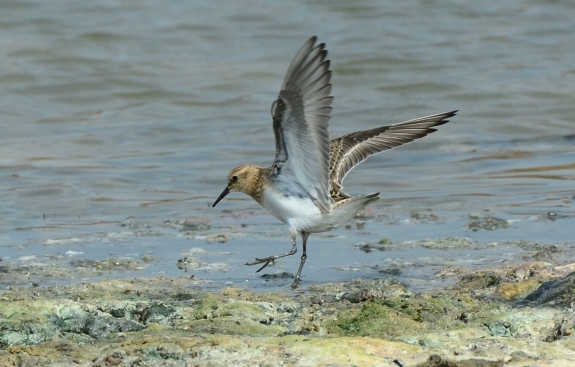
These Western Sandpipers just had to probe the same exact spot. Must be awkward to bump bills under the mud. Photographed at Charleston Slough.


Let's wrap things up with some avocets, photographed at Charleston Slough. Avocets simultaneously look gangly and awkward in flight, but somehow also striking and graceful. There are a shitload of avocets in the South Bay and I'm pretty happy about it. 

Sunday, January 5, 2020

Radius Roundup: Lessons and Results From a 5MR "Big Year", and The Shortest Big Day


A Ruby-crowned Kinglet unleashes a terrifying bellow into the chilly radius air. Photographed on the Guadalupe River Trail.

There has been an awakening.

Have you felt it?

eBird Top 100 listing rises, and Radius birding to meet it.

If you've checked in on BB&B a few times this year, you already know that I've put my full weight as one of birding's marquee influencers into propping up the FIVE MILE RADIUS. 5MR is now flourishing throughout the land, particularly in my state of California. But this year has been so much more than simply harvesting Flycatcher Jen's vision and going Johnny Appleseed with it all over the nerdscape...I've not only been talking the radial talk, I have spent this entire year walking the radial walk. Like several of you, I've taken part in Jen's 5MR Challenge, doing my own big year of sorts in my 5MR. More and more I find "big year" to be a cringeworthy phrase, but I guess it is what it is. I admittedly didn't go all out and missed my share of birds (more on that below), but I spent a shocking amount of time within five miles of my home this year while actually doing quite a bit of birding. To say it was nice would be a gross understatement...it was time well spent birding instead of sitting in the car, driving somewhere, burning gas, chasing things that some list may have "needed" but I did not actually need to see. Rather than feeling tied down by my radius, shifting my focus to what was really local felt almost luxurious at times.

How did I do? I finished 2019 with 187 species in eBird, with the only species not sanctioned by the Bird Police being European Goldfinch, which have been present in very low numbers in a part of my radius for a number of years but rightly are not considered established in the state by the CBRC. The goal I set for myself earlier in the year was 185 species, so I was surprisingly on point there. Many U.S. birders exceeded that total in their respective radii this year but I am still really happy with how I did. Lifetime (aka from spring of 2017 until present) my 5MR now stands at 196 species. I started the year with 169 species, and eagerly look forward to the 200 species milestone, which should be possible with spring migration coming this way sooner than I will be ready for.


While some spots I've recently started birding did not yield anything unexpected, I think it is only a matter of time before some of them bear radial fruit. Martial Cottle Park is one such place, and until that time its Poop Fairies Western Bluebirds will continue to remind dog walkers to pick up their shit.

Long story short, after a lot of work, strategy, staring at Google Earth and exploring, The Year of The 5MR has been Great Success. I'm very happy with how it went, and thought I'd share some final thoughts before easing off the radius gas pedal for a bit.

My radius is probably best described as moderately birded by other people. There is a small but dedicated and active group of birders who already do much of their birding within the confines of my radius, and there are a number of places that are productive enough to draw in birders from further afield. In terms of radius rarities I managed to see this year, I certainly benefited from the efforts of others (i.e. Horned Grebe, American Bittern, Swainson's Hawk, Red-naped and Yellow-bellied Sapsuckers, Summer Tanager), but I am very pleased with what I found myself (Long-billed Dowitcher, Glaucous Gull, Pileated Woodpecker, Eastern Kingbird, Red-eyed Vireo, Tennessee Warbler, Clay-colored Sparrows, Red Crossbill). I certainly did chase some birds but am happy to report that this was no run-of-the-mill year listing effort where I spent tons of time chasing species found by others, which was part of the idea baked into this thing in the first place.


While I did very, very little chasing outside my radius this year, I had no problem tracking down radius-rare stuff found by others. This Red-necked Phalarope found at the Los Capitancillos Ponds by Ann Verdi was without a doubt one of the Top 10 birds to be found within my radius this year, and possibly the most unexpected, even though they are fairly common migrants about 15 miles away.

I can't speak for Flycatcher Jen, but I always assumed 5 was chosen for the radius distance because it is a nice, round, modest number. For where I live, I am totally fine with it, 5 miles really does seem perfect. However, for other people I know that it isn't so appealing...obviously, people don't all live with the same diversity of habitats within 5 miles and, equally importantly, have comparable access to potential birding sites as everyone else. There's a lot of private property out there, a lot of public land that doesn't have real access, a lot of vast expanses of homogeneous habitat (i.e. sage, creosote flats, intensive ag, etc). In some places, a larger radius could be more appropriate than 5 miles, or *gasp* the whole radius thing isn't necessary. I would say that places not suited for 5MR are certainly the exception and not the rule though.

I touched on this already, but I found a great many locally uncommon and rare birds myself, including a number of species that are downright rare for the county. This is what I had hoped for but did not dare to actually expect, and is consistent with the experience of a lot of other 5MR birders this year. Rarities are out there waiting to be found, often in places where relatively few birders are searching. Tired of chasing stuff? Want to break from the pack and find your own birds more often? Your radius awaits.


I knew going in to 2019 that my radius is very, very tough for shorebirds, and results bore that out. However, I am now convinced that we actually could get numbers of shorebirds in the rare event that water levels at wetland sites actually become suitable. This flock of Western Sandpipers photographed from my backyard was, as far as I know, the one and only flock of peeps seen by anyone in my 5MR in 2019.

Another of the primary tenets of 5MR birding is to go check out sites you have never been before, places that are underbirded, or not birded at all. I'm happy to say I was able to do all that very frequently...in fact, on my last morning of birding of the year, 2 of the 3 sites I visited were places I'd never been to before 2019. eBird helped with this of course, not to mention just scrolling around satellite imagery in my radius and some local help too. It really is satisfying going to new places nearby and finding some that are worth repeat visits. Last month I walked up the "back side" of Santa Teresa County Park and snagged my first radius Prairie Falcon - I never would have tried this trail if it wasn't for 5MR....and I would not have seen the falcon if I was not doing the monthly challenge, which happened to be a stationary count!

Also, I have said this from the beginning, but 5MR is really perfect for birders with time constraints, such as when you have small children and can't afford to be gone all day without seeming like a Kenny Bostick. I knew radius birding was a match made in heaven with parenthood even before Annie was born, but this year really drove that point home. A number of other parents have echoed the same sentiment.


Birding a lot in my 5MR has really driven home the point that Cooper's Hawks have adapted quite well to suburban life. They are common here year round. Sharp-shinned Hawks, on the other hand, are very uncommon and nowhere reliable. This Cooper's was strutting around my back yard one day last summer.


For those of us who are interested in nonavian life, exploring your 5MR can be very beneficial as well. My non-bird highlight of the year (which was uncomfortably close to being a lowlight) was inadvertently walking up to a hunting mountain lion at Almaden Quicksilver County Park. I am still convinced it was waiting to ambush one of the many radius black-tailed deer in the area and would have ignored me had I not noticed it, but I still feel a bit lucky that I noticed it when I did and not when I was 7 or 8 feet away. Anyways, a sketchy but cool experience, happy to be able to see a lion up close and not have it be in a threatening mood.

What else? I bought less gas than I would have, burned less gas than I would have, potentially saved on some car maintenance, and only rarely found myself birding where more than a couple other birders were present at the same time. These are all very good things. And since I reached the 185 species plateau, I completed the bourbon challenge I issued to myself earlier this year. As a Champion Radius Birder, I bought myself a bottle of Black Skimmer Bourbon and WOW...if you are a whiskey fan do yourself a favor and pick some up if you are ever in a treat yoself mood. The Black Skimmer Rye is also very good, and is a few bucks cheaper.

Were there negatives to doing so much radius birding? Sure, birding in July and August (with one notable exception) was even slower than usual, and I didn't see a ton of Vague Runts this year...in fact, I did not even get a state bird...which stings, honestly. I love getting state birds. I would have chased the Yellow-browed Warbler but luckily a prior engagement prevented me from trying for it when I otherwise would have...which would have resulted in joining in a big fat group dip with 100+ other miserable birders from around the country. The shortage of Vague did make the rareish birds I saw in the radius that much better though. My backyard Eastern Kingbird will forever be one of my favorite self found Vague Runts, and I still reel over discovering a July Red-eyed Vireo, which is a bird I discovered without even driving.

And this should be obvious to everyone, but I would advise that you make sure to still bird out of your radius sometimes! Focusing solely on your 5MR is likely to make you crazy and make birding sound like a lackluster idea, which is really unnecessary. Don't foresake the places that you love! Birding your 5MR does not mean you are breaking some holy vow if you go bird outside of it.


Want to become the master of your domain? 5MR birding will get you extremely attuned to birdlife in your radius...not just status and distribution, but arrival and departure dates and breeding behavior or lack thereof. My radius Pied-billed Grebes had chicks very late this year at multiple locations - this fish exchange between an adult and a chick took place on November 9, which seemed strangely late in the year. Photographed at Los Gatos Creek County Park.


In November I listed my top 10 target birds for the remainder of the year; I managed to see 4 of them. My last new species of 2019 - this Golden-crowned Kinglet - was on the list. This fall/winter has been very good for many irruptive birds like this in the region, though the Varied Thrush invasion I was hoping for did not pan out. Photographed at Greystone Park.

And with that, here is everything that I know of that I missed that was seen in my radius this year. Most of these were just one or two records.

Tundra Swan (also a county bird)
Greater Scaup
Bonaparte's Gull
Solitary Sandpiper
Cassin's Kingbird
Purple Martin
Varied Thrush (damn you Justyn)
Pacific Wren
Hermit Warbler
Nashville Warbler
Blackpoll Warbler
Yellow-breasted Chat (also a county bird)
Swamp Sparrow
Evening Grosbeak

I'm sure there were some other species that could have been found on the fringes or passed through undetected, such as Northern Pygmy-Owl, Northern Saw-whet Owl, Ferruginous Hawk, Greater Roadrunner, Hammond's Flycatcher and Tricolored Blackbird. I'm very surprised that Snow Goose wasn't seen by anybody in the area this year. A Calliope Hummingbird was seen a stone's throw from my radius and was probably actually visible from inside at some point. But missing birds is a fundamental part of any kind of birding experience, no need to do a thorough autopsy on birds not seen.

In other radial news, on December 21 I met the monthly 5MR Challenge issued by her lordship Flycatcher Jen and did a BIG DAY in my radius. What better day to do a big day than the shortest one of the entire year?! It was not a max effort day as I did not go owling and I had done no scouting specifically for this, but I went pretty hard...no lunch break or anything like that. I started off by walking out my back gate and doing some of the ponds behind my house in the predawn light, which quickly netted me 46 species. After that, I was off like a shot.


You can't make out much in this photo but I think a lot of you recognize that silhouette. A Phainopepla has been wintering at Guadalupe Oak Grove Park for many years now and was readily findable on The Shortest Big Day. This is still the only one I've seen in the entire county; I assume the freakish flyover Phainopepla I had at my house once was this very bird.

I decided on 90 species as a goal...seemed reasonable, and was above the 86 species that was my previous day high back in 2017 for the 5MR challenge, which was done in the northwestern corner of Alameda County back when I lived in Albany. I could have gotten more on that fateful day, but I abruptly had to quit in the afternoon to go chase the Ross's Gull...one of the best decisions I've made in my whole life.

Instead of giving an agonizing blow by blow, I'll just skip to the end. Steller's Jay and Eurasian Collared-Doves were the biggest misses, and I easily could have picked up Wild Turkey and Band-tailed Pigeon had I gone up into the hills at all. I also probably could have found a Red-winged Blackbird if I stood in my backyard long enough at sunset. But otherwise I did very well, having less-than-ideal weather at only one spot and having much fortune with waterbirds and upland species in general.


I missed this bittern multiple times at the beginning of the year, but luckily it returned for another winter and I was able to connect with it a couple times late in 2019. One of those times was during my Solstice Big Day, which was heck of lucky considering it often isn't hanging out someplace visible.

I finished the day with a stunning (to me) 101 species! I couldn't be happier with that...considering the short day and lack of preparation, I think it is a sign of fruitful radius. It does make me wonder what time of year I could actually squeeze the biggest day out of my 5MR...is December/January as good as it gets? April? November? Maybe I'll attempt another one in 2020 and find out.

And so it goes. I'm going to give 5MR coverage a well-deserved rest for a while, as I've said my piece and don't plan on getting cray with year listing on any scale in 2020. That said, with the beginning of the new year I hope more birders give perpetual county year listing a break and give the radius a try! 

Monday, December 11, 2017

Rarities Return, Featuring: Parakeet Auklet, Little and Red-necked Stints!


Every now and then a birding community will be struck by a rarity so bizarre and unlikely that we are left running around slamming into walls, foaming at the mouth, bleeding from headwonds, uttering incoherently about needing to be somewhere, at any cost. A Parakeet Auklet in July (July!) in San Francisco did exactly that, smashing the 2017 summer doldrums into oblivion and sending birders scurrying to SF. The story of how this vague runt was found was truly unlikely; a birder found it in the water off Sutro Baths in the summer of 2016, but it was never seen again...a year later, the same birder relocated the bird while kayaking less than a half mile further up the coast. This time, the bird was seen sitting on seastacks and cliffs, which as far as I know is the first time a healthy individual has been seen on solid ground in the state. There is a good chance the bird was doing the same thing the previous year, but no one saw it!

I appreciate a good Parakeet Auklet, and this being a good Parakeet Auklet (and a state bird) I dragged the family up to the city kicking and screaming for a chance at this bird...but despite staking it out for hours, it never showed. It was a tough dip to swallow, and most everyone who actually dips will tell you that all dip is tough to swallow to begin with...I'm talking about chewing tobacco of course, but hey it applies to birds as well.

While doing the drive of shame back to San Jose, I analyzed my chances of getting the bird the next morning if I made another chase attempt and decided against it...which I immediately regretted the next day when the bird was relocated quickly. My heart was filled with hate. By mid afternoon I was twitching uncontrollably from the constant updates of resightings, said "fuck it" and rocketed back north. This time I found the bird in about 30 seconds, circling behind Mile Rock. It eventually landed on a distant rock just a stone's throw from the shoreline, which I pointed out to several birders who were clearly there for the same reason as me.


Incredibly, one of the birders I updated totally ignored what I had just said, and instead told me that he believed the bird was currently sitting on a seastack right below us. Keep in mind I had a spotting scope and he did not, so I must have seemed absolutely incompetent to him. Friends, do I give off an air of complete ineffectiveness? For those of you who haven't met me, next time you encounter a birder in the field that you believe has utterly no idea what they are doing, just go ahead and assume it is Seagull Steve.

I had to look at this man's auklet, of course. It turned out to be not a guillemot, or an oystercatcher, or a black bird of any sort...it was a shadow. A shadow.

I booked it to where the actual bird had been sitting and eventually ended up below it, as it had flwon from its rock and was roosting high up on a cliff. Talk about something I never expected to see outside of Alaska. July in San Francisco? Get out of here. State bird! Though California has accrued quite a few records now, this is a very unreliable bird to see anywhere in the state....as Flycatcher Jen would tell you, good times.


July isn't all state birds and Parakeet Auklets though. Least Sandpiper is much more typical birding fare around these parts, and much more confiding as well. Photographed at Don Edwards NWR.


My god...could it be? SHARP-TAILED GROUSE???

No, it can't be, but this Least Sandpiper is striking a pose remarkably similar to what displaying Sharp-tailed Grouse are known for. This bird was having a territorial dispute with another Least.


Remember the barren dowitcherless times? It sure is nice to have dowitchers again, especially pink and orange ones. I think these are all Long-billed.


On another July day, I was out birding and saw a report of an alternate plumage Little Stint that was within easy driving distance. It wasn't a lifer/state/county bird, but seeing as I had gotten to look at all of one (1) before, I picked up the scope and hustled back to the car. The instincts that made me the Global Birder Ranking System's #7 US birder made me stop and scan a blackbird flock just long enough to find my county Yellow-headed Blackbird on the way back, and I was still able to make it back to the car quickly. Things were going splendidly. Unfortunately, at that point my instincts ceased to serve me well...in my haste to get on the road, I broke off TWO door handles to my car. What the fuck?! Who does that? This wasn't even for a life bird. That's what those two gray things are in my palm, freakin door handles.

And to top it off, later that day I was playing bass and I ripped off the plug to the amp from the power cord. Nerd strength was just pumping through my veins that day.


But hey, I saw the Little Stint! Talk about a completely rubbish photo (digiscoped). The light wasn't great and the bird wasn't very close, but I did get really nice, prolonged views. Lifer plumage! Year bird! It was nice to continue my long running streak of taking terrible stint photos.


A few days later I went back to see if the stint was still around (it was not), but I did find a very interesting peep that had me confused for a bit. Not that you can tell, but the bird's back was very bright and boldly marked, with lots of orange and red tones. With the short, straight, tapered bill, it was an intriguing combination, but at the end of the day it was just a Semipalmated Sandpiper.

Just a Semipalmated Sandpiper? That's a bit of an understatement...despite a great deal of looking at peeps all around the bay for many years now, until this bird I have never been able to find one in any bay area county. Anyone who has birded much around here would find that baffling, and they would be right. This was a hard-won bird, thus you are forced to look at a photo (digiscoped) so awful that it is, in fact, art. It was also the most colorful individual I have ever seen, but again you cannot make that out whatsoever. Because art.


Sorry about the run of appalling photos. Here is an alternate Western Sandpiper pondering life in its reflection. This looks to be a male, judging by the relatively short and straight bill.


This adult has already acquired a lot of basic plumage, but retains some old summer chevrons on the breast. More of a femaley bill on this bird.


Oh why hello RED-NECKED STINT. It sure is nice to see Red-necked and Little Stint in the same week! That's California birding for you. This one was at Elsie Roemer Bird Sanctuary in Alameda. As I mentioned back in 2015, this place had been due for a great bird! As with my other Red-necked Stint experiences in California, nice prolonged looks at a spiffy alternate bird that was either distant or in crap light. Not sure how that keeps happening, but when one is looking at a stint one cannot complain. But now I really, really need to get a good photo of some kind of stint eventually...


Although they don't inspire the panic of a stint, Baird's Sandpiper is a refreshing fall migrant that only has a short window here. They are refreshing birds in and of themselves, but their presence is always a tasty precursor of things to come...if you are looking at a Baird's Sandpiper in California, chances are you are only a few weeks away from experiencing that holiest of months, SEPTEMBER.

I know, I know, you can roll your eyes, we are far removed from September, but I'm getting there! I won't say that blogging is hard (it isn't, despite everyone who starts one and then gives up), but I will tell you that blogging with a baby is hard. As Corey Finger rightly pointed out to me last year, it's not that you won't have time to bird anymore once you have a baby, it's that you won't have time to blog. This is true.


Refreshing birds are often found in disgusting places. That's not a gross mudflat the birds are on, it is a much filthier floating mat of algae. Juvenile Least Sandpiper on the left for comparison.


Has any bird mastered the filthy floating mat dance like the Baird's Sandpiper? Unlikely.


Ok, I'll throw in a token resident bird, and one that BB&B doesn't cover much. This juvenile California Gull was also holding down the algae mat along with the peeps. I know birders in most states don't get to see this short-lived plumage very often, and we are balls-deep in gull season right now, so enjoy! The Baird'seses and the gull were at Coyote Hills Regional Park in Fremont, CA.

Tuesday, September 20, 2016

Plovers, Peeps, Goose-like Wingbeats


This adult Black-bellied Plover still has some appeal, but lacks in crispness/crispiness. In August, adult southbound shorebirds still wear the ragged remains of their once-impressive plumage they sported on the tundra or taiga. Sometimes it can present an ID challenge (i.e., with adult golden-plovers), at other times it is a simple statement...migration is on, the birds are back, and you need to be out looking for that rare shit. Elsie Roemer Bird Sanctuary, Alameda, CA.

It's September now, and I've been cruising. Unlike last year, when hoped-for rarities did not seem to start materializing until the very end of the month, things have been going swimmingly so far. Vague runts seem relatively plentiful, and disappointments have been few.

But as I said, there is much to catch up with. Before September, there was August. Here in the bay area, the birding has just gotten better and better...June is boring, July is better (shorebirds return), and August brings pelagic trips and plentiful shorebirds, not to mention a whole lot of suspense around the big question seasoned California birders ask each other (in trembling voices) every year...what will September bring? In other words, August birding is exciting again, and I thought I would pay respects to some of the birds of shore (not just shorebirds) prominently featured during the month.

Oh, and before we get in too deep, think of a bird (not a goose) with goose-like wingbeats. Got it? Now put it in your pocket and we will take it out for another look at the end of the post.


Snowy Plovers are patchily distributed around the bay area, favoring salt ponds and a few select beaches along the coast. This adult was washing off the salt at Frank's Dump in Hayward, CA.


Despite being adorable and intensely, Snowy Plovers are very territorial and often chase each other off or do battle if it is called for. The faded bird snuck up on the unsuspecting bather and chased it off. There were still a couple of broods of tiny, downy chicks out here this day (which seemed a bit odd...it was late August), so the aggression was not a surprise.


The Global Birder Ranking System (GBRS) lists me as the #7 U.S. birder, based on hundreds of factors. One of those factors is my ability to pass on knowledge, to not just hoard what I have learned. In that spirit, I want to let you you in on a secret...Semipalmated Plovers have white outer retrices. Did you know that? Middle Harbor Shoreline Park, Oakland, CA.


I may be #7, but I am just like you in a lot of ways...I have fears. Not of slipping to #8 or anything absurd like that, but genuine concerns that I dwell on, that keep me up at night. For example, I have seen many thousands of Semipalmated Plovers...could one of those have been a Common Ringed Plover? Talk about a bird that would be easy to overlook...at any rate, this is a standard Semipalmated.


In August, the mudflats at this park were inundated by Least Terns, mostly from the nearby Alameda colony (I assume) but possibly from elsewhere in the bay. I counted 190 individuals one day at the beginning of August, which to me is a staggering number to see away from a breeding colony. There were a lot of juveniles around (which is good news, as Least Terns are federally listed in the state) and a lot of strange looking molting birds, like this one. Almost no tail on this bird...why????


This fresh juvenile was not confusing, only encouraging. It was good to see Least Terns in something other than alternate plumage, because they get the hell out of dodge almost as soon as breeding is complete so it's not often we get to see much variation in these birds, beyond full alternate. I'm sure I've already seen my last Least Terns of the year already...it's been real.


A great many Western Sandpipers use San Francisco Bay during migration, which I am very grateful for. Here is a typical juvenile male, showing rusty scapulars and a relatively short bill. I've spent an inordinate amount of time this fall sorting through Westerns, looking for a Semipalmated, as it would be a year bird and I've never been able to find one in the bay area...how embarrassing. The search has been in vein, but the search for other vague runts continues.


Now that I think about it, I've spent a not insignificant part of my life sorting through Western Sandpipers. I'm ok with that. It's more enjoyable than sorting through Least Sandpipers.


Ah, the homely Least Sandpiper. They don't get a lot of love. If someone asked you, "What would you rather, have American Redstarts go extinct or have Least Sandpipers go extinct", you know you would pick the sandpiper over the vast majority of other birds. It's not their fault they are so drab and abundant, and they certainly aren't obnoxious or anything. They're just being Least Sandpipers. I liked the cracked mud this one was coursing over. 


Now that I've lulled you to sleep with common birds, how about something else...do you see a godwit (the startling pale one...on the left) that is not like the others? Bolinas Lagoon, Bolinas, CA.


Bolinas Lagoon hosted this Bar-tailed Godwit for about a week, which we were able to see from Highway 1. I've only seen one in the state before, so when Peter Pyle reported this bird, the drool started flowing in earnest. Though it never came particularly close, the bird readily stood out from the Marbleds, even at great distance. Seeing a Sibe always feels like a major accomplishment, and this bird brought the warm and fuzzy rarity endorphins I knew it would. Also present were a Ruddy Turnstone (oddly, somewhat of a rarity in Marin) and a fantastically distant golden-plover, which Peter and others had previously identified as an American.


A lone Long-billed Curlew provided the godwitting birders close company on the shore of the lagoon. Sibley notes "goose-like wingbeats" and "foraging movements graceful"; neither of these thoughts have ever occurred to me, though I won't go on record as denying them.


Perhaps he will note "forceful bellowing" in the next edition.