Showing posts with label American Oystercatcher. Show all posts

Wednesday, February 17, 2016

Winter Mexico Tour Y2K16, Days 7-8: Isla Del Rey and Tecuitata


Dipper Dan, Flycatcher Jen and Stilt (nerds) stroll giddily toward a flock at Isla Del Rey.

Remember when I said that was the end of San Blas? Well...I lied! I'm a liar! Live with it!

On the morning of Day 7, we left San Blas returned to Lower Singayta to rebird it. The birding was ok...the new bird shine that we enjoyed here for our first morning in town had begun to wane a bit and it wasn't quite as good as on that first day. Such is life. However, we did get a group lifer, which a Washingtonian had scouted for us...White-throated Flycatcher! This was a milestone lifer for Flycatcher Jen, which cements this bird as...you guessed...her spirit bird! So, if you run into her, she now prefers to be called White-throated Flycatcher Jen. You can see our eBird list here.

In the afternoon four of had become quite conscious of a gaping hole...in our life lists. We had never seen Purplish-backed Jay. So despite the bitter, borderline violent protests of Dipper Dan (who had seen them), we got a panga and headed over to Peso Island, which is really called Isla Del Rey. After about a half hour of birding, we found a flock of them along the main trail. Life lists no longer gaped, only mouths. Stoked!


Shortly after the jays departed, we got out to the beach on the west side of the island. A big flock of birds loafed to the south, near the base of the breakwater. California Gull was a trip bird here, and a boring one at that. The scenery was nicer.


A confiding Common Black-Hawk was hunting in the dunes right above the beach. I'm used to poor to mediocre looks at these birds, so a brazen flyby unobstructed by bullshit vegetation was a great change of pace. And who knew black-hawks hung out in dunes? There is nothing these birds can't do.


Mmmm...black-hawk crush. This is one of those species I remember seeing in field guides as a kid...I never thought I would see one, yet here I was standing on goddamn sand dune, crushing the shit out of one. I've seen a lot of black-hawks over the years, but every now and then I'll see a bird like this and get a weird flashback...I never thought I would see this. You see, this is the kind of damage you can do to yourself if you become a hopeless nerd at such a young age.


Common Black-Hawk on a dune. Suitable habitat. Now we know.


Despite the black-hawk's mellow ways, this American Oystercatcher left me chuffed. Not only was this a quality trip bird, it was a frazeri. This is the subspecies that shows up in California, which confusingly also looks like Black X American Oystercatchers, which are fairly common in SoCal and in coastal Baja. I've written and worried extensively about that here.


Note the jagged breast band, a classic trait for this subspecies.


The white wing stripe often does not extend onto the primaries in frazeri, which is the case for this bird. In the photo below, you can also see some dusky coloring on the white uppertail stripe, another trait the nominate subspecies lacks. Its cool seeing these birds where you know they aren't just hanging out and boning down with Black Oystercatchers, for the sake of ID of course.


If you are so inclined, here is our eBird checklist from that afternoon. Oh, it is totally possible to circumnavigate the southern part of the island, but only at low tide! We learned that the hard way.

On the morning of Day 8, it was time to head south for real. We would bird one more site in Nayarit, above the little town of Tecuitata, which is one of the new hot shit birding spots in the area. I copied down the instructions included in the excellent Birds of Passage, and even managed to find Teodoro (the first Mexican Miracle of the morning) who have us the green light to head up the hill away from town. He said we had to talk to someone else (I forget his name) in order to pay the birding fee, but said we could pay after we were done birding. We found the right parking spot mentioned in Birds of Passage, and eventually even found the guy we were supposed to pay a couple hours later on the trail (the second Mexican Miracle of the morning). It seems they are pretty serious about developing ecotourism here, and with the high quality birding the area offers it's a perfect fit. I will say one thing that Birds of Passage left out...when you park, the road that goes left is much longer (and thus preferable) than the road that goes up the hill to the right; if you go right, you will probably have to turn back around after a little while. The habitat is great in both areas though.


Shortly after parking, we found a massive flock of birds feeding in the fruiting trees. Many Black-throated Magpie-Jays adorned the trees. This remains a bird that I am not comfortable with looking at...they are just too crippling.


Much of the flock was made up of Yellow-winged Caciques, loud, flashy birds with funny crests that do not at all fit in with other birds I've seen. There is something different about them, and it's not just the way they can devour an avocado.


Citreoline Trogons are always nice to gaze upon. What is not nice to gaze upon, I can say from experience, are Colima Pygmy-Owls...I walked up on one and flushed it from about 15 feet away at eye level before I knew it was there, just to have it fly into the forest, never to be seen again. I am not counting it. Colima Painful-Owl is more like it.


Golden-cheeked Woodpeckers are everywhere, but they are flashy birds.


We had some great mixed flocks that morning; one of my favorites had Yellow, Black-headed and Rose-breasted Grosbeaks all in the same combo/binocular view. As Flycatcher Jen mentioned over at I Used To Hate Birds, this was Don Francisco's trigger bird when he was a kid, as he solemnly and ceremoniously told us at the very beginning of the trip. Looking at a Yellow Grosbeak is like looking into fully-realized Frank's soul.


I was really stoked to get this as a lifer a couple days before in La Bajada...its not like I'm going to run into one of these in southeast Arizona anytime soon. What an absurd head.

Overall, Tecuitata was great birding and I would highly recommend it to anyone birding in Nayarit. Lots of great, mid-elevation habitat, and big mixed flocks. The checklist from the morning is right here.

Monday, April 28, 2014

Birding Is Really Hard


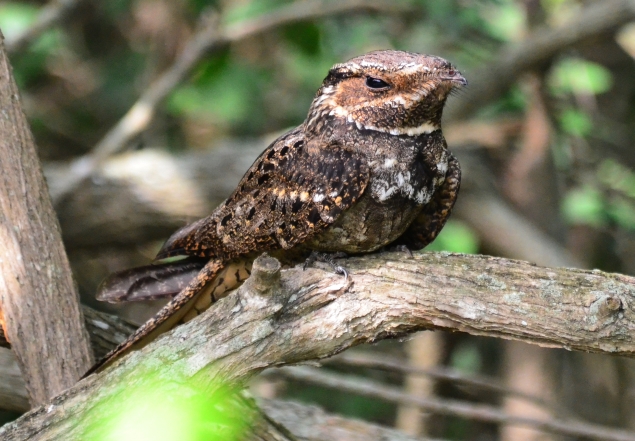
Chuck-will's-widow, a long-awaited LIFE BIRD. I had no idea how freaking big these things were. Blucher Park, Corpus Christi, TX.

Despite the title of this post, I'm not about to pat myself on the back for being a legendary birder, or ramble on about the years of self-inflicted emotional damage birding has brought, or give all the gory details of the various life-threatening situations I've found myself in while in the pursuit of birds. When I tell you that birding is really hard, I mean it in an entirely different context.

Earlier this month I broke out of my habitual South Padre Island weekend routine to head a couple hours north to Corpus Christi, to bird with Nate of This Machine Watches Birds. The ABA just had a rally there, and specifically banned The Great Ornithologist Felonious Jive from attending because, in the words of a representative, "His birding skills make our leaders look like noobs, he smells like sardines, and people tend to get blackout drunk around him". Which is neither here nor there, but if the ABA is going to have a meeting there, you know the area has potential.

Wasted potential in this case. The birding was...mediocre...well, somewhere between mediocre and shitty. We hit a bunch of different migrant traps and other spots, but it was windy and the wind had been blowing the wrong direction for several days. On the Gulf Coast in the spring, that means only one thing...

Life is pain.

But is it really? No. Aside from getting to hang out with some people besides my coworkers for a change (refreshing as hell), I got a life bird. And not just any life bird...a gigantic nightjar. So all in all, the weekend was GREAT SUCCESS.


Pardon my grain, but I think you can still infer some of this bird's sickness from this unworthy image. Truly bizarre. I can't get over the birds structure, let alone the crazy immaculate camo the bird is rocking. Blucher Park is known for being a good spot to track this species and Eastern Whip-poor-will (which we dipped on).


This was the first of many Summer Tanagers I would see this spring. Paradise Pond, Port Aransas, TX.


California can have great shorebirding, but what we get in rockpipers and Sibe vagrants, we lose in charismatic eastern species. Stilt Sandpipers is one of those birds that is usually missing from any given shorebird flock on the west coast, and it's great getting to see so many (often in full-blown alternate plumage) here in Texas. Hazel Bazemore Park, Corpus Christi, TX.


Migrating makes Stilt Sandpiper so sleepy.


Blue-winged Teal are common down this way, and are capable of inducing their own brand of facemelt when they feel like it. Just let them whip out a wing. Turnbull Birding Center, Port Aransas, TX.


American Oystercatcher. It's so refreshing to see a black and white oystercatcher and not have to double check that it is a hybrid...that gets a bit old after a while. Jehl must have gone mad. Photographed at Indian Point, Corpus Christi (?).


The American Oystercatcher: a creature cursed with cankles.


Eastern Willets are plentiful along the coast here. Those with higher GBRS rankings than myself have suggested that the Willets will be split one day. Californians have ignored the existence of this subspecies for many years, but any birder who finds themselves near the Atlantic Ocean should get familiar with telling the two apart. Photographed at Indian Point.

"Kedek kidirk kedeek kerdek." - Least Tern. The sound of Least Terns talking to themselves is music to my ears. They are small and seemingly prone to poor reproductive success, but they are energetic and bring life to any beach or wetland they visit. Photographed at Indian Point.


The humble Sandwich Tern is dwarfed by it's orange-billed relative of royalty. Photographed on Mustang Island.


Pollywog Pond was one of many boring/disappointing places we birded. "Birding is really hard", I told Nate during our stroll through some great but lifeless habitat, and I meant it. One of the few birds of interest there was this low-flying Swainson's Hawk, which repeatedly coursed back and forth low over the treetops.


Despite the regrettable lighting, I got a few shots that I like. Swainson's Hawk is one of my favorite raptors, and it's been nice getting to see so many again this spring. Wish I could say that about Mississippi Kites...birding is really hard.

Wednesday, June 12, 2013

Americanish Oystercatchers: Hybrids vs. Frazari

Bird #1. A rather haggard black and white oystercatcher with a low black bib, with a lot of black "dripping" down its bib onto the upper belly. Although some many would be tempted to call this a frazari American Oystercatcher, it is a hybrid American X Black Oystercatcher. Ventura Harbor, Ventura, CA.

On much of the continent, ID of oystercatchers is a carefree and stressless task. You either have Black or American, or none at all. Simple. Enter Southern California, which has moderate numbers of Black Oystercatchers, and occasionally American Oystercatchers, which allegedly occur so often that they aren't even a review species anymore. The two species hybridize frequently, primarily in Baja California, but those birds regularly move north into California...giving us Black, American and hybrid oystercatchers to find. This is complicated enough, right?

At least Black Oystercatcher ID is not complicated. Looking at them does not inspire headaches, only love. Miller-Knox Regional Shoreline, Richmond, CA.

No. No it is not. It needs to be more complicated. Because the subspecies of American Oystercatcher here (frazari) is thought (by some) to look exactly what a hybrid American X Black Oystercatcher would be expected to look like. They are not really expected to look like the clean cut, palliatus Americans of the east coast. They are sloppy, smudgy, and have tons of black bleeding in to their white parts...or so some have been lead to believe.

So how can you tell a hybrid from a frazari American Oystercatcher? Is there even a difference? Are frazari oystercatchers just hybrids, and nothing more? Well, with the way some birders think of frazari as appearingthere really isn't a difference (i.e. in the latest edition of the National Geographic guide, which is quite unhelpful in this instance). But if one is a bit more conservative in their approach (i.e. not stringy), the differences begin to appear.

This is where I am obliged to mention the vaunted "Jehl Scale", which birders take very seriously. If you're not familiar with it, go take a peek. I think it's a good idea and is widely accepted by high-ranking birders, but it is just begging to be misinterpreted. Stringers love using the Jehl Scale, because they can magically turn hybrids into pure birds while sounding like an expert. Put a bunch of birders together and you will likely get all sorts of different Jehl scores for the same damn bird. You also need very good looks/photographs of the bird in order to score it accurately.

My opinion? To put it simply, many so-called frazari in California should simply be called hybrids. The birds with a high black "bib", little to no black in strange places, and only a little smudging on the sides of the bib are good for frazari. It should be noted that other populations/subspecies of American Oystercatcher, such as those in the Galapagos Islands (galapagensis), have a slightly uneven bib as well, so this is not just something to be expected in hybrids.

Yeesh, what a mess. Let's just look at some birds, shall we?


Bird #2: A typical hybrid oystercatcher, albeit a whiter one than Bird #1. The Ventura Harbor has been one of the easiest places to see hybrids in California the last couple years. That said, the Ventura Harbor has been one of the easiest places to string an American Oystercatcher the last couple years, if you get my drift. Photographed at Ventura Harbor.


Note dark mottling under the wing and under the tail, dark flecking on the belly, extensively dark uppertail and black rump...all strong hybrid marks. By the way, I want to give props to the diligent eBird reviewers who have kept misidentified "Americans" from the Ventura Harbor off of eBird.

Bird #3: Another hybrid. True, this photo is incredibly artistic, but I'm trying to show the dirty and broken u-shaped tail stripe. This belongs to pretty mixed-up bird (genetically). Morse Point, Santa Cruz Island.


The same bird as above. A very striking individual; the dark blotches on the axillaries and breast band extending well into the belly (among other things) put this bird firmly into hybrid territory.


Bird #3, at rest. This is on the heavily-marked side of Americanish oystercatchers that show up in California, many are not as striking.


Bird #4: Morse Point, Santa Cruz Island. At first I thought it was the same American Oystercatcher that I had located at the same site previously (see Bird #5) until I noted that it was an adult (adults have all orange-red bills, immatures have a dusky-tipped bill). The breast band was somewhat lower on the breast as well, and less white was visible above the folded wing.


Bird #3 is on the left, Bird #4 on the right. Note the more white on the tail/rump of Bird #4, and wider white wing stripe.


Scoring Bird #4 very conservatively (using other photos as well), the Jehl Scale gives it a 31. That's a pure American Oystercatcher right there, despite the suspiciously narrow wing stripe and narrow tail band infused with dark feathering. At least, that's what Jehl thinks it is. Me? I'm not convinced. I have no doubt that many birders (including good ones) would tick this as an American, but I personally feel like there are too many Black Oystercatcher genes getting expressed.


Meet Bird #5. The bird on the right had been present near Morse Point on Santa Cruz Island since early April, and appears to be staying for the summer. It has the high breast band typical of American Oystercatchers (sitting higher on the breast than birds 1-4), with a very limited amount of smudging near the bend of the folded wing, as expected in frazari.  It closely resembled American Oystercatchers I have seen in the Gulf of California, which do not have a mysterious genetic makeup; hybrids do not occur there.


This angle shows the high and unragged black bib line, as well as the clean white flanks, axillaries and underwing expected in frazari. The undertail coverts are a pristine white as well.


Note the broad width of the wing stripe and tail stripe compared to Bird #4. This bird has a little bit of dark mottling in  the white of the tail band, but it is limited and does not bisect the tail/rump. Out of the many American Oystercatcher candidates I've seen in California over the years, this is the only one that I feel really fits the frazari bill. And if you are wondering...this bird scored a 39 on the Jehl scale.

So do all American Oystercatchers in California have Black Oystercatcher genes? It's possible; there is no concrete evidence either way. The American Oystercatchers at the Salton Sea in the 1970's most likely came from the Gulf of California, where hybridization does not occur (a photograph of a couple of those birds is on Don Roberson's page here). I think that's something we should accept though; frazari birds that show up here likely have some Black Oystercatcher genes, but that doesn't mean we should count all hybrids as American Oystercatchers, or not count American Oystercatchers at all.

If you would like to learn practically everything there is to know about American Oystercatchers, the American Oystercatcher Working Group is an excellent resource. And if anyone knows where to find Jehl's classic paper online, please let us know!