Showing posts with label Prairie Warbler. Show all posts

Wednesday, June 10, 2015

Maynerayge Day 3: This Is Why I'm Not A Good Person


On day 3, we started the morning down at Biddeford Pool.  There seemed to be lots of warblers around, although most of them seemed to be Yellow Warblers at first.  The birding at the pool itself wasn't exactly thrilling, but the number of migrants flying around above us was a sign that we could not, would not, ignore.  Checking the beach quickly was rewarding, because Nate observed a middle-aged couple have a vicious fight, with the husband getting completely ditched and left on the beach smoking a cigar of sadness.  Hoping for good birding, I once again left my camera in the car, which worked like a charm.  Less than an hour later we were in a huge swarm of migrants that refused to go away.  It seemed like that this one small grove of trees were sucking in migrants from everywhere....Blackpolls, a Bay-breasted, Canadas, Northern Waterthrush, Chestnut-sided, etc., even an out-of-place Field Sparrow. We were glued to that spot for most of the morning; it was one of the better mixed flocks I've seen north of Mexico.  Good thing I didn't bring my camera!


After the turnover in the rampaging flock seemed to die down a little bit, we went out to East Point, where there were a couple Bicknell's/Gray-cheeked Thrushes mixed in with the Swainson's Thrushes, and I got to hear a Gray-cheeked Thrush sing for the very first time.  Tree Swallows were nesting in bird houses built like lighthouses, which I'm sure just tickles some people.


Near the rocky shore we found the first Long-tailed Duck and Merlin of the trip, along with a small creche of Common Eider kids, which was pretty cute.  Common Eiders are thick in Maine, even in summer, which is a very good thing.  While the west coast certainly has a much better and more interesting rockpiper community, the east coast has a raging seaduck scene.


Down by South Point, we lay waste to a flock of Common Eiders that only seemed to give the mildest of fucks about our presence.  I've seen a lot of Common Eiders in Massachusetts and the Aleutian Islands (and one in California, thank you very much), but never had I seen them at such a fantastically crushable distance.


To borrow one of Nate's favorite adjectives, these birds are splendid.  Looking at them from a modest distance is an extremely fulfilling experience, up close it's on a whole new level.


The full spectrum of Common Eider plumages.


This doesn't even make sense.  Such novel bill structure.


After Biddeford Pool, we went to Kennebunk Plains for Upland Sandpipers and Bobolinks.  It was hella windy and the birding left something to be desired...while we went on to find Bobolinks at a number of other places, we never ran into any Upland Sandpipers.  There are no Upland Sandpipers in Maine.

While there may not be Upland Sandpipers, there are very resourceful Prairie Warblers.  This one was attacking a pile of used toilet paper to use as nesting material. I didn't see it but Flycatcher Jen observed copious amounts of human feces in association with the nest material.  Talk about going to browntown.


This is the most humorous thing I've ever seen a warbler do.


The male was nearby, doing things other than wallowing whimsically in human waste.


Vesper Sparrow was one of the commoner birds out on the plains; Eastern Meadowlark and Grasshopper Sparrow were good trip birds as well.


After our failure at the Plains, we used eBird to successfully not find Bobolinks at another spot. While standing around stupidly behind a general store, there were at least a handful of birds around. There was a small roadside pond where swallows and Chimney Swifts were coming to drink, so I tried my hand at getting some swift photos.  It wasn't a total failure.


To be honest, I don't really have good photos of any swift species, this is probably the closest thing.

Giving in to the wind and the fail, we lurked back to our vacay house back on Pine Point.  I decided against a walk on the beach in favor of a shower, but headed out again upon hearing of more Roseate Terns and the return of the Little Gull's Bonaparte's Gull flock on the beach as the tide began to fall. What did Maynerayge Day 3.5 hold?  Birds more interesting than Yellow Warblers and Tree Swallows, that is for damn sure.

Thursday, December 20, 2012

The American Mothmasher, The Good Vireo, and The Dixie Warbler


It is December, and I still am not done stoking/bumming people out (depending on your attitudes towards jealousy) on my October Dry Tortugas trip. Hopefully I'm throwing enough other birds in the blog cocktail to keep things interesting...anyways, although American Redstart is one of the most abundant North American warblers, you don't hear anyone complaining. No one doubts the face-melting power of an adult male.


Moths are a popular item for destruction by migrant passerines on Garden Key. They are often a bit big for warblers and vireos to immediately gulp down, so it was not infrequent to see birds brutally bashing them to bits to make them a more manageable size for consumption.


Never have I witnessed such an act of ruthless moth-bashing, but I have to give credit to the redstart for being effective. Next time I am faced with a piece of living food that is too big to swallow whole, I will simply hit it against things over and over again until is smaller.


Booby Brittany photographed this Philadelphia Vireo with a point and shoot. We walked right up to it. Like a dumbass, I did not have my camera on me for some reason. In case you are wondering, yellow vireos are good vireos. In fact, this is one of those species that is often on birders lists for having a crappy name (this is not a particularly common bird in Philly)...why not "Good Vireo"? No one doubts the instrinsic goodness of this uncommon, exceptionally positive bird.


Magnolia Warblers are best observed when on the ground, 10 feet in front of you. This is a bird that warms the heart.


Fort Jefferson. From the outside, looking in.


From the inside, looking out.


Indigo Bunting, probably a hatch year bird. It will be a long stretch of buntingless months before they start reoccupying the country in April.


Why hello Ovenbird. No, I don't mind you hopping around my feet like a goddamn House Sparrow, make yourself at home.


Prairie Warbler is another one of those misnamed birds, although "prairie" does have a nice ring to it. I propose it be rechristened Dixie Warbler. Now that really has a ring to it. Only saw 1 or 2 on Garden Key, although they must move through in big numbers.


One of the most unexpected birds I found on Garden Key was this American Coot. It takes a lot for a coot to make it to the hallowed pages of BB&B, but since this one had found itself in the middle of nowhere, that's good enough for me.

Tuesday, October 30, 2012

Fully Warblered


This Worm-eating Warbler was working on an insect on the other side of the leaf. It appears that the warbler removed the leaf and wedged it in the bark of the branch, which is pretty wild and crazy. Key West Botanical Gardens, Stock Island, FL.

I didn't see any mythical fallout events in South Florida, but I did pretty good with migrants on my trip. 24 warbler species were more than I hoped for, with a lot of those being year birds. I ran into good flocks at Zachary Taylor State Park, Indigenous Park, the botanical gardens, and of course on the Dry Tortugas, where birding reached a crescendo. Dipped on Cape May and Kentucky, but I am in no position to complain. Again, for any birders who have not had the fortune of birding the east coast during migration...you are really missing out. Landbird migration is significantly more pronounced than it is in the west, and an average-sized (for an easterner) accumulation of migrants can seem staggering to a westerner.

For northeastern birders, good luck with "storm waifs" this week, but of course staying safe and making good decisions takes precedence. A birder I knew lost his life while seawatching on a jetty, and that wasn't even in a hurricane...don't do anything stupid!


Worm-eating Warbler. Looking inside dead leaves is more of their thing...I kind of like this weird perspective. Key West Botanical Gardens.


Palm Warblers were literally everywhere. The amount of tail-wagging I witnessed was mesmerizing. Little Hamaca City Park, Key West, FL.


Ah, the Ovenbird. I would say that this is one of the best warblers, given their stylish strut, thrussish markings and unmistakable attempts to summon the attention of nearby teachers. Indigenous Park, Key West, FL.


My best herp siting of the trip was this Florida Box Turtle that was scuffling through the leaf litter, which is what they spend most of their lives doing. I dig the carapace markings. Thanks to JK of Camera Trapping Campus for providing the correct identification. Key West Botanical Gardens.


I don't know what this is, but I like it. Key West Botanical Gardens.


Northern Parulas were plentiful. Looking at too many may cause the pupils to dilate...so I recommend welder's goggles to shield yourself from harmful parula-watching effects. Key West Botanical Gardens.


I only saw a handful of Red-eyed Vireos, I reckon most of them probably move through a little earlier in the fall. Key West Botanical Gardens.


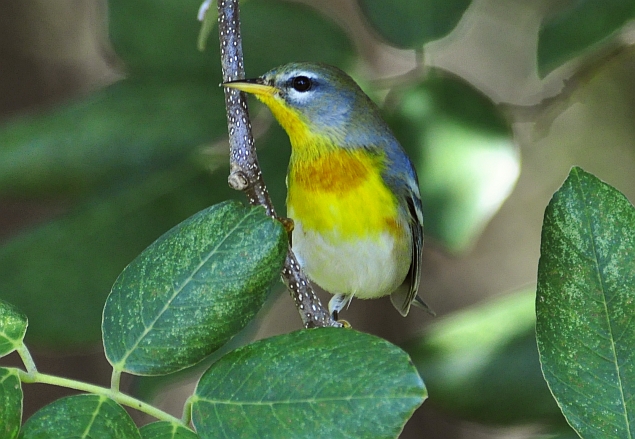
You don't have to be the Number 7 birder in the nation to know that Prairie Warblers are not hard to come by in South Florida. They are very sharp birds, and one of the few year round resident warblers. Key West Botanical Gardens.


Brown Anole. It's no doubt bummed that it's replacement tail growing in makes it look like it is perpetually pooping. Key West Cemetery, Key West, FL.


Yet another sunset picture, which is further evidence that this was not a birding vacation. I enjoyed this birdless sunset very much. I swear.

Sunday, November 27, 2011

Vagrants Become You

Tropical Kingbird. Manila (Humboldt County). Naked eye identification while going 55 mph. The bird wasn't even on the same street. That's why they call me "Number 7".

Unlike last fall, I have not decided to boycott birdwatching this year. This strategy has failed in getting any life birds (the one-day-wonder San Francisco Northern Wheater would have been one), and has succeeded in burning lots of money and gasoline. But most importantly (for me), I've actually been seeing a lot of good birds. Tufted Duck, Sharp-tailed Sandpiper, Red-throated Pipit, Cape May Warbler, Chestnut-sided Warbler, Red-throated Pipit, Clay-colored, Swamp and White-throated Sparrows, and Lapland Longspur are a few not pictured today. Just remembering them gives me the warm fuzzies.

"Good birds", in birder parlance, just means rare birds. Due to their obvious rarity, it's bloody hard to get pictures of rare birds, and so I find the most fitting shots of rare birds are the worst possible pictures (see Lucy's Warbler below). It's a good thing I am not a photographer, or else I would bring much Shame and Dishonor to my family.

Right. Here are a few decent birds from northern California, a veritable Shangri-la of vagrants. Bird here.

Orchard Oriole. Point Reyes. We walked up and someone pointed to this "Hooded Oriole". But the pictures tell a different story. Unfortunately for you, there is nothing in this image that would allude to either species. I just like the picture.


Tundra Swan. Pomponio State Beach. A rare bird in many parts of the state. Adults, being swans, appear very graceful, but this juvenile seems to be smiling about it's giant, pink, runny shnoz.

Yellow-throated Warbler. San Francisco. The same one as pictured a couple weeks ago. Hella rare. It's still here.


American Tree Sparrow. Point Reyes. Dan and I found this rufous-capped northern beast on the side of the road. 


The infamous Yellow-billed Loon. Sunnyvale. Many photographers got better pictures of it than me, but I never thought I would be lucky enough to get Yellow-billed Loon shots. This is the first one I've seen since the 90's...


Summer Tanager. San Francisco. The best birds to chase are the ones right down the street from your house.

Blackpoll Warbler. Arcata. Rob Fowler pished it in. Not super rare, but it was a Humboldt County bird for me.

Prairie Warbler. Point Reyes. I wonder if the disgruntled birder we ran into ever got to see it. If not, she probably went home and hurt herself. She really wanted to see it.


Ancient Murrelets. Half Moon Bay. While not insanely rare, its safe to say that this would be a life bird for many a birder out there. We were lucky enough to see over 30 birds last week, which is the most I've seen in California.


Lucy's Warbler. San Francisco. I think this is the quintessential rarity shot.

Greater White-fronted Goose. San Francisco. Not very rare, but I had to follow up the Lucy's Warbler with a better picture...