Showing posts with label Gray Flycatcher. Show all posts

Friday, October 14, 2016

The Coast Is Alive With The Sound of Vague Runts


September went by very, very quickly...I have much catching up to do. September is generally considered the best month of the year to be birding in California...seabirds, shorebirds, and passerines are barging through the state in huge numbers (by West Coast standards) and the potential for finding a rarity is as high as it can get. Not that October is any slouch...it can be just as good, if not better...the main problem this month is that you have to battle the Yellow-rumped Warblers. This week rarity fever has been particularly acute...after Sunday passed, day after day has been absolutely perfect for putting down Vague Runts on the coast, and I've been stuck in the office like a chump...the Perpetual Weekend looms large, in memory. Birders at Point Reyes and Bodega Bay have been getting rewarded every day with the overcast skies and south winds...the patches are just clogged with rare right now. No Yellow-green Vireos for me this week (three have been found in the greater bay area in the last few days, two photographed...fuck), but fall is not over yet.


This fall was a good one for Baird's Sandpipers, it seemed like they were getting reported a lot more than in most years. Seeing them in California always feels like a mild victory, though they aren't quite unusual enough to be a true rarity. Frank's Dump, Hayward, CA.


Lesser Yellowlegs bring the mellow compared to their louder, larger relatives. We get good numbers of them at Coyote Hills (where this bird was), but they are pretty local throughout the bay area.


In early September I moved from Oakland to Albany, to move in with Billy so we can raise the shit out of this baby that is on its way. Albany (on the north side of Berkeley) is a tiny city that is little-known outside of having Golden Gate Fields and the Albany Bulb, so tiny that most people who don't live here don't even have an opinion about it...and we in the bay have a lot of opinions. Anyways, my last morning in Oakland I thought I should bird my patch one last time before I had to start a new one. Middle Harbor Shoreline Park has never rewarded me with anything really juicy (an extremely late fall migrant Common Tern was my best bird to date), but I always though the place had a lot of potential for waterbirds. As expected for early fall, a horde of loud Elegant Terns were loafing on the mudflats. A throng of birders, presumably an Audubon group, was also there; when they moved past me without mentioning any birds of interest I presumed that it would be another typical visit. I was wrong.


Within minutes of the group finishing their trip and leaving, I found a no-doubt BAR-TAILED GODWIT not far away on a mudflat. I couldn't believe it...finally a rarity here...and not only a self-found vague runt, the best bird I'd found in a few years!


Unlike the godwit I had seen at Bolinas just a few weeks before, this bird was quite close. I walked out to the end of a breakwater and hoped the sleeping would come in closer as the tide came up, which worked out brilliantly. I was quite chuffed.


I was out there for a while, and eventually the birds accepted I wasn't a threat and went about their business. Great looks at this quality rarity, this quality SIBE. Now, I'm not a big proponent of the One Bird Theory, but with the help of Peter Pyle I was able to compare photos of this bird, the Bolinas bird, and the Don Edwards bird, all of which had been seen within weeks of each other in three different counties. Personally, I feel there is a strong probability that this bird and the Bolinas bird were one in the same, while the Don Edwards bird was another individual.


Luckily, the bird stuck around a few more days and was relished by a great many birders; I'm only aware of one or two other records for Alameda County, and people were stoked. I guess I can't call it quits on this patch after all.


Now that we got this rarity out of the way, we can go back to robin-stroking. We take them for granted here, but there is nothing not to like about Chestnut-backed Chickadees. They are one of a handful of our native passerines that have adapted well to urbanization, and their flocks often lure in various migrants that will join up. Lake Merced, San Francisco, CA.


When I talk about robin-stroking, I'm serious. Young American Robins are rather interesting early in the fall. Don't deny it. East Wash, San Francisco, CA.


Chickadees and robins are well and good (what would we do without them?), but those are not birds you want to devote a lot of energy to in September. Gray Flycatcher, on the other hand, is one of those birds. Westerns and Willows are the only expected Empids on the coast any time of year; anything else from that genus is a very solid bird. Golden Gate Park, San Francisco, CA.


I love getting county birds in San Francisco, even though I haven't lived there for a few years now. I also love seeing birds out of range, even though Gray Flycatchers breed about 4 hours east of here in Mono County. A life of seeking rarities will do that to you. Hopefully this individual continued south along the coast, and wasn't so turned around that it thought the best migratory route it should take was southwest over the Pacific. That's not how I would have done it.


Wild Turkeys drink bourbon, not sure what it was doing here. Coyote Hills Regional Park, Fremont, CA.

Thursday, July 28, 2016

Sierra Summer Birding Part II


Ahhh...this next batch of blogs is going to be very refreshing. Refreshing like how this Osprey feels when diving into a lake at 9,770 feet at Virginia Lakes. You see, I've largely managed to escape the "summer doldrums" this year, which is an important thing to avoid if you want to keep your birding sanity. Mountains have everything to do with it, not to mention early fall shorebirds...but that is for a later post. For now, its back to the Sierras.

After breakfast with the rosy-finches, Billy and I rolled down to the Bodie Hills to track down Pinyon Jays and Juniper Titmice. A jay abided, the tits did not. We did get a quality wildflower show, and Billy managed to find a solitaire nest under a boulder...a lifer nest! After leaving the hills, it was north to Bridgeport Reservoir, which I hadn't birded in many years. The south end was very birdy and coughed up a few county birds, the best of which was a distant Bald Eagle. In the afternoon Lee Vining Creek Delta (just north of Lee Vining, on Mono Lake) relinquished a few more interesting birds, in the form of Whimbrel, Caspian Tern, and some Great-tailed Grackles.

The following day we birded along the south shore of the lake and the "Mono Mills" area. Navy Beach was hella birdy, but since it was early June the diversity of species was abhorrent. Bleak, but as all the local birders must know, the potential here is real.

All in all it was a solid trip. We birded, we camped, we drank, we transported Art, and I turned 34. I'll just put up some photos now.


MacGillivray's Warblers were everywhere in the mountains. This bird was vigorously singing at our campground in Lee Vining Canyon, former home of The Grub. The Grub now lives at a nearby undisclosed location, where he has hummingbird feeders up that are currently being very well attended. That's right, The Grub has become a Geribirder.


This bird had raging hormones and let me approach as close as I could while it sang away...pretty crippling looks, probably the best I'll have of the bird this year. And who was MacGillivray you ask? William MacGillivray was a Scottish ornithologist. John James Audubon was his bro (brornithologist), and named the bird after Willie Mac. The species was actually discovered by John Kirk Townsend (of solitaire and warbler fame).


This Gray Flycatcher was south of Mono Lake, just west of the big Jeffrey Pine forest, out in the sage flats. We also had another Pinyon Jay out here, which is pretty typical despite the fact that we don't associate them with treeless areas.


As the #7 U.S. birder (according to the Global Birder Ranking System), I have something to admit to you all...aside from Buff-breasted Flycatcher, Gray Flycatcher is the easiest Empidonax to identify north of Mexico. Think about it...Willows look like Alders, Leasts can look like all sorts of things, Duskies look like Hammond's, Pacific-slopes and Cordillerans are identical, Yellow-bellieds can look like Leasts and Westerns, and Acadians can resemble all manner of things if seen poorly enough. Unlike these other species, Gray Flycatchers look incredibly consistent...in my experience they display little variability in color of the lower mandible and overall plumage. The long bill, dull color, stubby primaries, and amount of orange/yellow in the bill are very dependable field marks...the most variable field mark to me is the eyering, which can be weak to moderately bold. I reckon it is a pretty easy bird to identify, even without their distinctive summer/winter habitat preferences and tail-dipping habit that a lot of birders like to key in on.


The Jeffrey Pine forest south of Mono Lake was carpeted in Dwarf Monkeyflower. It was most mellow. This is a Pinyon Jay stronghold, the most reliable place to get them that I can think of. I imagine that every Pinyon Jays knows of this place, for it is sacred to them.


Huge blankets of the stuff turned the forest floor pink. Facemelting.


I thought this was a boldly-marked Sagebrush Lizard at the time, but now am not so confident about that. Birding is hard.


The Mono Basin is filled to the brim with Sage Thrashers in spring and summer. Funny how out-of-range Sage Thrashers tend to be so approachable, but they have always kept their distance from me in the places they "belong". One thing is for certain though...they belong in my heart.


Absurd numbers of Violet-green Swallows breed around Mono Lake. Tufa towers make very good homes apparently.


They also make good perches. For crushing. This Violet-green is not only sitting on tufa...it is being framed by tufa. Does anyone want to see my exif data for this photo? This was not in Colorado. And if any of you get that joke, my work is done here.


Ok, my work is almost done here. I'll leave you today with an excerpt from William Dawson, who has no equal in the realm of birdwriting.

What shall we do for the Violet-green Swallows? Simply this: we will call them children of heaven. 

To appear to the best advantage, this child of heaven should be seen on a typical California day, burning bright, when the livid green of back and crown may reflect the ardent glances of the sun with a delicate golden sheen. The violet of upper tail-coverts and rump comes to view only in changing flashes; but one catches such visions as a beggar flung coins, and adds image to image until he has a full concept of this rainbow hue. At such a time, if one is clambering about the skirting of some rugged precipice in Yosemite, he feels as if the dwellers of Olympus had come down in appropriate guise to inquire his earth-born business. Not, however, that these lovely creatures are either meddlesome or shrewish. Even when the nest is threatened by the strange presence, the birds seem unable to form any conception of harm, and pursue their way in sunny disregard. Especially pleasing to the eye is the pure white of the bird's underparts, rising high on flanks and cheeks, and sharply contrasting with the pattern of violet and green, in such fashion that, if Nature had invited us to "remold it nearer to the heart's desire," we must have declined the task. 

Tuesday, June 21, 2016

Train Wreck: The Siberian Express Derails in California


Spring is a loathsome time in California when it comes to rare shorebirds...compared to fall migration, they are very, very hard to come by. It is worthwhile to search for the very occasional Hudsonian Godwit or White-rumped Sandpiper, sure, but what about Sibes? It is a sad state of affairs.

Several years ago, while I was out in Texas, a freak Marsh Sandpiper was seen for a couple days in Solano County. A Marsh Sandpiper is a meguh. It's a species birders wistfully look at in their books and think "maybe I'll see one in Alaska some day", or, more commonly, "yeah, right". Being out of state saved me from some of the pain and stress I would have experienced if I was back at home and not seen it, and I just wrote the bird off as one of those things that I will just have to live with. Something to live with, and something to die with, in a nagging, unresolved way.

Earlier this year, the impossible happened...a Marsh Sandpiper was reported less than two hours from my house. In April! An hour later it had been confirmed, and I was on my way. After a short wait, the bird reappeared and provided great looks for the next hour and a half. This was not a life bird I was anticipating to get on this continent, but that is California birding for you.


The bird showed off its distinct white back wedge on a number of occasions. Though it never wandered very close to the birders, it was very cooperative. I couldn't believe my luck. I always thought I would see something like a Spotted Redshank (which is absurdly, painfully rare) in the state before a Marsh Sandpiper, yet here the bird was.


It had something like a Wilson's Phalarope X Lesser Yellowlegs structure. Luckily, I did not have to listen to any birders make the ludicrous suggestion that this is what the bird really was. Yeah, it's gotten to the point where I'd rather hear about blatant misidentifications rather than hybrid conspiracy theories.

This is one of the best birds, in terms of rarity, that I've seen in California over all these years. Considering I really like Sibes and I really like shorebirds, it's a tough one to top (though Common Scoter and Salvin's Albatross come to mind). It's not a flashy species, but damn it was a satisfying bird to see.


What is the deal with Red-necked Phalaropes? They are very pleasant birds. They are shorebirds, but they swim. You can see them way out at sea or far from the sea. They look fantastic in spring and not so bad in fall. Impressive credentials. Photographed at Don Edwards National Wildlife Refuge.


Red-necked Phalaropes are masters at picking edible crud off the surface of the water, and they make it look good.


Eared Grebes were also in abundance, all in slick black and gold alternate plumage. But Red-necked Phalarope and Eared Grebe were not the bird we were seeking. In a dramatic development, a Little Stint had been found here two days previous. That's right...another April vague runt shorebird...another April Sibe...another bird I had never seen in California, or any other place in my life. What were the chances? We trolled the side of a salty impoundment, back and forth, until finally another birder got all stinty.


Little Stint! Little Stint! Unlike the Marsh Sandpiper, which is unfathomably rare, this is a bird that I had been waiting a long time...a long time. They are pretty much annual in California, but I had never come across one, and my time on Buldir Island back in the day had yielded only (!) Red-necked and Long-toed. The bird foraged earnestly out in the impoundment with a group of Dunlin and Western Sandpipers...this may sound dumb, but I didn't expect it to be so...little. The bill was indeed slight with a fine tip, not at all what I would expect from a Semipalmated...but that seems like something that could be easily overlooked by just about anybody who didn't have spring stints on the brain.

The internet played a big role in developing the story of this rarity as well...Will Brooks, who found it, originally thought (as almost anyone would) that this was a Semipalmated Sandpiper, but the eBird reviewer (I believe it was Marshall Iliff) who looked at his photos thought Little Stint was a better fit. Word got out, and the following day photos were obtained showing that the bird lacked any webbing between its toes. The rest is birding history.


That's it on the left, being dwarfed by a Western Sandpiper. Even in the harsh light at a less than ideal distance, you could make out the rufous edging to the alternate tertials that had recently molted in. I couldn't believe my luck...three consecutive weeks in early spring had bore fruit in the form of Glossy Ibis, Marsh Sandpiper and Little Stint, a state bird and two lifers. This put a temporary end to whisky-fueled nights of screaming unintelligible obscenities and shaking my fist at the night sky.


I went back a couple times afterward to get better looks at the bird, to no avail. Instead, I got to see these avocets fuck. They sure make it look elegant. Pretty sure people look like trolls in comparison when they do the deed...actually, I am absolutely sure about this.


Even the dismount looked graceful.


Post-coital avocets are just the cutest thing. This is their version of spooning.


Even in the eye of a spring storm of Siberian meguhs, I can still stop and appreciate the rufous and chevrons of a Western Sandpiper. Ignoring Western Sandpipers isn't going to solve anything.


Of course, April birding in the bay area is not all hot-shit vague runts, hell, this might be the first and last time...but there are locally rare my grunts to look for. I live just a couple minutes from Emeryville, so one day after work I lurked over to the Emeryville Marina to check out a Gray Flycatcher that Aaron Maizlish had found.


Aaron was actually leaving when I pulled up, but was kind enough to go back and point the bird out to me. He's a BB&B reader, so naturally he is a good person. The Gray Flycatcher was a nice year bird and addition to my home county list, which I generally am not very excited about. Why that is, I couldn't tell you. Gray Flycatchers are always worth garnering some excitement for, though maybe its just because I don't see them on the regular.


Compared to Dusky vs. Hammond's Flycatchers, identifying Gray Flycatchers is a walk in the park. The bill alone is usually enough to clinch it for me. Grays are rare but regular along much of the California coast; they are much easier to find as my grunts in the desert or breeders (brie duhrs?) in or near patches of sage. If there was a Sage Flycatcher, I think this would be it, but since Gray Flycatcher is a spot-on description (albeit boring), I can live with that.

Tuesday, November 20, 2012

Felonious Jive's Introduction to Unlocking Birds

Once upon a time, in a galaxy far, far away, I was not the Number 7 birder in the nation. Unlike The Great Ornithologist Felonious Jive, I was not born with an unnatural ability to correctly identify and locate a huge variety of birds. I still remember what it was like to see a bird and not know what it was, although those memories are getting quite fuzzy now. But lets face it...the world needs more good birders (or perhaps more birders that are good?), so we at BB&B are going to endeavor to make you, the reader, a better birder.

As everyone knows, some birds are easier to tell apart than others. Jays are simple. Drake ducks are a cinch. Spring warblers are no problem, and neither are male hummingbirds. Owls? If you are lucky enough to see them, its usually no sweat to know what you are looking at. But many up-and-coming birders cower at other birds. Like the professional drinker who loves all booze except for that ONE kind of liquor (most people say its tequila), many developing birdwatchers can't bear the thought of dealing with a certain group of birds, be it gulls, sparrows, shorebirds, flycatchers, shearwaters....you get the picture. They are all so similar that budding birders often don't even know where to start. So we at BB&B are going to make it happen for you...for absolutely free! Sure you could (and should) buy Kenn Kaufman's advanced birding guides, but consider BB&B to be at your service.


Brewer's Sparrows are one of my favorite sparrows, although more for their amazing vocal abilities than their good looks. Some birders would be offended that I have good things to say about such a bird, since so many are incapable of even identifying one. Can we do something about that? YES WE CAN. Agua Caliente County Park, CA.
Before we delve into these specific bird groups, I'm going to ask The Great Ornithologist Felonious Jive to reiterate some crucial birding points to keep in mind. This is important, basic shit, that people forget over and over again, so it bears repeating. Apologies if anyone is offended, but my colleague is a crude man. Take it away Felonious...

#1) Use a good field guide. For Christ's sake don't depend on Google Images or some internet group to identify birds for you. I endorse Sibley and National Geographic Guides only. They're not perfect, but they do come close. Even better, get more than one guide.

#2) Use a field guide...correctly. Look at the range maps. Look at a bird's size. Read about its habits and habitat preferences. IT IS ALL INCREDIBLY HELPFUL. Sure it takes more effort than glancing at a pretty picture, but the payoff is that you might end up identifying birds correctly.


Look at Gray Flycatcher in any field guide and it will appear depressingly similar to other Empidonax flycatchers. But if you read about its habitat preferences and tail-bobbing obsession, you will learn about what makes this sage-baron unique. Photographed at Mono Lake, CA.

#3) Never assume you found a rare bird unless you know exactly what you are doing. Rare birds are to be treated like huge scientific discoveries...you should not be announcing them unless you are completely confident in your own abilities. Inexperienced and experienced birders alike are always turning common birds into rare birds, much to the chagrin of everyone. This is a terrible habit, kind of like picking scabs or popping zits...on strangers you don't even know. It's just a poor idea, plain and simple, doomed to failure. I fiend for rarities as much as the next birder but its important to be accurate.

#4) Go birding with people better than you. Listen to other birders. If you point out a Slaty-backed Gull to your local birding guru and he/she politely says it is a Western Gull, said guru is worth listening to and is likely correct. Of course, if your local guru impolitely says its a Western Gull, you are free to tell them to fuck off.

#5) Beware the internet...it is filled with lies. It can give you the answers you seek, but sometimes at great cost. Once you enter the world of cyber-birding, don't expect to get treated like a prince or princess. People in email groups, messageboards, forums and facebook groups are painfully anal and occasionally straight-up dickish, and its easy to take things out of context. This isn't because birders are bad people, its because the internet is a cruel place.


Black Turnstones love a good pile of rocks, although they will settle on sand if they have to. This one seems to be pretty enthusiastic about rope as well. Point Reyes, CA.

#6) Be aware of a bird's surroundings, not just how a bird looks. What habitat is it in? Pine trees or willows? Rocky shore or sand? How high was it foraging? Was it in freshwater or saltwater? Was this blackbird in a MacDonald's or Burger King lot? The more you notice, the easier a difficult identification can be rendered.

#7) Birding by camera makes sense at times, but I guarantee you you can see so much more without one. Keep in mind each and every birder who occupies the high realms of the Global Birder Ranking Scale learned to bird before the advent of the digital camera. We didn't identify birds by chimping, we did it by looking at them and listening to them. When you do use a photo to help identify birds, be very aware that poor lighting can transmogrify one bird into another.


This dude was desperately crashing through the underbrush, trying to catch a glimpse of a Common Cuckoo perched somewhere above him. Other birders watched his reckless actions in wonder from across the pond. This is exactly how you don't look for rare birds.

#8) Whether you are a photographer or not, don't do dumb shit like scare birds off, trample habitat, lurk next to active nests, use recordings excessively...its just bad news, and will earn you an interesting reputation very quickly. This kind of behavior will lead to both birds and birders avoiding you, which isn't very good for building your bird skills.

#9) Learn bird anatomy. Learn the terminology. Many bird field marks don't have anything to do with recognizable human body parts....lores, tertials, undertail coverts, scapulars, and supercilium are all words that make no sense to nonbirders, and can all be very important in bird identification. Get to know the lingo quickly and you will have a great head start, it will help you learn what to key in on when looking at a confusing bird.


If you knew what the "nail" on a scaup's bill was, we would have a much easier time communicating about what this bird could be. This slim-nailed Lesser Scaup was at Lake Merritt, Oakland, CA.

#10) There are some fucked up birders out there. Seagull Steve and I have been forced to say it time and time again, but birders are strange. If you haven't run into these people yet, it is either A) just a matter of time or B) because you are actually one of the bizarros, so everyone else seems pretty normal in comparison. The lesson here is to not let a negative exposure to a couple of poorly-socialized bird freaks dissuade you from an unabashed lust for birds.

Well, I guess that last one isn't related to bird ID, but Felonious is a bit of a loose cannon. That's all for now everyone...see you after Thanksgiving!

Wednesday, January 4, 2012

The Truth Is Out There


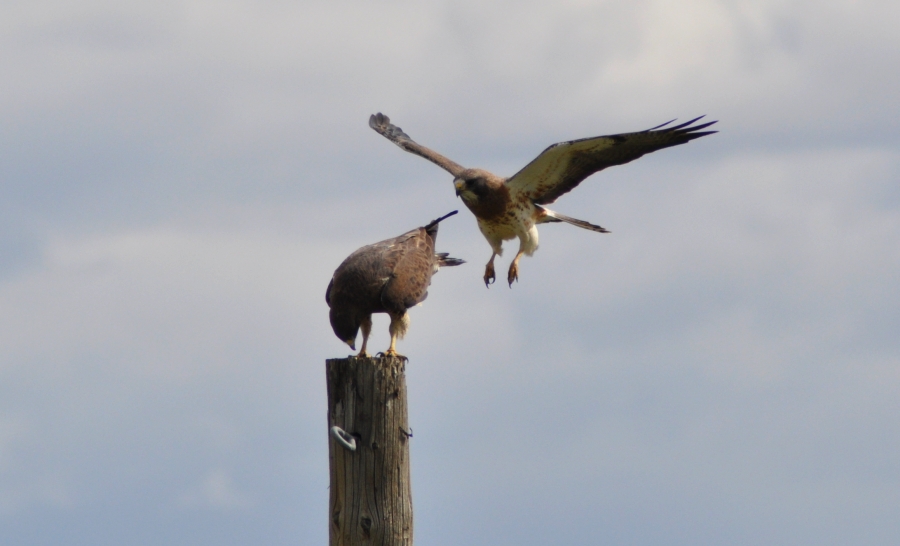
Swainson's Hawks ready to make sweet sweet love. They sexed for quite a prolonged period of time after this photo was taken, I was impressed. Near Camas National Wildlife Refuge, ID.

Everyone keeps asking me..."Seagull, where will you end up this year?". The truth is, I have absolutely no idea, but for the short term, I will go north. I seek the Snowy Owl, after all. Yesterday I began my migration that will culminate in dismal/dreary Port Angeles, WA, on the Olympic Peninsula....a place that some refer to as "where people go to die". I hope that's not true, or else I should seriously reconsider my motivations for going in the first place.

Being a Professional Crastinator, here are some more of my fav birds from last summer. Thank you, come again.

Gray Flycatcher, the baron of the sage. Mono Lake, CA.

Yellow-headed Blackbirds are obviously the best blackbirds. Camas National Wildlife Refuge, ID.


Franklin's Gull...an excellent gull. Redmond Lakes, ND.


Upland Sandpipers were a common sight for me over the summer. I guess that explains my face melting off several times a week. Redmond Lakes, ND.


Baird's Sparrow. If anyone gets a job at Lostwood National Wildlife Refuge this year, I can tell you where the magic Baird's spot is. Otherwise...just go to the Sharp-tailed Grouse blind, and don't misidentify the Grasshopper and Savannah Sparrows there. Redmond Lakes, ND.


Common Nighthawk. Peent! Peent! Peent! Redmond Lakes, ND.


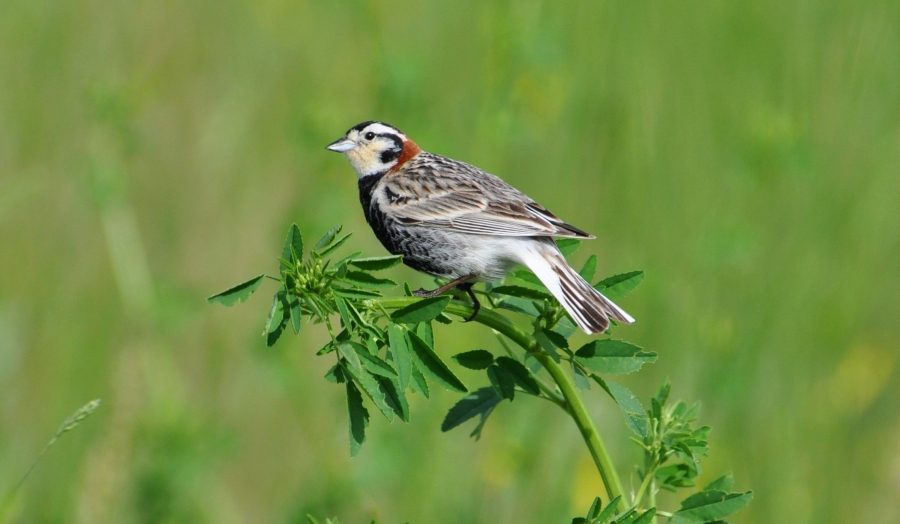
Chestnut-collared Longspur. This was the friendliest longspur I met all year, on the entrance road to Medicine Lake National Wildlife Refuge, MT. Yet another prairie bird with an awesome song and tear-jerking flight display.


Black Tern. Des Lacs National Wildlife Refuge, ND, is awash in Franklin's Gulls, Black Terns and other shorebirds in the late summer. The terns act more like swallows than seabirds there, and are easy to get good photos of.


Before last year, I have never been someplace where Vesper Sparrows plague the landscape. Now that I lived in North Dakota, that has changed. Redmond Lakes, ND.