Showing posts with label least tern. Show all posts

Tuesday, September 20, 2016

Plovers, Peeps, Goose-like Wingbeats


This adult Black-bellied Plover still has some appeal, but lacks in crispness/crispiness. In August, adult southbound shorebirds still wear the ragged remains of their once-impressive plumage they sported on the tundra or taiga. Sometimes it can present an ID challenge (i.e., with adult golden-plovers), at other times it is a simple statement...migration is on, the birds are back, and you need to be out looking for that rare shit. Elsie Roemer Bird Sanctuary, Alameda, CA.

It's September now, and I've been cruising. Unlike last year, when hoped-for rarities did not seem to start materializing until the very end of the month, things have been going swimmingly so far. Vague runts seem relatively plentiful, and disappointments have been few.

But as I said, there is much to catch up with. Before September, there was August. Here in the bay area, the birding has just gotten better and better...June is boring, July is better (shorebirds return), and August brings pelagic trips and plentiful shorebirds, not to mention a whole lot of suspense around the big question seasoned California birders ask each other (in trembling voices) every year...what will September bring? In other words, August birding is exciting again, and I thought I would pay respects to some of the birds of shore (not just shorebirds) prominently featured during the month.

Oh, and before we get in too deep, think of a bird (not a goose) with goose-like wingbeats. Got it? Now put it in your pocket and we will take it out for another look at the end of the post.


Snowy Plovers are patchily distributed around the bay area, favoring salt ponds and a few select beaches along the coast. This adult was washing off the salt at Frank's Dump in Hayward, CA.


Despite being adorable and intensely, Snowy Plovers are very territorial and often chase each other off or do battle if it is called for. The faded bird snuck up on the unsuspecting bather and chased it off. There were still a couple of broods of tiny, downy chicks out here this day (which seemed a bit odd...it was late August), so the aggression was not a surprise.


The Global Birder Ranking System (GBRS) lists me as the #7 U.S. birder, based on hundreds of factors. One of those factors is my ability to pass on knowledge, to not just hoard what I have learned. In that spirit, I want to let you you in on a secret...Semipalmated Plovers have white outer retrices. Did you know that? Middle Harbor Shoreline Park, Oakland, CA.


I may be #7, but I am just like you in a lot of ways...I have fears. Not of slipping to #8 or anything absurd like that, but genuine concerns that I dwell on, that keep me up at night. For example, I have seen many thousands of Semipalmated Plovers...could one of those have been a Common Ringed Plover? Talk about a bird that would be easy to overlook...at any rate, this is a standard Semipalmated.


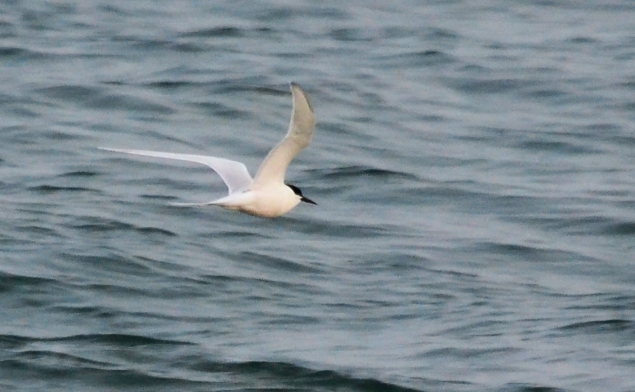
In August, the mudflats at this park were inundated by Least Terns, mostly from the nearby Alameda colony (I assume) but possibly from elsewhere in the bay. I counted 190 individuals one day at the beginning of August, which to me is a staggering number to see away from a breeding colony. There were a lot of juveniles around (which is good news, as Least Terns are federally listed in the state) and a lot of strange looking molting birds, like this one. Almost no tail on this bird...why????


This fresh juvenile was not confusing, only encouraging. It was good to see Least Terns in something other than alternate plumage, because they get the hell out of dodge almost as soon as breeding is complete so it's not often we get to see much variation in these birds, beyond full alternate. I'm sure I've already seen my last Least Terns of the year already...it's been real.


A great many Western Sandpipers use San Francisco Bay during migration, which I am very grateful for. Here is a typical juvenile male, showing rusty scapulars and a relatively short bill. I've spent an inordinate amount of time this fall sorting through Westerns, looking for a Semipalmated, as it would be a year bird and I've never been able to find one in the bay area...how embarrassing. The search has been in vein, but the search for other vague runts continues.


Now that I think about it, I've spent a not insignificant part of my life sorting through Western Sandpipers. I'm ok with that. It's more enjoyable than sorting through Least Sandpipers.


Ah, the homely Least Sandpiper. They don't get a lot of love. If someone asked you, "What would you rather, have American Redstarts go extinct or have Least Sandpipers go extinct", you know you would pick the sandpiper over the vast majority of other birds. It's not their fault they are so drab and abundant, and they certainly aren't obnoxious or anything. They're just being Least Sandpipers. I liked the cracked mud this one was coursing over. 


Now that I've lulled you to sleep with common birds, how about something else...do you see a godwit (the startling pale one...on the left) that is not like the others? Bolinas Lagoon, Bolinas, CA.


Bolinas Lagoon hosted this Bar-tailed Godwit for about a week, which we were able to see from Highway 1. I've only seen one in the state before, so when Peter Pyle reported this bird, the drool started flowing in earnest. Though it never came particularly close, the bird readily stood out from the Marbleds, even at great distance. Seeing a Sibe always feels like a major accomplishment, and this bird brought the warm and fuzzy rarity endorphins I knew it would. Also present were a Ruddy Turnstone (oddly, somewhat of a rarity in Marin) and a fantastically distant golden-plover, which Peter and others had previously identified as an American.


A lone Long-billed Curlew provided the godwitting birders close company on the shore of the lagoon. Sibley notes "goose-like wingbeats" and "foraging movements graceful"; neither of these thoughts have ever occurred to me, though I won't go on record as denying them.


Perhaps he will note "forceful bellowing" in the next edition.

Sunday, June 14, 2015

Maynerayge Day 3.5: Slipping The Clutch


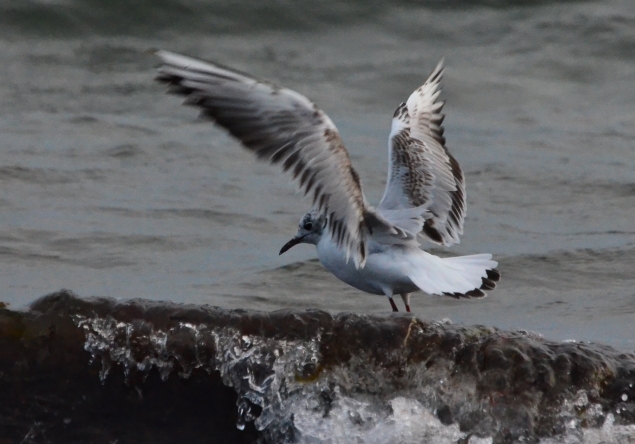
It was late in the afternoon, and Nate and I decided to head out to the beach at Pine Point to try our luck with the continuing Little Gull and for more looks at Roseate Terns.  It was sadly dark when we got out to the jetty...a big cloud bank was blotting out the sun and Maine was cold again, and any photos to be taken were to come out dark and grainy.  But there they were...the Bonaparte's Gulls, frolicking in the surf, just where they were supposed to be.  Where was the Little Gull?  Scanning the flock repeatedly brought no such thing...in fact it only brought Roseate Terns, which Nate always informed me were flying very close by behind me whenever I got too distracted by the gulls.  It was agonizing.

Since it did not seem to be around, the thought occurred to me that I should do something other than focus on finding the Little Gull that I thought I had previously found...I should really find my own Little Gull. So I stopped looking for the tiny black-headed wonder and kept scanning the Bonaparte's flock. It wasn't long before a bird lifted off the beach with a really bizarre wing pattern...could it be? My redemption? My destiny? It landed out next to the end of the jetty, so I Nate and I troglodyted out to where another group of Bony's was feeding. Within a few minutes...we had our reward. Another Little Gull!  I love it when a Vague Runt plan comes together.


Due to the awful light conditions, essentially none of the birds around were crushable, but we had good looks at this bird as it foraged and flew around the tip of the jetty. This being only the third Little Gull that I've ever seen, I wasn't going to complain.


This is a young bird in first-summer plumage, overall pretty shabby-looking but it really stood out both on the water and in flight. With such a bold wing pattern, it was impossible to miss when it was on the wing.

While we were out on the jetty, we noticed another birder had shown up back on the beach, and he was clearly on the hunt for the other Little Gull. After our young bird disappeared, we saw him running down the beach toward another Bonaparte's flock, clearly in hot pursuit of the adult Little Gull that he had just relocated. Nate and I decided to parasitize him, and he led us right to the bird.


There it was, our other little buddy.  We had seen it three days in a row now...Vague Runts are good birds to know, especially in this case where it is especially runty.  It gave good looks in the fading light, and eventually flew out to the river mouth to feed.

I thought the day was at an end.  I was mentally packing up and getting ready to go, and did the prerequisite last scan of the flock of birds in front of me...and then all time stopped. My heart paused between beats.  Gulls were frozen in mid-air.  What the fuck is that bird standing there?  Holy shit, it's a Black-headed Gull!!!!


For the last several minutes, this Black-headed Gull had been standing right in front of us, just a few feet away from the Little Gull, without anyone noticing! Indeed, in one of the last Litttle Gull pics I took that day, I can see the Black-headed standing in the corner of the frame. Compared to the Bonaparte's, it was huge, and after spending so much time looking at Little and Bonaparte's Gulls the last few days, it was instantly recognizable. Like the first Little Gull of the day, it was a first-summer bird, a life plumage for me. Check out the leg color (and girth!) compared to the Bonaparte's standing behind it.


Nate and I couldn't believe our luck. We summoned the other birder we had previously been parasitizing, Josh Fecteau, and were able to pay him back handsomely with this ace Vague Runt. The bird moved off the beach and foraged in the little breaking waves, giving great comparisons to Bonaparte's Gulls. Check out the different wing patterns between the Vague Runt and a Bonaparte's of the same age. Remarkably, Dipper Dan and Flycatcher Jen had stayed back at the vacay house the entire time, seeing none of these birds. Even sadder/funnier, Nate and I had taken the rental car, so if they wanted to see this bird they would have to hoof it all the way from the house before it was too dark to see. Is that fucked or what?


Dipper Dan and Flycatcher Jen eventually showed up in time, while the Black-headed continued to be hella cooperative. All was well in the world. Note the extensive black in the inner primaries.


The bird was clearly larger than a Bonaparte's with a longer bill (reddish in good light) and traces of a hood that came up much higher on the head than a Bonaparte's, and way way higher than on a Little Gull.  A field mark that I did not remember on basic-plumage birds (I've only seen one of those, cut me some slack) was how white the bird was on the hindneck compared to a Boney.  That was one of the first things I noticed about the bird, back when it was standing on the beach.


The Black-headed also was pretty dark on the underwings.  As with Little Gull, I've only seen Black-headed a handful of times before, so this was a victorious find.  According eBird, this is only the second recorded in Maine this year, and the only one other folks were able to chase successfully.


As I mentioned earlier, I somehow managed to not photograph every single Roseate Tern that flew by closely, and the shots I did get made me wince when I looked at them.  At least you can actually see the roseate hue and strikingly pale upperwing in this photo.  This was one of my top target birds of the trip (I've now seen every expected tern species in North America and the Hawaiian Islands except Blue-gray Noddy...don't know how I'll bump into one of those things), and it was nice to see a number of them flying around off the Pine Point jetty. Looking forward to the next time I get to meet this tern.


Common Terns really are common in Maine, no shocker there.  It's been a long time since I've seen so many. Being a decidedly uncommon bird in California, it was great to spend some more time with this species, all of which were in alternate plumage.  Solid.


The typical pot-bellied, short-tailed look of a Common Tern.


It wasn't so long ago (though it seems like it now) that I was in the Least Tern business, down in the whale's vagina. Since we are no longer business partners I am no longer afforded the chance to see them every day of the week, so I was pleased to see so many Least Terns around Scarborough Marsh and Pine Point. It's crazy to think that some of the birds I've seen on Midway Atoll I've also now seen in Maine...along with Least Tern, Ruddy Turnstone and Green-winged Teal are the others. Least Terns even breed on Midway...the mind reels.


Least Terns are gray in the uppertail and rump, whereas Little Terns are white. Remember that, and you might be a birding hero someday.


Just offshore from the jetty and the mouth of the Scarborough River, a large flock of terns and Bonaparte's Gulls were feeding the entire evening.  No doubt the abundance of food right next to the beach was behind the number of quality birds present.  Considering the warbler show earlier in the morning, this was probably my best day of birding for the entire year. Birding in Maine is good birding.

Thursday, March 12, 2015

From Anous to Thalasseus: Tern Heroes


Brown Noddy is a truly slick looking bird, with shades of gray, brown and black all somehow seamlessly melting into one another.  I'm told they can be pretty aggressive around nests but in my experience with them you just walk up to them and they let you stare at them super hard. Photographed at Midway Atoll.

I have a plan...a plan to see a certain species of tern.  A species I haven't seen before.  I'm not going to try for another couple of months, but I'm really looking forward to it.  I don't get lifer terns very often (the last couple were Bridled in 2013, Aleutian in 2010) so I'm getting pretty worked up about it. Terns are a big deal.  They are aesthetically pleasing, highly migratory, prone to vagrancy, and often offer a worthy ID challenge.  Many species are stunning, even while still comfortably constrained by The Economy of Style.  In anticipation and celebration of this event, I'm going to post a suite of other terns that have improved my life in myriad ways.


My experiences with Black Noddy, on the other hand, have not been similar.  They look at you from trees and don't want to be near you.  Although I saw many, many Black Noddies while out at Midway, this was the one and only really approachable individual I found...which I am grateful for, because it chose the perfect perch and perfect background. Note the longer, more slender bill in comparison to Brown Noddy.


Sooty Terns sure do get around...around the world, that is.  It's one of two tern species I've seen on the east coast, west coast, and Hawaiian Islands (Least Tern being the other).  This bird was (still is?) part of the colony on Eastern Island at Midway Atoll.

Ahhh, my last life tern, and what a sweet lifer it was.  Before seeing them I was always confounded about how these could be told from Grey-backed Terns (which do have some range overlap in the South Pacific), but I can see a difference now. This Bridled Tern was photographed off Cape Hatteras, North Carolina.


Grey-backed Terns are sweet birds...they sometimes nest in the same places as Sooty Terns, but are always less abundant and less annoying (Sooty colonies are loud and intense).  I've always considered them the luxury car of terns, although I don't know why and that probably doesn't make sense to anyone else.  Note the finer bill and paler back than the Bridled Tern above; Grey-backed also has less black in the primaries when seen from below. Photographed at Midway Atoll.


Least Terns and I go way back...they are one of the handful of birds that I remember well from those dark ages of before I was a birder.  I worked with these birds a lot in San Diego a couple years ago, unfortunately all of their breeding colonies fared horribly and it was kind of depressing (colonies up and down California failed that year).  Photographed in Escondido, CA.


As far as photography goes, shooting feeding terns never gets old.  Here is a Forster's Tern, mid-plunge. Photographed at the Tijuana River Estuary, CA.


Though shackled with a...common...yet horrible name, Common Tern is always a bird we enjoy seeing in California.  Rarely common, we most often find them during fall migration at the Salton Sea, coastal wetlands and well offshore, in the realm of Arctic Terns.  You would not expect to find a bird from the Canadian prairie far out at sea, but luckily birds have a habit of defying birder expectations.  Photographed at Ormond Beach, CA.


Arctic Terns are tantalizing.  Unless you are lucky enough to bird where they breed, they always seem so...ephemeral.  Uncommon off California during fall, they are never really dependable on pelagic trips, and sightings are usually brief and of poor to mediocre quality. I want to see more. Photographed off Bodega Bay, CA.


I first met Sandwich Tern at Bolsa Chica Ecological Reserve (in Orange County, CA) back in the mid 90's when one had teamed up with an Elegant Tern to make hybrids.  It would be over 10 years before I saw another, but now we make sure to eyeball each other with more regularity. Photographed at the Dry Tortugas, FL.


Elegant Terns are a common sight up and down California in summer and fall.  As breeders, they have increased in the state over the years, forming colonies in San Diego, Orange and most recently Los Angeles Counties...no minor achievement, considering how few breeding colonies there are in the world.  Photographed at Half Moon Bay, CA.


Unlike on the Atlantic coast, Royal Terns do not venture very far northward; they are a rare bird away from southern California.  Despite frequently associating with Elegant Terns (which provide great comparisons), they are often misidentified...but such is the fate of many terns South Padre Island, TX.


For the world's biggest tern, you would think Caspian Terns would have some different behaviors from the rest of the family...but aside from monstrous vocalizations, they are pretty similar.  Fortunately, those horrible calls are quite charming.  Photographed at South Padre Island, TX.


Gull-billed Terns, on the other hand, know how to stand apart.  Gull-billed Terns are just as content foraging for horned lizards in the sand dunes as they are fish in the surf line.  They hunt bird eggs and chicks, and will get mobbed by other tern species.  They are everything Caspian Terns wish they could be, all while carrying themselves with a certain grace and elegance. Photographed at the Tijuana River Estuary.


Black Terns have always been there for me.  Back when I started birding, a Black Tern was one of the first Vague Runts I ever saw (at the Ventura Water Treatment Plant, if you must know). They are always there for me at the Salton Sea in the summer.  When I needed them most (for lack of humanity to spend time with), they were there in the greatest of numbers in North Dakota.  I would be lying if I said I wasn't dying to see their Vague Runt brethren, White-winged Tern, but until I do Black Terns will continue to validate my existence.  Photographed at Lostwood NWR, North Dakota.


White Tern is a singular bird...there's nothing quite like them. They nest pretty much anywhere that isn't the ground, just plop out an egg where hopefully the chick won't be too exposed to the weather. They are tame. They come hover next to your head as you walk by their perch. If you haven't seen one, they are your favorite bird waiting to happen. Photographed at Midway Atoll.


Last but not Least Tern, I finally give you a stupid tern pun and offer you an honorary tern, a Black Skimmer. Skimmers look great on the wing, but they always look so grumpy at rest. Maybe if no one could tell that I had eyeballs, I would seem grumpy too.  Photographed at South Padre Island, TX.

Sunday, June 8, 2014

Pooped Out of Texas...Catharus PTSD...The Imminent Hangover


Sabal Palm Sanctuary is the place to go in the valley for Least Grebe this summer. They are easy to see at close/crushable range, and word has it they are nesting as well. The only other places I picked up this ghastly grayling on this trip were Pollywog Pond (Corpus Christi) and Ester Llano Grande (Pharr).

Hello admirers, friends, frenemies, and lurking trolls...I thought it would be prudent to give a quick update from The Road. Suddenly I find myself at the ass end of another field season. I have been pooped out of the bowels of the Lower Rio Grande Valley into the great big toilet of the American West. My exit featured a bird-heavy (and occasionally whiskey-soaked) route from Austin through southeast Arizona, and now I find myself with old friends in Flagstaff. Good birds have abounded this spring, and I am lucky to have survived another productive season without slipping rank in Global Birder Ranking System. I bask in the light of the smiling gods of birding...there is nothing like it.

Except, perhaps, good whiskey.


It was great to see so many Stilt Sandpiper this spring. Crisp breeding plumage birds lie somewhere on the spectrum between Economy of Style and Facemelt. Their appeal does exactly rip your eyes out, but you don't have to look very hard to see it either. They are captivating, in fact. I must find a name for this zone of appearance/appeal. Oh, that's a Lesser Yellowlegs on the right, if you were wondering. Estero Llano Grande WBC, TX.


How about another "Valley Specialty"? Here is a White-tailed Hawk. I had a lot of fun trying to separate these from Swainson's Hawks at great distance, while soaring. My findings? It's not always easy, but at least GBRS gave me some points for the effort. Hidalgo County, TX.


Warblers, like this confiding Blackpoll, really stole the show for me this spring. I never did get the Swainson's I was looking for, but I don't mind needing an excuse to get back to the Gulf Coast in spring! Fuck! South Padre Island, TX.

Gray-cheeked Thrush was a bird I was happy to get to see more of in April and May. Catharus are a bitch, huh? For weeks I had to sit back and watch birders absolutely slaughter the identification of thrushes, left and right. I think having to see so many blown calls gave me some kind of PTSD. South Padre Island, TX.


This Groove-billed Ani was an ABA bird for me. In fact, it was the only one I recorded while I was down there, which is unusual because they are actually fairly common by now. Birding is weird. The ani was sunning itself, shortly after sunrise, in a roadside mesquite. Hidalgo County, TX.


Let's tie it all up with a Least Tern, a bird of Texas and a bird of California, which is where I will be seeing my next one. More coverage from Texas (and southeast Arizona) coming up soon. Such good birding the past few months! A birding hangover is imminent. Photographed at South Padre Island, TX.