Showing posts with label Lake Merritt. Show all posts

Wednesday, December 11, 2013

Return of the Crusher


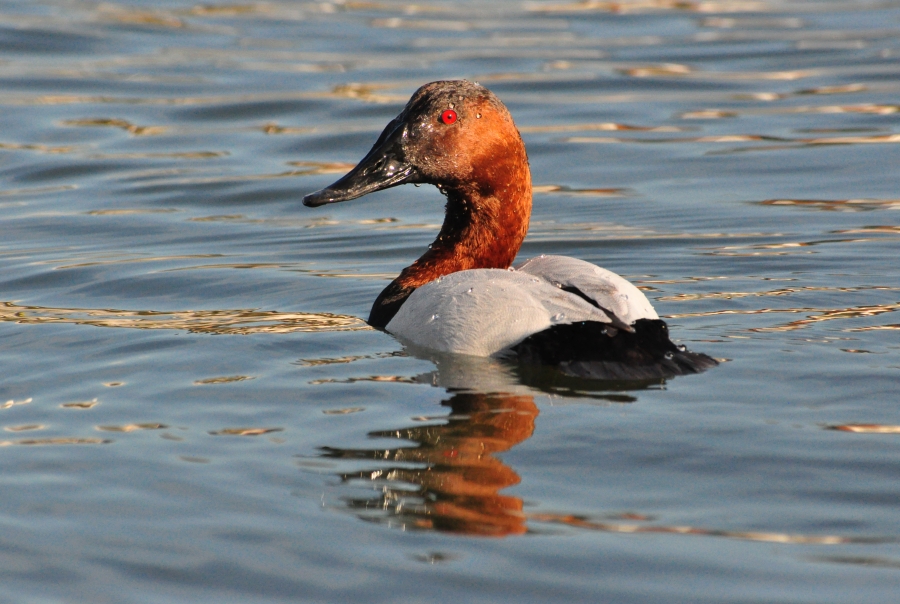
After close to a month of not taking bird photos, I finally got my crusher back. Cautiously optimistic that everything was fine, I lurked out to Lake Merritt to see if I had the capacity of damage infliction that I was hoping for. My first targets were Canvasbacks...


Very quickly I found that any worries I had were unfounded. It's good to be back in business. Here's a hen Canvasback modeling her Economy of Style.


Black-crowned Night-Herons at the lake are always eager for attention. When observing birds, it's important to be able to see how far their eyeballs protrude from their sockets.


An adult Glaucous-winged Gull was equally obliging. Orbital ring color is a very helpful field mark for adult gull ID; Glaucous-wings use pink eyeliner.


Glaucous wings. Frosty.


This adult Thayer's Gull was also hanging around, behaving somewhat meekly.


Who needs sunlight for a good photo? This is by far my favorite shot of Thayer's that I have. Note the pale inner primaries.


The most recent addition to my small collection of second-cycle Thayer's photos. Note the dark (not black) primaries with pale tips, and small bill. Interesting to me, it attempted some half-assed begging for food aimed at the adult bird above. It didn't work.


Looking into the eye of an Eared Grebe is always a captivating, albeit confusing experience.


A Glaucous-winged X Herring hybrid achieves maximum bellow. I wouldn't want to be the piece of garbage inhaled into this bird's gaping maw.


I think this crush captures the essence of what Western Gulls are all about. It had just finished bludgeoning a shellfish.

Tuesday, February 26, 2013

Big News: Lake Merritt, Storm-Petrels and Seagull Steve


Oakland's most popular vagrant has come a long way since his arrival at the lake last fall, when he was heavily molting. He is now crisply colored and has a big, shiny tuft. Last year he stayed well in to March, so we should have him for a little while longer. All photos today from Lake Merritt.

Well Bay Area folks, until recently I was completely unaware of the tremendous amount of effort being put in to restoring the connectivity of Lake Merritt with the Oakland Estuary/San Francisco Bay. This should provide both a healthier tidal ecosystem (including some new salt marsh) and more access points, which should result in better birding and photo opportunities. I guess I should go check out this newly restored area while the Perpetual Weekend is still rolling along...winter is almost over but I have a feeling the channel will be good for diving ducks like Barrow's Goldeneye. Much more work seems to be planned as well...the Chronicle has a good article about current and future restoration work right here. It's nice to share good news once in a while, you know?


This attractive but terrible creature has been lurking at the lake for the past several weeks. I think it's one of those mysteriously pale and faded Thayer's Gulls that some people would be tempted to call a Kumlien's.

If you haven't caught the recent storm-petrel news (inexplicably, also good), a new species was just officially described off the coast of Chile...Alvaro Jamarillo has a summary of the discovery right here. What is particularly exciting about this bird is that its just something birders and ornithologists have simply missed over the years; it is not a result of genetic work done in a lab. Also, the until-recently-thought-extinct New Zealand Storm-Petrel just had it's first breeding site discovered. Birdlife International has the details.

And since we are on a seabird kick, I think its worth mentioning my new field job for this spring and summer...monitoring breeding and foraging seabirds on Santa Cruz Island for PRBO (Point Reyes Bird Observatory). Santa Cruz is one of the Channel Islands that lie off the coast of Santa Barbara County in California...it is famous for the endemic Island Scrub-Jay and adorable Island Foxes, but it is a major seabird nesting site as well. Totally stoked for that, although my blog output will undoubtedly suffer.

Last but not least, The Great Ornithologist Felonious Jive (truly, the Caligula of ornithologists) wonders how certain individuals can put their money to work for birds over at 10,000 Birds. Check it out, and please comment if you know anything we don't.


Clark's Grebes are common at Lake Merritt; it's a great place to compare them with Western Grebes at close range.

Monday, March 26, 2012

Hank The Pelican


Hello from San Diego! As you read this I'm over at the San Diego Zoo, getting dosed with my first round of trainings for my new job. Hopefully all will go smoothly, and I'll be able to get into the zoo for free when that is all said and done with.

Since I went to Lake Merritt over and over and over again this winter, I got to the point where I began to recognize individual birds...the one Ring-necked Duck, the Redhead with too much white, the Black-crowned Night-Heron with the droopy wing, the crusty-looking Great Egret, the teenage Barrow's Goldneye, the celebrity Tufted Duck. But the bird that even nonbirders knew was Hank, the American White Pelican.


Hank is a dapper bird. Look at the size of her....her....horn? What is the name of that thing anyway? Well, you know what I mean, that thing is huge.


Pterosaur Face.

I had been seeing Hank there for years, but I just recently learned her story, that her name was Hank, and that he was a she.

According to a passerby (and the internet), Hank was found with a janky wing in Oregon, back in 2004. After it was determined she would not be able to fly again, she wound up in Oakland, of all places, at Lake Merritt's Rotary Nature Center. Every day, for the past 8 years, she spends her time at the nature center (where she is fed delicious fish) and the small islands just offshore. Since she is such a stud, she now attracts free-flying white pelicans to the lake every year to hang out with him, which apparently never happened before her arrival.

On my last day at Lake Merritt, they had drained the scum ponds at the nature center and were filling them with clean water. Hank got stoked, and started doing all kinds of weird stuff.


If you had seen how nasty that water usually is, you would want to dunk your head in there too.

Although you would be considered whorish to count Hank on any kind of official list, she still gets cred from her less disabled pelican relatives and probably spends inordinate amounts of time wishing she could fly someplace else more suited to copulating with a female. At least she has the distinction of being the biggest damn bird on the lake, and makes passing children cower in fear...a toddler could fit in her throat pouch, no problem.


Nom nom nom nom nom.


People don't usually think of pelicans as being crested birds. Now, people will know better.


I am not used to having such giant birds cause tsunamis a few feet in front of me, even if they are only half-wild. I can't imagine what holding one of these birds is like...prolly a mixture of sheer terror and blood.


Hank can easily pass for a wild bird when she wants to. Don't forget to say "hi" to her if you find yourself at the lake.

Wednesday, March 7, 2012

Lake Merritt: The Realm of Fuligula and Friends


Buffleheads even attract the attention of nonbirders. Little do they know that they actually nest in the ear cavities of American Buffalo, a highly specified niche.

I've been spending a lot of time in Oakland this year. Who knew? I've always felt loyal to sweet sweet West Bay.

Like San Francisco, there is a lot of concrete around here, but birds can be found with the right pair of eyes...or access to BB&B. The obvious best birding/photography spot around is Lake Merritt, which is filled with diving ducks all winter long, not to mention grebes, gulls, herons and various songbirds around the lake. That's pretty cool in and of itself, but these birds are quite acclimated to people, as anyone who tried to go hunting here would probably end up on the losing end of a shootout with a local gang. Bring a camera and you can spend many hours there...November-February are the best months, but get there soon and you can probably still find most of the regulars. All pictures today are from Lake Merritt.

PS Although not from Lake Merritt, I highly recommend looking at this gem from Postsecret. Swans > Kids any day and every day.


Canvasbacks can be a bitch to photograph, which is a shame, because they are brilliant ducks...superb, even. I once saw a Peregrine Falcon grab a Canvasback from the sky, and then drop it into a pond from 150 feet up. THE DUCK SURVIVED. You will have no problem getting cornea-bending looks of them at the lake.


This American White Pelican can't fly and has been living off fishy handouts at the lake's nature center for several years. Occasionally a wild birds drops by and keeps it company/steals its meals. It still goes into breeding plumage late every winter and is fun to look at when its around.


Of course, the avian celebrity of the lake is the annually returning Tufted Duck. For the past several years this has been the most reliable place in the state to see one.


His tuft doesn't always look so immaculate, and it needs to be shampooed and conditioned on the regular. It reminds me more of a droopy mohawk (stylish in it's own right) in this picture.


Well I have a feeling this is a hybrid, but maybe (against all odds) it's a Glaucous-winged Gull. Kind of a pretty bird though. The lake can hold good numbers of gulls from time to time, and should be checked for some of the rarer species.

One of the Great Egrets that frequents the lake has lost most of it's fear of people, which allows you to get pictures like this one...


...and this one. Maybe someone can bring it some moisturizer?????


Green Herons are there too, although aren't as notoriously cooperative as some of the other herons. In fact, I haven't met a truly abiding Green since 2009 in the Everglades....what a bummer.


Eared Grebes appear harmless, but their terminator eyes say otherwise. Between their eyes and their fluffy, pillowesque bodies, they are one of the great mysteries of nature. 


Lake Merritt and scaup on a cloudy day.


There are birds without webbed feet found at the lake too, like this Nuttall's Woodpecker. Nuttall's is practically endemic to California, so my heart swells with pride whenever I see one.


Lesser Scaup. I dig the fine patterning on it's back (scaupulars?!), that's not something non-hunters get to see very much. Go to sleep my scaupy friend.


Friday, February 10, 2012

They Called Him "Fuligula"


Every part of the country has it's "specialty" rarities. The northeast gets European birds. Florida gets birds from the Carribean. Texas and Arizona suck up Mexican specialties. The West Coast gets Asians.

Yup. There are a lot of Asians around these parts. I am half Asian myself, which gives me Hybrid Vigor. Of course, birders here are just as disproportionately white as anywhere else, but we are not talking about that. No, when I'm talking about Asians, I'm talking about birds.

Of course, we don't get the volume of Asian Awesomeness that Alaska does, but we do get our share. In the last few months I've been lucky enough to see Falcated Duck, Red-throated Pipit, Brambling, Ruff, Sharp-tailed Sandpiper, and a couple of Tufted Ducks. Maybe I've seen all of these birds because of my Hybrid Vigor.

Tufted Ducks occur regularly every winter from Washington south to the bay area, and sometimes further, making them the most dependable Asiafowl to find aside from the comparatively abundant Eurasian Wigeon and "Common" Teal.


As you can see in this photograph, Tufted Ducks are clearly awesome. Have you seen one? No? Well come visit Lake Merritt in Oakland, California, where this dude spends every winter. Although it's often passed out with the scaup flock in the middle of the lake, you can occasionally find it lurking just a few feet from shore. I last saw the bird yesterday (February 9), so if you're in the area, come on by.

Per my normal policy, I will now intentionally not begin talking about how to identify Tufted Ducks. That would be boring and redundant, as you probably have your own bird books, and as you can see it has a giant tuft sticking out of the back of its head, which is indicative of it being a Tufted Duck.


Here's our Tufted friend with cousins, Greater Scaup (middle) and Ring-necked Duck (right). Obviously, they all look different. Sorry I couldn't get any Lesser Scaup in to the frame.


Like Greater and Lesser Scaup, the color of a drake's head is dependent on the light. Sometimes they have green, and sometimes purple heads. Not useful for identification, but a nice aesthetic touch.


Tufted Ducks can be hard to spot. Even when they're right in front of you. You should still be embarrassed though.


Tufted Ducks are easiest to spot when you happen to be positioned within 10 feet of the bird, preferably when it's directly beneath you. In fact, I recommend this method highly. That said, I have met more than one Lake Merritt birder who failed to notice the Tufted Duck sitting within petting distance from shore, which has heavy implications, to say the least...


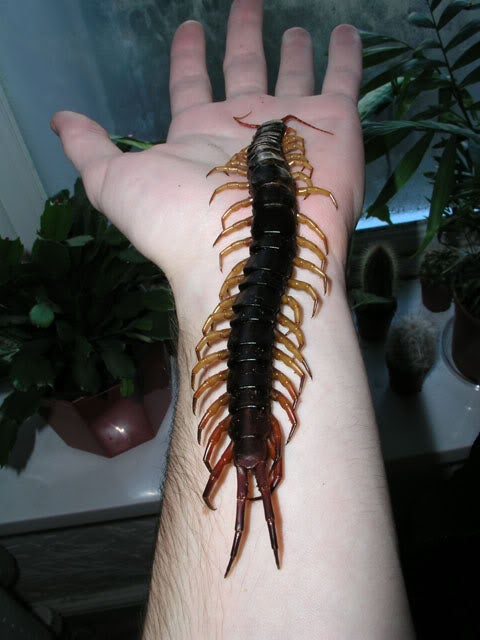
Here it is, the shot you've been waiting for...The Bellowing Tufted. I would describe the listening experience as similar to what it would be like to have two (2) Amazonian Giant Centipedes in your ears, sinking their horrible fangs into your ear drums and sending you into terminal brain paralysis.


Tuft tuft tuft.


Since Tufted Ducks spend inordinate amounts of time being rare and making birders wet their pants, they need to get their shut-eye.

Tuesday, January 31, 2012

Bellowing Ducks


Have you ever looked down the throat of a living, breathing Greater Scaup? If you have, then you have seen Hell. Photographed at Lake Merritt, CA.

There is nothing worse in the bird world than having to withstand the horrible bellowing of waterfowl.  Their piercing and horrible cries are enough to bring anyone to their knees. Today BB&B will provide the service of showcasing various bellowing ducks, without forcing you to listen to their wretched, ungodly sounds. You can thank me now.


Here is the same scaup uttering its war cry yet again. This is it's classic combat pose; as you can see, its foot is poised for skull crushing.


Cinnamon Teal specialize in bellowing from shrubs, just above the water....where you would least expect them. Photographed at Radio Road, Redwood Shores, CA.


The thick tongue of the Canvasback assists it in uttering bass-filled, guttaral tones that can liquify the skeletons of its prey. Lake Merritt, CA.


You too may someday meet your destiny between the dark, betoothed mandibles of a Hooded Merganser. Pray that its terrible shrieks end your life first. Golden Gate Park, San Francisco, CA.


Everyone knows that being bellowed at by females is far more unpleasant than getting an earful by males. This Redhead was at Lake Merritt, Oakland, CA.


That's right...dual bellowing. The blood and feathers will fly. I wish I had photographed these birds on some remote river in Central America, but these birds live in Golden Gate Park. They usually sleep right next to each other and don't do anything else, but any relationship can get strained...


This Northern Pintail hen has contorted herself into Ultimate Bellowing Position. Be very afraid. Radio Road, CA.


The cry of the Ring-necked Duck will bring the death rattle to your bones in a matter of seconds. Golden Gate Park, CA.


This Common Goldeneye has assumed the position of Alpha Bellow. If you ever see a goldeneye do this, not only will you suffer a terrible, unspeakable fate, but so will your first-born child. Just avoid looking at medium and large bodies of water for the rest of your life and you will be fine. Lake Merritt, CA.