Showing posts with label Willet. Show all posts

Sunday, October 13, 2019

Still S.E.V.E.N./Breaking Rad(ius)


How long has it been since the last post? I'm really dropping the ball over here. Well, I've been doing a lot of crud, and quite a bit of stuff too, so it's not like I've had ample opportunities to fire up the blogerator...but still. Even though it has not been sheer, bottomless laziness that is to blame, I have let you down all the same.

I have failed you.

But I am here now. BB&B languishes no longer. Withering away into oblivion is not fait accompli...at least, not yet. Before BB&B fades away, I must pass on all that I know. A thousand blog posts will live in you. Someday, this will be your fight.

And what a fight it will be. The truth about birders must be told, even after I am gone. Although our rate of posting has dwindled, BB&B is constantly taking the temperature of the birding community, and our recent findings are disconcerting at best. Birders are still as nonsensical, annoying, petty, anal and pedantic as ever...perhaps now more than ever. They still fail to apply basic concepts of science to their bizarre, baseless theories while claiming to embrace science. They are still obsessed with making everything into a hybrids. They still spew vicious, evil lies like "there is no such thing as a bad day of birding".

Unbelievable.

Someday, dear reader, you will construct your own lightsaber and your skills will be complete. Indeed, you will be powerful. But that day has not come yet...I am still here, and my journey is not yet over. I am still here, still the Global Birder Ranking System's #7 U.S. birder, still a birding master, still capturing the birding Zeitgeist like no blog ever has.

Still rock my khakis with a cuff and a crease.

Chances are most of you readers are too old or too young to know what that means, but for the rest of you, enjoy that easter egg. Now that we have reestablished my blog wizardry, I feel comfortable admitting to you a deeply shameful fact...September was an utter failure in terms of seeing rare birds. I didn't really chase very much (going to take this opportunity to pat myself on the back here), and while that may be admirable, I also didn't find jack shit locally. I can't remember the last time I went through September without seeing a single vague runt somewhere in the bay area...how embarrassing!

Apparently, I no longer see vagrants. I no longer see uncommon birds. What has happened to me? Can I just go #FULLGERI and retire so I can go bird all the time? If only there were a way...

No, this is not where I direct you to my gofundme page so you can pay for my birding trips. You're welcome.

No matter. The rarities will return, though they may or not be within my 5MR. It hasn't been too difficult to stay in the friendly confines of the 5MR for most of the year though. I've gotten a lot of new radius birds, seen some rarities, and found a couple really good ones of my own. However, that strategy has been backfiring a bit lately, and I think one of the best ways to maintain a good relationship with your radius is to know when to break free of your radial shackles!

So with that in mind, here is some non-radial stuff from earlier this year.


Countless birders went to see this Eastern Bell's Vireo when it set up a territory for a couple of weeks in late spring. Not only was this my first Bell's Vireo of any subspecies in Santa Clara County, this was my first Eastern seen in the state. Easterns are exceptionally rare in California and practically unheard of in spring...it's worth wondering if this split will be revisited again. I've only seen one or two of these before, so this relatively cooperative vague runt gets FIVE STARS. Photographed at Don Edwards National Wildlife Refuge, Santa Clara County.


A day later, I hiked out on a trail I had previously not heard of for another county bird, an Indigo Bunting. While it wasn't very cooperative, I did appreciate that it dispensed with the suspense and appeared almost immediately upon my arrival. Photographed on the Stanford Dish Trail, Santa Clara County.


Dark-eyed Juncos isn't the slightest bit rare, but I appreciate friendly ones like this. This was photograped at New Brighton State Beach in Santa Cruz County, where I also got my lifer great white sharks! Standing on a fairly crowded beach while a bunch of (mostly small) sharks swim offshore is quite the spectacle, very Jawsish in a low intensity kind of way. Best moment: despite everyone on the beach knowing there were sharks visible just offshore, a dude on a stand up paddleboard tried to be all nonchalant and paddle around anyway, but had to frantically turn around and paddle to shore when a shark came up next to him. Golden!


The easiest, most reliable Red-footed Booby in the Lower 48 has made its home roost at the end of the Seacliff Pier in Capitola for spans of 2018 and 2019. It's still there, being awesome. Of all the booby species, this one has been the hardest to chase in California until very recently, as they had a penchant of dying immediately after being found. This one is holding it down though.


Here it is back in 2018. Back then, it looked a bit more blonde-headed and pink-billed.


I live near sea otters. They are very east to see down at Moss Landing (where this one was) and in the Monterey area. This proximity has enriched my life. Everyone would be a lot happier if they had access to sea otters. Alas, most of the world is a sea otter desert.

And so the world burns.


Unlike otters, summertime Long-tailed Ducks are not at all expected, as they are a good find even during winter. These two decided to pass their time going through gnarly molts in Moss Landing. 


After driving by it countless times without stopping, I finally checked out Moss Landing Wildlife Area. I'm glad I did, because there was a Snowy Plover nest hatching right next to the trail! Crazy timing. Look at that little chickie! It's still wet and has eggshell in its down. I spent less than 30 seconds next to the nest and then booked it out of there to make sure it was minimally disturbed...after all, I am not a photographer. Hey-oh!


Microfishing is all the rage now but Great Egrets have been doing it since there have been Great Egrets. Photographed at Shoreline Lake, Santa Clara County.


Can you imagine connecting with this microtrophy with hook and line? Oh, the stories you could tell. 


Shoreline Lake is also a popular fishing spot for Forster's Terns and a great place to see them up close, since they are very acclimated to fishing next to the well-trafficked footpath. I love me some acclimation. Too bad the Black Skimmers that nest there now aren't so prone to cruising by the shore.


It's not like I'm a photographer or anything, but one of my favorite things to shoot is terns in flight. Shooting many flying birds (swifts, hummingbirds, most passerines, almost anything on pelagic trips) often ends in nothing but crushed hopes, massive disappointments and some mediocre keepers, but terns have such nice lines, some tolerance for people and aren't obnoxiously small. Also, anything that feeds by plunge diving gets extra points from me.


Willets are underappreciated. Nice to see this confiding friend just returned from its breeding grounds...where their obnoxiousness is what is unappreciated. Being near a Willet nest is not a pleasant sensory experience. Photographed at Shoreline Lake.


Cliff Swallows are still occupying their wonderful ovenish nests in late summer. Photographed at the Palo Alto Baylands, Santa Clara County.


At the Casey Forebay pumphouse, I settled in to sort through the swallows that roost there. I don't get to see/study juvenile swallows as well or as often as I would like, and the flock here provides a good opportunity to see birds up close. Here is a somewhat bedraggled adult Cliff flanked by juveniles.


I was surprised to find this white faced juvenile Cliff Swallow. At first I thought it was an abnormality, but then I noticed several other white-faced juveniles in the flock.


This is a different individual. Bizarre. Well it's most likely not bizarre at all, but I did not expect it. Anyone know what's up with this whiteness? How long it is retained? Do only a minority of birds get this or is this a pretty typical part of their molt?


In the back of my mind, I had an alterior motive for standing there with the swallows. I wanted to find a Bank Swallow. They are a rarity in Santa Clara and I had never seen one here. You can imagine my surprise when one casually swooped in and landed on the railing 15 feet from me, allowing me to crush it through the chain link fence.


Uh....what? Finding rare birds usually does not work like that. Finding a rarity...a county bird...is always ace, but finding one in July is the icing on the cake. Having the bird come to you within scope and tripod hurling distance is the crushed up painkillers sprinkled on the icing on the cake. This business with betraying one's radius is not so bad after all, eh? Although they nest at a couple places on the coast, I don't often get to see Bank Swallows and this was my one and only of the year.


While the Bank Swallow was confiding, it did not stick around for long so I was left with the other swallow species. It was cool to have all the other brown swallows represent in the swallow roost, which made for a great comparison with the Bank and with one another. Here is a juvenile Tree Swallow.


And here it is bellowing.


Here is a juvenile Violet-green Swallow, showing just a tad bit of white above and behind the eye.


And last but for once not least, here is a juvenile Northern Rough-winged Swallow. Yes, typically this swallow is one of the absolute drabbest North American birds, but they are pretty cool looking as juveniles! So many rich colors...relatively speaking! A veritable rainbow of browns. I'm probably about done taking swallow pictures for the year, so I hope you enjoyed the brownbow!

Wednesday, April 5, 2017

2017 AOS (AOU) Proposed Lumps and Splits


Western Willets (above) have long been considered to be distinct in a number of ways from Eastern Willet, and can be told apart in the field with some practice. Will this be the year of the great Willet split?

The proposals are in...there are an obscene number of splits and lumps proposed for birds under the American Ornithological Society's purview this year. There is the potential for a lot of huge shakeups...of course, who knows how many of these will actually become Bird Law? Maybe none at all! In any case, we can expect a lot of butthurt birders after news of these splits and lumps (or lack thereof) is released. Perhaps these decisions will all be warranted, perhaps not, but regardless of what happens there are a lot of sweaty palms out there right now, and almost too many splits/lumps to keep track of. For your sake, beloved readers, I have gleaned all the splits and lumps from the three rounds of proposals that are out. No rearranging of families or genera to sort through, no simple name changes, just the meat and potatoes - the splits and lumps.

Split Willet into Eastern Willet and Western Willet.


Lump Thayer's (above) and Iceland Gull. Thayer's Gull would become a subspecies of Iceland, and the kumlieni subspecies would lose its status and be considered a hybrid swarm. Birders are coming out of the woodwork to make their opinions known about the Thiceland Gull proposal, some of which don't seem to be informed by actual facts. This one, as predicted, really struck a nerve. 

Recognize Northern Harrier and Hen Harrier as different species.

Split Magnificent Hummingbird into two species, Rivoli's and Admirable Hummingbirds (northern and southern populations).

Split Emerald Toucanet into a bunch of different species.

Split Guatemalan Flicker from Northern Flicker.

Recognize Northern Shrike and Great Gray Shrike as different species.


Split Least Vireo (above) from Bell's Vireo. Drab western birds like this one would become Least Vireo, the more colorful eastern birds would remain known as Bell's Vireo. Simple.

Split Grayson's Robin from Rufous-backed Robin.

Split Nearctic Creeper from Brown Creeper; or perhaps split Brown Creeper into Nearctic Creeper and Neotropical Creeper.

Split Nashville Warbler into two species, Rusty-capped Warbler and Calaveras Warbler.

Split Yellow-rumped Warbler into three species, Audubon's, Myrtle and Goldman's Warblers.

Split Guerrero Brushfinch from Chestnut-capped Brushfinch.


Split Yellow-eyed Junco by recognizing Baird's (endemic to Baja California) and Guatemalan Yellow-eyed Juncos (endemic to Chiapas and Guatemala) as full species, but lump the other remaining Yellow-eyed Junco subspecies with Dark-eyed Junco. I don't see the lump portion of this proposal going through, but then again I am not a committee.

Split Red Crossbill into two species, elevating the "South Hills Crossbill" from "type" to full species status. South Hills Crossbill is endemic to mountain ranges in Cassia County, Idaho.

Lump Common and Hoary Redpolls.

Split White-faced Ground-Sparrow from Prevost's Ground-Sparrow.

Sunday, March 8, 2015

Winter Hangs On In The East Bay


Mmmmmm....Nelson's Sparrow.  Show me your orange face.  Show it to me at high tide.  Does anyone else think of Nelson Muntz whenever they hear the name of this bird?

Much of the Birdosphere is already talking about spring, and the eastern half of the U.S. is dying for spring, but here at BB&B we are desperately clinging to winter, if only because that is the season we associate with desperately needed rain and snow.  Listservs are being flooded with grave news of birds pairing up and flirting with each other, but that is not a dialogue that BB&B will be joining...not yet.  Foxtrot Oscar Sierra and Foxtrot Oscar Yankee are not phrases that abound, at least not for another couple weeks.  Winter birds are still here, after all, and aside from a swallow here and an Allen's Hummingbird there, the local avifanua remains distinctly winter-flavored.  Well, let's start things off with a rare bird and take it from there.


Nelson's Sparrows winter in California in low numbers (very low numbers), and after trying many times over the last few years to see our local bird or two at Arrowhead Marsh, I finally succeeded.  Although secretive (as expected), the bird was pretty confiding, giving some of the best looks I've ever had.


I had to manually focus for this shot, and bump up the ISO a bit.  Not bad, eh?  If I had a county nemesis bird, this would be the one, so getting such good looks was supremely satisfying. Good luck to you Nelson, on your way back to Saskatchewan or wherever it is you are about to be going.


Like Nelson's Sparrows, Marsh Wrens hate when you look at them, especially if you are nearby with the sun to your back, so it's always nice when they pop out in the open and even better when they sit for a portrait.  Unlike Nelson's Sparrows, Marsh Wrens have yet to be split, although some feel that that would be appropriate.  Photographed at Arrowhead Marsh.


For years I have known that Lake Merritt's outlet, the channel that connects it with the bay, was a good place to see Barrow's Goldeneyes up close, but I had always settled with seeing them occasionally on the lake itself, often at great and uninspiring distances.  I finally decided to check out the channel and was rewarded with this female Barrow's, my Foxtrot Oscar Sierra and Lima Oscar Sierra, which provided some of the best looks I've had of the species.


Interesting pattern on the bill...I'm not sure how much of that darkness is actual pigment and how much is accumulated gunk.  It's possible she is a young bird, retaining some of the mandibular darkness of a juvenile, but I don't think there is a way to conclusively know.


Perhaps you, the discerning birder, were concerned about the first two photos of the Barrow's Goldeneye.  Perhaps you liked the yellow bill, but not the head shape.  This is where your concerns can be laid to rest.  This is where you can tuck them into bed and say goodnight, and sing them the last lullaby they will ever hear.  Birds can change their head shape....it is known. Diving ducks often flatten their crowns when actively feeding...now you know.


It would have been preferable to have the hen Barrow's next to a hen Common, but drakes are better looking so I'm not complaining.


A female Common Goldeneye shows off the classic head shape and bill pattern one would expect of the species, although I wasn't expecting to see her on such a towering perch. Interesting approach.


Greater Scaup are the bane of molluscs, and they take their mollusc-bane very seriously. Photographed at Lake Merritt's outflow.


I wish my digestive system would allow me to just choke down entire shellfish...but if I could do that I might be a type of scaup, which is an odd thing to consider.


Big plumes are sprouting from the backs of egrets everywhere.  Great Egrets are ubiquitous in wetlands around the bay, and despite their abundance they will not be ignored.   I think it's fascinating that birds with such large ranges can be incredibly variable or, to our eye, very homogeneous...for example, there are 13 recognized subspecies of Marsh Wrens in North America, but just 1 subspecies of Great Egret that we know of.  Perhaps if they had more variety in their color palate there would be noticeable geographic variation, but then again maybe not.  Photographed at the Lake Merritt outflow.


Is Willet the new phalarope?  A Peregrine Falcon in the area was keeping the shorebirds from their preferred roosting destination, and out of frustration this Willet flock simply landed on the open water. Photographed at Arrowhead Marsh.


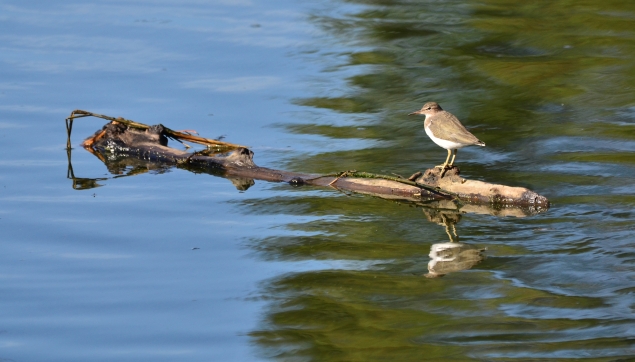
Did that unconvential Willet flock get you worked up?  Relax with this bucolic Spotted Sandpiper. Photographed at Lake Merritt's outflow.


You all know Hank, the world's most famous American White Pelican that lives at Lake Merritt.  I prefer to photograph Hank's wild, free-flying buddies when they are around (Hank is a cripple and was brought here from Oregon, where she collided with powerlines), but Hank just looks so damn sexy this time of year I had to crush her face.  And yes, as far as anyone can tell Hank is a girl, she was presumably named before anyone saw her next to any other pelicans (males are noticeably larger, though there is overlap).


This is my favorite photo I have of her, without a doubt.


In case you were thinking about being in a good mood today, here is a lynched cormorant for you to look at. What a shitty way to die...life is pain. Photographed at Lake Merritt.

Monday, April 28, 2014

Birding Is Really Hard


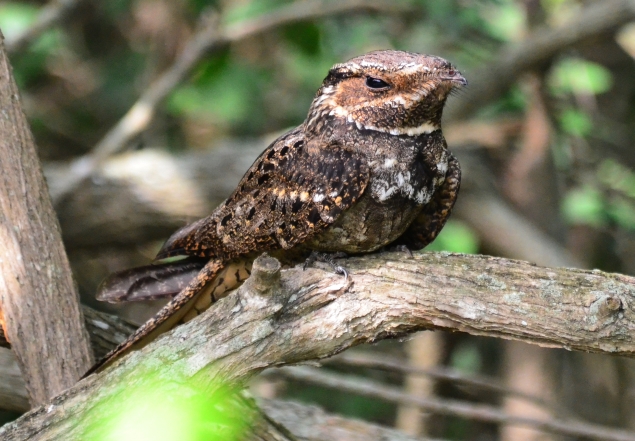
Chuck-will's-widow, a long-awaited LIFE BIRD. I had no idea how freaking big these things were. Blucher Park, Corpus Christi, TX.

Despite the title of this post, I'm not about to pat myself on the back for being a legendary birder, or ramble on about the years of self-inflicted emotional damage birding has brought, or give all the gory details of the various life-threatening situations I've found myself in while in the pursuit of birds. When I tell you that birding is really hard, I mean it in an entirely different context.

Earlier this month I broke out of my habitual South Padre Island weekend routine to head a couple hours north to Corpus Christi, to bird with Nate of This Machine Watches Birds. The ABA just had a rally there, and specifically banned The Great Ornithologist Felonious Jive from attending because, in the words of a representative, "His birding skills make our leaders look like noobs, he smells like sardines, and people tend to get blackout drunk around him". Which is neither here nor there, but if the ABA is going to have a meeting there, you know the area has potential.

Wasted potential in this case. The birding was...mediocre...well, somewhere between mediocre and shitty. We hit a bunch of different migrant traps and other spots, but it was windy and the wind had been blowing the wrong direction for several days. On the Gulf Coast in the spring, that means only one thing...

Life is pain.

But is it really? No. Aside from getting to hang out with some people besides my coworkers for a change (refreshing as hell), I got a life bird. And not just any life bird...a gigantic nightjar. So all in all, the weekend was GREAT SUCCESS.


Pardon my grain, but I think you can still infer some of this bird's sickness from this unworthy image. Truly bizarre. I can't get over the birds structure, let alone the crazy immaculate camo the bird is rocking. Blucher Park is known for being a good spot to track this species and Eastern Whip-poor-will (which we dipped on).


This was the first of many Summer Tanagers I would see this spring. Paradise Pond, Port Aransas, TX.


California can have great shorebirding, but what we get in rockpipers and Sibe vagrants, we lose in charismatic eastern species. Stilt Sandpipers is one of those birds that is usually missing from any given shorebird flock on the west coast, and it's great getting to see so many (often in full-blown alternate plumage) here in Texas. Hazel Bazemore Park, Corpus Christi, TX.


Migrating makes Stilt Sandpiper so sleepy.


Blue-winged Teal are common down this way, and are capable of inducing their own brand of facemelt when they feel like it. Just let them whip out a wing. Turnbull Birding Center, Port Aransas, TX.


American Oystercatcher. It's so refreshing to see a black and white oystercatcher and not have to double check that it is a hybrid...that gets a bit old after a while. Jehl must have gone mad. Photographed at Indian Point, Corpus Christi (?).


The American Oystercatcher: a creature cursed with cankles.


Eastern Willets are plentiful along the coast here. Those with higher GBRS rankings than myself have suggested that the Willets will be split one day. Californians have ignored the existence of this subspecies for many years, but any birder who finds themselves near the Atlantic Ocean should get familiar with telling the two apart. Photographed at Indian Point.

"Kedek kidirk kedeek kerdek." - Least Tern. The sound of Least Terns talking to themselves is music to my ears. They are small and seemingly prone to poor reproductive success, but they are energetic and bring life to any beach or wetland they visit. Photographed at Indian Point.


The humble Sandwich Tern is dwarfed by it's orange-billed relative of royalty. Photographed on Mustang Island.


Pollywog Pond was one of many boring/disappointing places we birded. "Birding is really hard", I told Nate during our stroll through some great but lifeless habitat, and I meant it. One of the few birds of interest there was this low-flying Swainson's Hawk, which repeatedly coursed back and forth low over the treetops.


Despite the regrettable lighting, I got a few shots that I like. Swainson's Hawk is one of my favorite raptors, and it's been nice getting to see so many again this spring. Wish I could say that about Mississippi Kites...birding is really hard.