Showing posts with label Stilt Sandpiper. Show all posts

Wednesday, February 22, 2017

Puerto Rico Winter Tour Y2K16: Refugio de Vida Silvestre de Boquerón, Cabo Rojo


It's been a weird winter here in the bay area. It seems to rain constantly, and I am in a persistant daze due to the newborn baby that strangely requires frequent attention. However, I can't bitch about not getting to the tropics this winter, because it was only back in December that our group from MAX REBO BIRDING TOURS were slaying Caribbean birds in Puerto Rico. The trip report must go on...

It is about time I posted a picture of one of my first lifers of the trip...Greater Antillean Grackle. I somehow did not get to crush them as well as I could, so I had to settle with photographing them while sitting around eating lunch after we birded Laguna Cartagena. An old lady with bad Parkinson's was feeding them rice, so I stole a few grackle souls.


These are one of the most abundant native birds of Puerto Rico. They are quite small, more like a Common than a Great-tailed, and haven't totally abandoned native habitats in favor of streets and parking lots. They are also much less cacophonous and obtrusive than Great-tailed...I ended up liking them a lot, considering they are literally a trash bird.

After lunch we decided to check out Silvestre de Boqueron, a coastal site that is not mentioned in a single trip report that I could find, but boasts a very robust (for Puerto Rico) site list in eBird. We found the entrance road easily enough and parked at the admin buildings. Here, there is a boardwalk trail through the mangroves, and longer trails that go to the south and to the west. We chose to walk the southern trail, which ended up being very rewarding...almost immediately we got our first White-crowned Pigeon of the trip, which was a lifer both Officer Searcy and Dipper Dan. They turned out to be fairly common there, and one of the dudes who works at the refuge says they nest next to the other trail that we did not take.


White-crowned Pigeon did not turn out to be the highlight though...a few minutes later, we were blessed with an increasingly rare group lifer (#grouplifer)...at long last, we had found a Lesser Antillean Pewee!  YESSSSSSSSSS!!!!!! This was a major target bird of the trip (again, all Caribbean species were targets for us), and I was getting worried that we might end up dipping on it. The Puerto Rican birds population may be treated as their own species someday, so it was a very bankable bird as well.


We saw multiple pewees on this trail, in a habitat where none of us were expecting them...they are not exactly considered a mangrove species from what I could tell. Though the birds would rarely sit in crushable light, they were bizarrely cooperative, which I appreciated very much. Their buffy underparts and trusting ways were most mellowing. We would not go on to see them anywhere else, though I did hear one at Bosque Susua.


Puerto Rican Woodpeckers were common and widespread. This eye-catching endemic is built to last, occupying many different habitats...unfortunately I never got the crush that this bird deserves. It is much, much more interesting than your average Melanerpes.


The most surprising thing about our time at Silvestre de Boquerón was how fucking birdy the place was. Almost everywhere we birded on the island was somewhere between not birdy and kinda birdy, but there was a lot of activity here. Northern Parulas were very common, showing up in almost every mixed flock we crossed paths with.


As with most sites, Puerto Rican Flycatchers were holding it down.
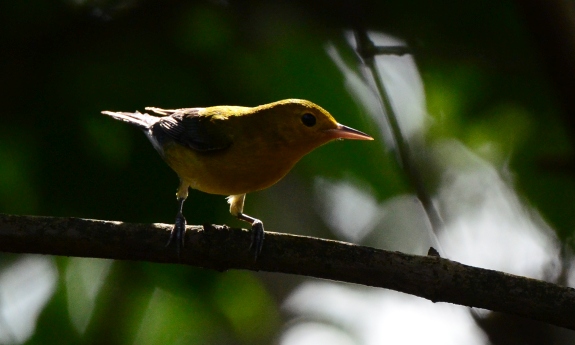

Unlike the pewee, Prothonotary Warblers are known to be lovers of swamps and mangroves. This dimly-lit (but still facemelting) rarity was another excellent trip bird; a Black-and-white Warbler near the parking area was another new North American migrant for the trip list. Good times at this place...if you are interested in checking out this site, our eBird checklist can be viewed right here. Note that during the hunting season the refuge is not accessible seven days a week. We were also told that it was ok to park outside the entrance gate and walk in to bird outside of normal hours.

We had some daylight left, so it was back to Cabo Rojo to continue the never-ending search for trip birds (other than the mythical Masked Duck, we had run out of lifers to get in immediate area). Our spot that previously produced a huge peep flock and Franklin's Gull earlier was almost devoid of birds, which did not surprise any of us. Still a bummer though.


This friendly Merlin provided some consolation. I don't know about ya'll, but friendly Merlins are few and far between out here. Oh, and while I think of it, how come Merlins seem to be so unpopular with falconers? Seems like the next logical bird to graduate to after a kestrel, and they are fun as hell to watch hunt. Oh well, leave them in the wild, suits me.

Our search for waterbirds took us all the way to the end of the road, at the parking area for the hella popular beach. Despite a great deal of good habitat, there was little to see...maybe the tide was too high?


We did see some cool terrestrial snails at least. Who doesn't appreciate a good snail?

On the way back we pulled over where some shorebirds and a group of icterids were roosting; Dipper Dan noticed some Yellow-shouldered Blackbirds in the flock, so we hung out and looked around.


The trees along this stretch of road were clearly the site of a significant night roost for Icterids. It was fantastic to see Yellow-shouldered Blackbirds in a more natural setting than the La Parguera hardware store.


A little while later, we refound the Franklin's Gull picking at shit out in the lagoon...a nice bird, but there was a lot more to look at...the closer to sunset it got, the more and more birds we noticed began to arrive...and that is when we realized it was happening.


Thousands of icterids flew south down the peninsula to roost next to where we had parked. Shiny Cowbirds (above) comprised a large portion of these birds, which I had mixed feelings about; they are a major factor in the decline of the blackbird...but they were also a bird I had just lifered only days before. We also started seeing Prairie Warblers fly in to roost (!), which was a most fetching thing to watch.


Luckily for us, Yellow-shouldered Blackbirds came streaming in over our heads with the grackles and cowbirds. Ace.


Amazing looks at these hell of rare birds. While it is easy to think of them as just a Red-winged Blackbird with a different wing patch, there is another major difference between the two species, phenologically speaking...the sexes have identical plumage. Yup, these might be females. Astounding, no? I wonder how this unisex plumage evolved.


Flocks of Stilt Sandpipers and Lesser Yellowlegs wheeled around over the laguna while we watched the blackbirds fly in, adding to the birding ambiance.


The laguna and distant Guanica Dry Forest glowed beneath afternoon storm clouds in the fading light. Our time here at the blackbird roost was one of the definite highlights of the trip, and I would highly recommend attempting to see the blackbirds here (17.954779°, -67.198514°) in the late afternoon instead of the mutant bread-lovers at the hardware store.

Wednesday, December 28, 2016

Puerto Rico Winter Tour Y2K16: Comerio to Guanica


Our time in Ceiba was done, so the nerds got up early for making the Kessel Run trip to get the final east side target bird, none other than the rare, legendary and highly-localized endemic subspecies of Plain Pigeon. This is not a bird you will blunder into while birding in Puerto Rico; you definitely need to make a targeted effort to see them. Google Maps was highly ineffective in getting us to the right spot (again, beware the app's suggestions for shortcuts in Puerto Rico), but eventually we made it. It was a weird place...basically, you look for the birds from a baseball field. Lifer situation.

Adam and I immediately had a Plain Pigeon fly directly overhead when we arrived, basically looking down the first base line, though better views were definitely desired. Looking at the trees beyond the outfield was unproductive after the initial flyover, so I turned the scope around and started scanning the hillside beyond home plate....BINGO. We had distant but prolonged looks at two Plain Pigeons feeding in the blooming African tulip trees (local photogs call them tulipans)...fuck yes. A scope was essential here, so if you plan on seeing Plain Pigeon in any satisfactory way, do bring a scope or you run the risk of stringing a Scaly-naped Pigeon. We ran into some local bird photogs who were about to head up a road to the general area where we had seen the birds, so if you want to try and get closer to the birds you can walk up the small road at 18.222429°, -66.201390°.


Ground Zero in the valley of the Plain Pigeon.


Gray Kingbirds seem to run things in any remotely open habitat on the island.


The most conspicuous reptiles of Puerto Rico are the introduced green igaunas. They are everywhere. Any loud, crazy thrashing sounds you hear coming from shrubbery, plopping into ponds or falling out of trees are iguanas.

After the pigeon victory we headed down to the south coast, hoping to check out some random spots between Jobos and Guanica, where we sould be spending the night. This stretch of the island is seemingly unbirded by anyone who doesn't live in Puerto Rico, as this large area is completely absent from any trip reports I've found. Dipper Dan worked on trying to find some places to bird switching between eBird and Google Maps with mixed success...we managed to get to 2/4 spots we attempted to bird. Again, Google Maps on the island is not your best friend, but it's not worthless either.

Playita-Vertedero Salinas was a totally random spot Dan found on eBird that was not hard to access (17.955920, -66.286848). Just drive down the dirt road and park in the obvious dirt parking area next to the lagoon; scope the lagoon and bird further on down the road. The lagoon and salt flats were not overly birdy but did net us a number of trip birds (most notably the one and only Gull-billed Tern of the trip), and the mangroves along the road held Black-faced Grassquits (common and widespread on the island) and a smattering of warblers.


By far the best bird here (for me anyways) was this cooperative Green-throated Carib, which we got much better looks at than back at Humacao. Caribs appear to have their eyes set further back in their heads than other hummingbirds, which gives them a unique facial expression.


The deep blue belly contrasting with the emerald throat is a nice touch. This would be the last carib we would see on our trip, and we never saw Antillean Crested away from Humacao and the Fajardo Inn.


Palm Warbler was a new trip bird; we finally got our first Yellow Warblers of the trip here as well. The local Yellow Warbler subspecies turned out to be much more uncommon than we thought they would be.

Dipper Dan worked furiously on eBird, trying to figure out how to access other hotspots...attempts to access a couple bird areas east of here were met with abject failure (thanks Google Maps), but we did successfully reach Laguna Salinas (yes, another Salinas) after an awesome lunch at the Oasis Cafe and Bakery in Santa Isabel. Their coffee was unlike anything I've ever had...hot damn!

Accessing this site is interesting...you have to get on an eastbound onramp to Hwy 2 and then make a sharp right turn onto a dirt road directly off the highway. The dropoff between the highway and the road is pretty big, so I'm not sure how well this would work with a sedan (we had a jeep, so it was mellow). At any rate, the turnoff to the laguna is at 17.974407, -66.673697. The birding here was decent (in other words, more trip birds), with close looks at a Clapper Rail being one of the highlights. Lifer subspecies!


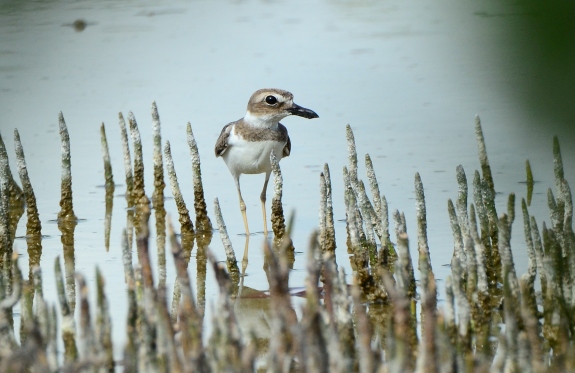
I hadn't seen Wilson's Plover since I was working in Texas a couple years ago...this bird was standing in the middle of the road, a niche typically occupied by Killdeer. Lifer situation. I had forgotten what a massive bill is attached to that cute little plover face.

At the end of the day we finally pulled in to our Airbnb, a few minutes southeast of Guanica. As we had hoped, the area had some decent birding to offer...a big semi-birdy (genuinely birdy places are apparently rare in Puerto Rico) lagoon was right next to our place. Venezuelan Troupial was a facemelting but reluctant lifer (they are an introduced species), and were very common here. This would be home base for the next four nights. One of the beds smelled like piss and the tap water was burly (not the owner's fault obvi, but tap water in other parts of the island was excellent), but otherwise it worked out really well. Lots of great birding within an hour's drive!


The view from the balcony, a mellow mangrove-lined lagoon with the famous Guanica Dry Forest cloaking the hills in the background. Tranquilo, though the mosquitoes got annoying. This was one of the best views of any Airbnb I've ever stayed at, though I still think "The Edge" in Lubec, Maine, still has...an edge.


These amazing/terrifying lobster-tailed things were crawling all over the place. You never know what is waiting in the bushes of love.


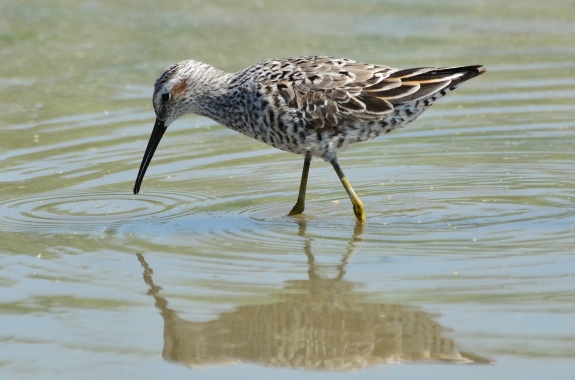
The lagoon was filled with Lesser Yellowlegs and Stilt Sandpipers; more than 400 Stilt Sandpipers could be seen roosting from our balcony every day, which is hella to a California birder. The only place we can see that (well, maybe not anymore 😓) is down at the Salton Sea.


White-cheeked Pintails were the commonest ducks here, which were always visible in some numbers. Fantastic. I no longer need to feel the pain of a stinging gripoff whenever one is seen in Florida.

The next day we would bird a lifer habitat in the Guanica Dry Forest, which was very kind to us. Spoiler alert: lifers.

Monday, October 3, 2016

ID Challenges: The Worst of The West


Birding...it's not easy. Sure, there are times when you get out of the car, walk over to a group of birders, and they wave their hand at the staggering mega that is sitting there in front of you. Some birders will chase rarities, see the bird, then ask to have the field marks explained to them by others...how easy! How great! What else is great? Harlequin Ducks, Roseate Spoonbills, Elegant Trogons, Scissor-tailed Flycatchers, Scarlet Tanagers...those are beautiful, unmistakable birds.

Most birds? Not that easy. Not that easy to find, not that easy to see well, not that easy to identify. I thought I would take the time today to run down some of the hardest families of birds in the western Lower 48...people like lists, after all, particularly birders. There is some overlap here with other parts of the country, but there are distinct differences...for example, the east coast has more terns and thrushes, but less storm-petrels and hummingbirds.

Before we get to the list, I should name some Honorable Mentions that didn't quite make the Top Ten:

- Swans. Tundra vs. Trumpeter can be extremely challenging. Luckily, we only have two swan species to really worry about (until Bewick's Swan is split). That's a Tundra Swan up top there.

- Petrels. Petrels are arguably the most difficult of our birds, period. A large suite of them can potentially show up off our coast, very few birders know them well, and they rarely cooperate with boats or come close to seawatching sites. They fly incredibly fast and all come in white, gray, black and brown. However, they are rarely encountered relative to all the other birds we are discussing today; while often seen on repositioning cruises, there are few other instances when you can realistically expect to see them.

- Hawks. Hawk ID is not exceptionally complicated west of Texas, in my opinion, though obviously there are problematic plumages out there. Of course, Accipiters will always be misidentified by everybody, so hawks are deserving of a mention (an honorable one).

- Oystercatchers. This problem is unique to Southern California...Black Oystercatchers are as distinctive as any bird we have, but Black X American Oystercatcher hybrids and our local American Oystercatcher subspecies look confoundingly similar. American Oystercatcher is one of the most overreported birds in the area.

- Plovers. Telling apart American and Pacific Golden-Plovers can be absolutely excruciating. Beginning and intermediate birders will often misidentify Black-bellied Plovers for either Golden-Plover species. The smaller plovers aren't bad though.

- Crows and Ravens. Some birders can't tell crows and ravens apart from one another...well what about Common Raven vs. Chihuahuan Raven? American Crow vs. Northwestern Crow? In some places, these ID challenges can seem almost impossible to overcome, particularly with the crow situation in Washington.

- Gnatcatchers. If you are birding someplace where Black-capped Gnatcatcher can reasonably be found, the other two southwestern species can give you a world of trouble, especially if you don't find yourself birding down there very often and don't know the calls well. They are hyper little bastards, which makes seeing already subtle field marks an extremely taxing ordeal.

And now...the list!


#10 - Sparrows. The western U.S. is blessed/cursed with an impressive diversity of sparrows. The majority of them are migratory and/or have a tendency toward vagrancy, and they are all brown, brown, brown, brown, brown, brown brown...gray, and brown. However, though they are terrifying for beginners, sparrows aren't so bad once you've put some birding years in the rearview, and some of them are downright difficult to misidentify. That said, Spizella sparrows (like the Clay-colored above) can be especially vexing. Savannah Sparrows, one of the most abundant sparrows in the country, are arguably also the most misidentified of them all, as they can pass for Song, Lincoln's, Vesper and Baird's.


#9 - Sandpipers. Show me a rookie birder and I will show you someone who is going to be greatly troubled...by shorebirds, sandpipers in particular. The dowitcher duo is legendary, peep problems are relentless...to put it bluntly, almost every sandpiper species is at a high risk of being misidentified for something else. Those of us on the coast always have Siberian species on the brain, which complicates the picture even further...yikes. However, the "expected" species do become pretty familiar in time.


#8 - Warblers. Spring warblers are decidedly unproblematic, with the exception of waterthrushes (that's a whitish Northern above). However, you may not be aware that there are three other seasons. Most warblers do not have the same snappy facemelt in October that they do in April. They are referred to as "confusing fall warblers" for a reason, though I despise that tired and overused phrase. There are so many identification pitfalls here that there is no point in even starting in to them. Californians have it especially bad, since we have multiple records of almost every breeding warbler species in the country.


#7 - Vireos. Vireos make people very uncomfortable. Seen poorly enough, every single vireo species (with the exception of a vagrant White-eyed) stands a good chance of being misidentified. Just a few days ago on Facebook, I watched (seemingly in slow motion, like a car crash) in horror as a birder sought out the expertise of an expert, to identify a bird she had photographed very well. He called it an Orange-crowned Warbler...it was a Warbling Vireo. At least with a sandpiper you know it's a sandpiper...with vireos, people call them warblers (and vice versa) on the regular. The hardest vireos? Warbling vs. Philadelphia, and Blue-headed vs. Cassin's vs. Plumbeous. That's a Philadelphia above.


#6 - Longspurs. Away from the prairies of eastern Colorado, Wyoming and Montana, we don't even get to see longspurs in spring. When we get them, they always look like rubbish. Lapland (above) can look like Smith's, Smith's can look like Chesnut-collared, Chestnut-collared can look like McCown's. And 90% of the time, you are getting total garbage looks at them. They all look similar, their calls are not drastically different, and they hate being cooperative for birders. That is a recipe for pain.


#5 - Hummingbirds. Unlike sneaky longspurs and skulky warblers, you can typically get really solid looks at hummingbirds. That said, this may not be of much use to you if you are not prepared...male hummingbirds are facemelting birds, but young males (like the Costa's above) and females can be brutal. With the exceptions of Violet-crowned and maybe Berylline, I think every one of our young/female hummingbird species is at an extremely high risk of being misidentified. Don't believe me? Go geri-birding in Arizona and watch the carnage unfold.


#4 - Storm-petrels. I lead a lot of pelagic trips, and I will tell you that no group of birds strikes more fear into the heart of an inexperienced birder than these. When it comes to these birds, people seeing them for the first time completely surrender any attempt at an ID to the leaders on the boat. We could tell them whatever we wanted and get away with it (fortunately, we want to tell them the truth). Other than the lovely Fork-tailed Storm-Petrels (most of the birds above), they are either all small black birds or small black birds with white rumps. Generally, they want nothing to do with the boat you are on and you are going to be really unsatisfied looking a them if there is a big swell that day. New developments in the Leach's complex have everyone reeling. These are the birds your nightmares are made of.


#3 - Jaegers. You probably didn't see this being #3....but the difficulties of jaeger ID are legendary. Even dark Pomarines and South Polar Skuas get mixed up. Trying to ID certain individuals can lead to such circular logic and mental numbness that I am getting tired just thinking about it. Just be happy when you get to see "easy" individuals, like this Pomarine above.


#2 - Flycatchers. You know what? I haven't done a quiz in a while. What do you think this bird is? The answer is at the bottom of the post. Hint: It's a flycatcher.

Flycatchers are just heinous. Think about each gnarly genus we have all lumped into one jaw-clenching, teeth-grinding family...Contopus, Empidonax, Myiarchus, Tyrannus, etc. That's some heavy shit. The first three genera are especially bad. I don't even know what to tell you here, except to advise you that you can at least get close to the right species. Hammond's and Grays are not similar. Willows and Pacific-slopes are not a confusing couple. Buff-breasted do not look like pewees.

Pewees....yeah. Just identify pewees correctly (don't misidentify them for Empids) and you will command at least a small modicum of respect. Don't report an Eastern unless it's calling though, or you will be run out of your state.


#1 - Gulls. Obvi. I have nothing to say about gulls that you haven't heard before. This is a perfectly typical Herring Gull...I bet not many of you knew that.

There you have it, the list, for your edification and mine. Do you agree, or do I have it all wrong? Are ducks and geese deserving of being on the list? Are alcids alarming? Do Wrentits cause your brain to boggle? I hope not. At any rate, feel free to let us know.


p.s. The quiz bird is a Least Flycatcher. Props if you got it right. And before you descend into a nerdy rage, yes it is a flycatcher that breeds in western states. #notjustavaguerunt

Sunday, June 29, 2014

News From the Homefront, More From South TX


I finally got soul-stroking looks at Black-billed Cuckoo this spring, after going over a decade without actually laying eyes on one. South Padre Island, TX.

Welcome to another flawless BB&B post. I want to tell you, my friends, that it's hard being a leading tastemaker in the Birdosphere. Not every post can have the full backing of the Human Birdwatcher Project ("Birders Are People Too!"), which tend to get more love and attention than the classic "I-went-here-and-saw-this" format that 95% of all bird blog posts consist of. I mean, there just aren't a hundred Swallowgate stories out there, and some of the great stories I haven't shared yet are simply not meant for public consumption...it's my job to keep birding elite, after all.

So before we get to the I-went-here-and-saw-this segment of this post, I wanted to share some news with you. My time in Texas is complete. I am back in California, after a very successful detour to southeast Arizona that featured some fantastic birds and a couple lifers, and managed to pick up California bird #507 just a few days ago. I'm starting a new job in the bay area, so I'll be sticking around here for a while (come and bird with me).

My best recent whiskey find is Sazerac Rye, which is made by the fine folks at Buffalo Trace Distillery (a name you should be very familiar with already). I picked up a bottle for under $30 and would not hesitate to get another one, given the chance. Drink up.

The Global Birder Ranking System released a new quarterly report, and I'm happy to inform you all that I am still the 7th ranked birder in the United States. While I am not at liberty to divulge many of the details in said report, I will let you all know that a certain plover-stroker stands to be awarded an enormous number of points by discovering and collecting what could be a first ABA record. I'm sure you are frothing at the mouth for details, but as I said...I'm not at liberty. This is some real inner circle shit. I will tell you that that this bird was not found on some barren island off the coast of Alaska (which is where most first ABA records come from these days).

That's it for the time being. Southbound shorebirds will be noticeable in a couple weeks, and stint season will be upon us. Please join me in the search for Little Stint, a bird I need crazily. And now, back to your regularly scheduled Texas programming.


This is a pants-shittingly rare bird in California, rare enough that I got to see Common Cuckoo in the state before this relatively common eastern bird...the last record here was in 2008. But who cares? I don't know if I'll ever meet such a confiding member of the species again.

When a male Indigo Bunting decides to hang out six feet away from you, the rest of the world ceases to exist. You live in Indigo Bunting world. South Padre Island, TX.


No, I did not photoshop the bug that this female Purple Martin is about to inhale. Estero Llano Grande State Park/WBC, TX.


I envy places that are rich in Purple Martins. They are relatively local breeders in California and are rarely found in very big concentrations...it's a very different scene from the east.


Lesser Yellowlegs. Not to discredit the species, but looking at this image just makes me really want to find a Marsh Sandpiper. That is the one MEGA I missed out on by going to Texas. Estero Llano Grande.


A Lesser Yellowlegs does its best Greater Yellowlegs impression when completely stretched out.


I saw more Stilt Sandpipers this spring than ever before. They are, perhaps, the perfect shorebird. Estero Llano Grande.


Estero Llano Grande turned out to be a great spot for shorebirds; there was plenty of mudflat in April and May and no shortage of shorebirds, some of which were confiding to the extreme. Long-billed Dowitchers and Stilt Sandpipers seemed to be the most abundant species there for much of the spring.


Tricolored Heron. This spring was the first time I got to see Tricoloreds sporting their indigo-colored lores of the breeding season. It's nice when a common bird is so damn crippling. South Padre Island, TX.


Is nice bird, no?


Philadelphia Vireos and I get along very well. I have been lucky enough to find myself in the right place at the right time over the years to find them relatively easily, from their breeding territory in North Dakota to their wintering grounds in Costa Rica. Photographed at South Padre Island, TX.


Look at them black lores! It is a little-known fact that Philadelphia Vireos actually enjoy a good crushing now and then. After this post, this fact should be widely-known.


I should probably fit in a "valley specialty" in here. Meet Buff-bellied Hummingbird, a relatively easy bird to find in spring. Not quite crippling but visually flavorful nonetheless. You can find them just about anywhere with some native veg in the lower valley, although they aren't as common in the winter. Photographed at Estero Llano Grande.

Buff-bellied, a biggish green and rufous hummer, is a member of Amazilia, a genus that is more at home in the tropics. Berylline, Cinnamon Hummingbirds (and Violet-crowned, as Matt Brady of the Bayou points out) are it's only relatives that have been documented north of Mexico.