Showing posts with label Todos Santos. Show all posts

Monday, March 24, 2014

The Boobies Were Real


Ah, Baja. It wasn't that long ago...but sitting here in Harlingen, Texas, I feel very removed from that trip. But a dream it was not...the boobies were real. And so I thought I'd churn out another post before I get overloaded with work and get caught in the deep and fast-moving current that is spring migration on the Gulf Coast.


Unlike Todos Santos, an apparent booby wasteland, Blue-footed Boobies were lusciously abundant in La Paz. They were easy to see from the main waterfront, where these photos were taken.


Plunge-diving birds bring me much joy...you need good form if you are going to plunge underwater from great height and expect to catch something. There were also a number of Brown Boobies in the area, but I didn't manage any photos of them.


Being on the Sea of Cortez side of the peninsula, the common large gull in La Paz is Yellow-footed (above), not Western. Western Gulls are puny in comparison to the mammoth Yellow-footed.


Yellow-footed Gull is truly a gnarly beast. I wonder how they would do in a duel with Great Black-backed Gull. Let's hope they never hybridize, for all of nature will be lost.


Here's a young Yellow-footed. Unlike other large gulls, a 3rd cycle Yellow-footed Gull is essentially an adult bird. They grow up fast in Mexico.


Moon Vulture. Photographed at Playa Balandra, an awesome beach north of La Paz.


Ash-throated Flycatcher is a true creature of the scrub. You show me scrub, chaparral, and trees of unimpressive height...and I will show your Ash-throated Flycatcher. Their habitat doesn't change very drastically throughout their range, and it doesn't look that different down by the cape either. Photographed at Playa Balandra.


Atop the coke villa for a sunset, we ooze sexy.


I got my best ever looks at Gilded Flicker on this trip. Photographed in the cemetery at Todos Santos.


Having gorged on sweet sweet sweet Mexican nectar, the flicker contemplates the irony of feasting on bright flowery wonderfulness amid a barren field saturated with human remains. Gilded Flickers, after all, are known for leading a rich and rewarding inner life.


Hooded Oriole seems to be one of the most abundant winter birds in the Todos Santos area. Most of the males were a bit dingy looking...but they are still honorable birds. Todos Santos.


Xantus's Hummingbird...a bird that I saw many of, and a bird that I miss. Sure I can walk across the street today and see Buff-bellied Hummingbirds, but the Trochilid of Xantus lives in a league of its own. Do go and visit them when you have the chance. Todos Santos.


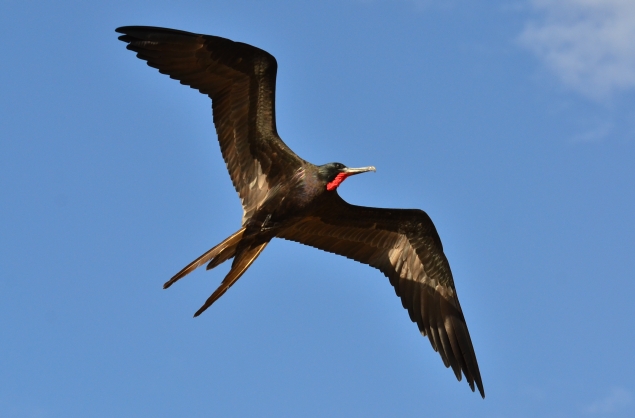
Magnificent Frigatebird doing a Black Skimmer impression at La Poza, Todos Santos. Truly versatile birds.


Moon Frigate. Photographed at Punta Lobos, south of Todos Santos.


Frigatebirds have a habit of furnishing some of the best birding memories. La Poza.


I have taken many frigatebird photos over the years...I think this is by far the funniest. Keep in mind the bird is not directly overhead, it's actually flying low and "standing" vertically in midair.


I do love me some Bonus Herps, although I depend on the kindness of nerds to identify them for me most of the time. This is a Red Diamond Rattlesnake (thanks Natalie).


Ok, here's a mystery lizard that lived at our coke villa in Todos Santos. Any of you cold-blooded folk familiar with this? I also saw a San Lucas Banded Rock Lizard on the side of the house one day, but failed at getting any documentation. It was a crippler though.


Our complete pinche Mexican crew on an ill-fated walk through the desert. It turns out jamming seven people into a tiny rental car doesn't work very well...but thanks to our overheating car, we all got some Wild Ass.

Friday, February 14, 2014

Flying Nightmares, Beloved Belding's Yellowthroats, and The Hummingbird of Anxiety


Old Man Pelican. All photos today from the Todos Santos area, Baja California Sur.


Frigatebirds are the best. They usually look like this; majestic, awe-inspring, and confident. However, it does not take much for them to turn into living nightmares.


If I showed this photograph to a nonbirder and told them these birds have been known to snatch babies from their cribs, they would probably believe me.


Ah yes, the last thing countless toddlers will ever see.

I struggle to come up with an apt description of this...perhaps an example of post-nuclear-fallout-avifauna.


Motmots aren't the only birds who can tick-tock their tails...which perhaps is a scary notion to some.

Laughing Gull, Mexicrushed.


We saw a handful of Herring Gulls at Punta Lobos, just south of Todos Santos, which seemed to have the best gull concentrations in the area. Larids gather there in the afternoon to eat discarded fish scraps from the panga fisherman; unfortunately I failed to pull out anything very remarkable; the best was the Laughing Gull (above) and a disturbing number of yellow/orange-legged Western Gulls. If you go there expecting Yellow-footed Gulls, I can only offer the old adage "caution is warranted".


If you are a white person and move to Baja, you end up looking something like this after a few years.


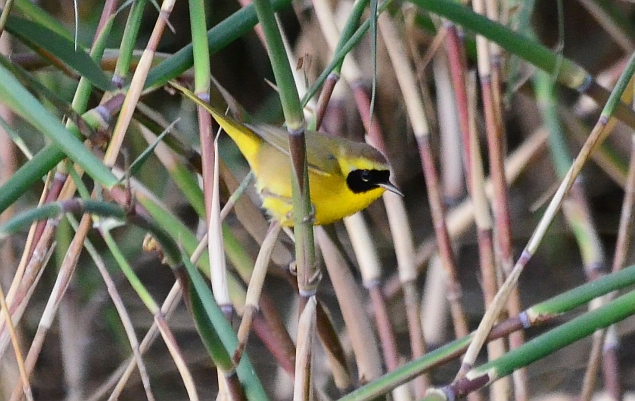
There are hordes of Belding's Yellowthroats at La Poza, the big pond on the beach in Todos Santos. It was nice to see so many, considering the tiny distribution this subspecies (beldingi) has.


Hella yellow underparts.


Here's a considerably duller-looking individual, but still with significant yellow coming up the side of the mask and onto the forehead. A younger male?


Females were surprisingly pretty easy to tell from Common Yellowthroat...surprising because I wasn't using a field guide and just thought I'd wing it. As with males, there is much yellow on the head, which frames a grayish auricular patch.


Scott's Orioles were greatly outnumbered by Hooded, but they were still easy to find. Every morning I could hear their soothing meadowlarky songs sung from our house.


There are birders out there who think it is completely unethical to photograph a bird on its nest...ever. Why? Because birds can't handle the stress and will abandon their nest, which is often true...but always is a considerable stretch of the imagination. Well, have a look at this disturbed, stress-ridden bird. It is the Hummingbird of Anxiety. What do you say to do this crush? The bird is pretty much life-sized in this picture. Is your blood boiling?


Look at her sleep. What a sleepy hummingbird. This Xantus's Hummingbird was nesting inside a restaurant in Pescadero where we had lunch one day, so I wasn't exactly worried about disturbing her. Maybe she likes the big fiestas and live music they have every weekend...the waitress said she nested there last year too.


Male Xantus's Hummingbirds are too cool to not stand next to and blow hundreds of photos on.


Young male Costa's Hummingbirds have some fresh facemelt growing into their faces, but only when the sun hits them right.


I could not identify this bird.

Tuesday, January 28, 2014

Todos Santos, Un Ornitólogo Grande, y 10,000 Aves


Felonious Jive, The Great Ornithologist, breaks down the bird scene at Todos Santos and southern Baja at 10,000 Birds. Much like the Brown Pelican hungrily devours discarded fish parts, Felonious greedily devours the birdlife wherever he goes.

Wednesday, January 22, 2014

To Bird or To Rage? Todos Santos (Part 1)


Costa's Hummingbirds are the wee kings of cripple, tiny bastions of facemelt. Much sought-after by many birders, to find where they are truly common, one usually has to find oneself in the middle of some strange and random spot in the desert. For any birders who find themselves in Todos Santos, Baja California Sur, any longings for Costa's Hummingbirds would be more than satisfied.

Baja California Sur. Most people go there with one thing in mind...raging. Cabo San Lucas is known worldwide for its rage opportunities and beaches (but mostly for rage). However, others go to BCS with something in mind besides forcefed tequila shots, and there is much more to see other than the debauchery in Cabo.

One such place is Todos Santos, just over an hour's drive northwest of Cabo San Lucas on the Pacific side of the peninsula. It's not unknown by any means. Many gringos go there to both visit and live, as the town is known as a small art community and has an abundance of good food (which, to be fair, can be said of most Mexican towns). Birders make it there from time to time as well, and can get a decent fix while birding areas in and outside of town. Xantus's Hummingbirds, Gray Thrashers and Belding's Yellowthroats can all be found without difficulty in the pueblo, and many western migrants and desert residents lurk as well.


I almost felt bad crushing this fragile little gem...almost...


Of course, I have to point out the obvious fact that any birder travelling to Todos Santos is probably more interested in this hummingbird, the one found in Baja California Sur and no place else. Xantus's Hummingbirds (LIFER) are common in the lowlands in winter...and crushing them felt really, really good.


The avian community down in southern BCS is strange, at least for someone who has not been there before...a strange mix of species one would associate with California's coastal chaparral and the Sonoran desert, with some endemic passerines and a pygmy-owl thrown in. Crested Caracaras (above) are, thankfully, a regular sight in the desert and near the edges of town.

I was lucky enough to recently sample the BCS avefauna (truly, it was a sample, not a gorge), mostly while based out of Todos Santos. BB&B and 10,000 Birds (where the Great Ornithologist Felonious Jive will post) will have total coverage, and tips for any future visitors. It was a very interesting birdscape, and we did not even get into the Sierra de la Laguna or the sewage ponds at La Paz.

And for the record, I highly recommend both tequila consumption and debauchery, just do it on your own terms...unless you are in college, then all bets are off.


Mmmmmmm...another life bird, and a Baja endemic at that. Meet the Gray Thrasher, denizen of the peninsula's desert scrub.


We were lucky enough to have all three of the lowland Baja endemics lurking within walking distance of our house. Gray Thrashers were the least numerous of the three, which is kind of funny considering how globally rare the local subspecies of Belding's Yellowthroat is...more on them later.


Cactus Wrens roam around in small, raucous groups, bearing little resemblance to the smaller Troglodytes (that's wrens, not cave-dwellers) that are found throughout the U.S. Strangely, it was here in Todos Santos where I really got the feeling that these birds were behaving much like Rufous-naped and Spotted Wrens, other Campylorhynchus I've seen in other parts of Mexico.


I like this pose...the barred flight feathers melt easily into the barring on the tail. What is the significance? I'm not entirely sure, but a nerve has been struck.


Among the throngs of Common Ground-Doves in Todos Santos, the semi-aware observer can pick out Ruddy Ground-Doves as well. We saw two different birds on the trip, both along a random road in the north part of town. EBird has a couple of reports of substantial numbers of RUGDs in the area, so be vigilant.


Seemingly the most abundant bird in Baja California Sur, White-winged Doves are everywhere. They are thriving. They even invite American Kestrels into their flocks, for good or ill. It is worth mentioning that during our stay, we saw no Eurasian Collared-Doves in either Todos Santos or La Paz...in fact, eBird does not show any records for Todos Santos at all.

Behold, the White-winged Dove. Their wings may blind you in flight, but the face pattern allures.


It's been a while, so I am now dismayed to have the dishonor of presenting to you, yet again, a terrible photo of a good bird. This is a male Varied Bunting, photographed near Punta Lobos, just south of Todos Santos. These cripplers are uncommon in BCS, but not unexpected.


One afternoon we tried to get out into the desert to find a nice cactus forest to walk through. The road I chose was a poor choice (there was a lack of large cactus to admire), although we may have gotten somewhere interesting if our completely overpacked car had not overheated. Still a nice sunset though, despite the heaps of garbage and animal bones.