Showing posts with label merlin. Show all posts

Monday, April 27, 2020

5MR Birding in Exponential Times


I have seen countless Anna's Hummingbirds in my life and I will admit I no longer look at each one with child-like wonder, or even its rare and highly diluted cousin, regular adult wonder. For example, the male Anna's in my backyard is highly territorial and essentially keeps all other hummingbirds out of there, no matter how many feeders I put up and juicy nectar-giving plants I put in the ground. Just today he chased out an interesting Selasphorus. It's in his nature of course, but still...what a dick! That said whenever the light catches a male the right way or one is doing its display flight nearby, it is still impossible to look away. Photographed at the Los Capitancillos Ponds.

Any birdpunx remember Cobra Skulls? I really dug that band. Imma kick off this post with a verse of theirs.
The golden age is never coming back
Getting out was not part of the plan
You are just a victim of an older time
Falling behind in exponential times
Grim eh? But very fitting. The notion that large numbers of us could be wiped out by an illness that also brings society to a grinding halt seemed outlandish and atavistic to many a mere couple months ago. The phrase "exponential growth" meant almost nothing to anybody except nerds. The phrase was safely in the weak grasp of dweebs. Now that idea has been bouncing around all over the place this spring, though clearly it has not made it's way into the brains of all ("It didn't go in. It just impacted on the surface."). These are exponential, weird times we live in. Things seemed weird...and not in a good way...before this fateful March, but of course our day to day life has been totally upended since then. The Groundhog Day effect, already familiar to so many, has intensified to peak Bill Murray levels. It's not just that each day is so similar to the last, or that days blur together, the other less obvious but still significant component of that headspace is that we don't know when any of this sad, stressful bizarreness will end. The light at the end of the tunnel is dim and ill-defined...and possibly because the light is being made by a fiery inferno, and we are all barreling toward it.

But chances are if you are reading this, no matter where you all, you know all too well of what I speak. It's my job as the #7 U.S. birder as identified by the infallible Global Birder Ranking System (universally recognized as an Essential Business) and one of birding's most prominent influencers to carry on and talk about birding in spite of the conditions in which we find ourselves.


Red-winged "Bicolored" Blackbirds arrive to breed at my house very early in winter and appear to set up territories before any other migrant songbird within my radius. Though you can find them without trouble year round in the county, these particular birds will likely all leave the area before the end of June. I have not grown numb to their presence and am happy to always have them in earshot and at my feeders while GERI BIRDING. This male was making some modest but pleasing display flights. Photographed at the Los Capitancillos Ponds.

The first thing that needs to be said is that birders, like people in general, are having all sorts of reactions to covid-19 and the shelter-in-place orders. I will be the first one to step up and admit that I did not see this pandemic coming and that we would be the world leader in number of cases and death toll (MAGA! USA!), but I am going to tell you that once it got rolling here I knew exactly how this would affect birders. It is all happening as I have foreseen. To w(h)it:

*A lot of birders would have sweet birding trips cancelled.

*Yard birding would take off.

*5MR birding would grow yet more in popularity.

*Some birders would stop birding away from their yard.

*Some birders would only bird locally.

*Some birders would still travel to bird (mostly to chase essential rarities, obvi) but not as much as they normally would.

*Some birders would bird the exact same way they did in February, as if nothing at all had changed. Lots of county listers/chasers with this attitude. 


I have seen countless White-crowned Sparrows in my life but their arrival and departure from California lowlands have always been very significant to me. Now, as a GERI BIRDER, I am particularly saddened when they and their Golden-crowned brethren pull out and head north. My yard will gain no new common birds in the meantime, as my very small suite of summer birds have already arrived. My last White-crown departed on April 24, and it seems my last Golden-crowned left on April 26, but luckily they will be back in less than five months. This is a pugetensis with the dull yellow bill and noticeable brown wash on the breast and underparts. Photographed at Rancho de Bastardos.


And here is a crisp gambelii for comparison, which was foraging a few feet away from the pugetensis above.

*All tour guides would be totally screwed.

*There would be a great deal of shelter-shaming (shaming people in public for chasing distant rarities or just doing any birding at all) in listservs and Facebook groups.

*The number of reported rarities will fall off as a result of birders travelling less and popular sites having reduced or no access, but may be compensated in part by birders by birding locations that previously enjoyed less coverage. The birding herd mentality so prevalent in many regions will be tamped down somewhat.

*Since almost everyone is even more stressed during this time, there will be some highly entertaining pitched battles between birders in public forums on all manner of topics.

Ok, the one thing I did not predict was people hoping eBird would remove alerts and start hiding data to discourage birders from...birding. This seems not only unrealistic, but also really bizarre. Oh I also know that a very well known birder...also, unfortunately, an eBird reviewer...thinks that law enforcement agencies are planning to use eBird data to cite violators of shelter in place measures?

How embarrassing, to put it mildly.


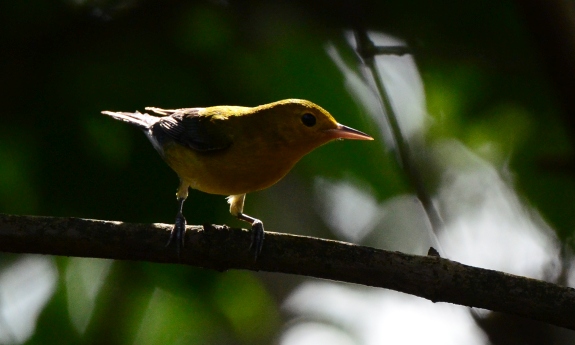
For the number of Merlins I've seen, its notable that these slick birds seem to so rarely remain on perches close enough to say that you got great looks at them. This one, presumably the last one I'll see until fall, was brave enough to buck the trend. Photographed at the Santa Clara Valley Water District HQ.

As for me? I have not left the county since sheltering started (and here, we have the Santa Clara County measures on top of the California ones) and mostly, but not entirely, remain in my 5MR when birding. Santa Clara County's shelter order directs us to remain within the county unless performing an essential activity, so by that measure I guess I have been COMPLIANT...and perhaps you think I am a coward for doing so. That's ok, because I'm sure some of you other readers probably think I am a plague vendor doling out pestilence and death each and every time I go birding away from my yard. Where does The Truth lie? Who is in possession of The Answer?

Many have found The Answer...to everything...lies somewhere within their own FIVE MILE RADIUS. Interestingly, the San Mateo County (which is the county north of here) shelter in place order restricts residents to...you guessed it, a 5MR from their homes! Sad to be sure, but from a purely birding standpoint, convenient and hilarious. Upon learning this, one unenlightened local birder posted to the local listserv about how depressing birding will be if he was going to be confined to locations within five miles of his house. I can only imagine his surprise (and disgust) when he learned of the legions of birders who volunteer to do this very thing!


Some of the plantings at the Santa Clara Valley Water District have turned out to great for migrant hummingbirds, most of which are comprised of zesty Rufous Hummingbirds. I've ended up seeing a lot more Rufous Hummingbirds since moving here from Alameda County and their comparative abundance has been refreshing. And no, I'm not 100% sure that female is not an Allen's, but Allen's are greatly outnumbered in my 5MR by Rufous for some reason.


One of my post-Costa Rica birding highlights this year was finding this Calliope Hummingbird, also at the water district. Unlike many of my experiences with this species, it was very close and gave excellent looks. They are annual in the county but are typically only reported from one or two locations per year. This wee little crippler is easily one of my favorite western migrants. Fortunately, it's been a very good spring for finding them in lowlands in the state, and I'm sure a large number of them have passed through the saddle at Loma Prieta undetected.


Here is my first new radius bird of 2020 - a much-anticipated Purple Martin. Though not quite a rarity, this is another very hard bird to find in the county away from Loma Prieta, where they breed. Photographed at the Chynoweth Pond in San Jose.

I'm pretty sure I've said this before, but if there was ever a time to be redundant on the topic of radius birding, it is now. I know most of you reading this fall into the following categories: (1) you are Flycatcher Jen (who started radius birding), (2) you are already a 5MR birder, (3) you are sympathetic to 5MR birding but haven't embarked on your radial journey, (4) you think 5MR birding is dumb and entirely unappealing, or (5) you live someplace where it doesn't work so well (those exist - you get a free pass). If 3 or 4 resonate with you...now is the time to step out of the darkness and into the radial light. Do you have someplace to be? No. Something better to do? Definitely not. Come join us! I'm not at all saying we should give ourselves the self-imposed San Mateo treatment, but really there could be no better time to be doing a lot of birding close to home. 

I should mention that all birds in today's post were seen in my 5MR, including Rancho de Bastardos, a Geri Birding haven for me in these difficult times. I've recorded 95 species here since sheltering began here in mid-March, including a banner day where I managed a whopping (to me) 61 species, almost entirely after 12PM. I believe that's my highest single day species total here so far. Geri to the rescue!


Similar to the situation with Red-winged Blackbirds, Band-tailed Pigeons can be found in the county throughout the year but they disappear from my yard in fall and winter. I wonder how far "our" birds migrate, after all they are found from Alaska to Argentina (!) and have a nice pattern of vagrancy in the eastern half of the continent, so some birds are certainly moving significant distances. At any rare, it's good to have these humongous floppy goofs back and available for Geri Birding duties. Photographed at Rancho de Bastardos.


I'm happy to have Hooded Oriole as a common visitor to the yard, I'm pretty sure they nest on both sides of my house along my street. For whatever reason adult males are way more skittish than females and juveniles, so I'll take a powerline shot. This is far and away the flashiest bird that visits the yard on the reg, what would I do without them? Photographed at Rancho de Bastardos.

I think we are pretty much caught up on things now. Oh, I need to mention that I got one more new radius bird recently, which was also a new addition to the yard list (first since last year) - I stepped out into my backyard briefly the other night and almost keeled over when I heard a strident PILL-WILL-WILLET! proclaimed not once, but twice, with strength and vigor. Shorebirds are so hard to come by in my radius that I was totally taken aback by this northbound Willet giving nocturnal flight calls. Migration is a hell of a thing.


Wednesday, March 22, 2017

Semilocal Birding - Love, Contempt, a Prairie Falcon and a Falcon of the Prairie


Common as they may be, I've never been ungrateful for Common Loons...they have one of the best bird calls in the world, forage for crabs excellently and dive righteously. They are better-looking than Red-throated Loons, more approachable than Pacifics/Arctics, and only occasionally resemble Yellow-billed Loons...which are probably a more interesting bird, but I've only seen a couple. Emeryville Marina, Emeryville (duh), California (duh duh duh).

In recent years it has been a struggle to keep up with my formerly furious pace of blogging that once went hand-in-hand with The Perpetual Weekend...what is dead may never die. This is not due to a decreased interest in the Birdosphere or even laziness (!), but due to the horrible reality of having a permanent, full-time job...and now a full-time baby. Looking at my recent posts, I am happy to see a wide range of subjects being covered...Puerto Rico, eBird, Humboldt County, Ventura County, the "internet" (whatever that is), and best of all, Cass' Swainson's Thrush post...but one topic is noticeably absent. Where the fuck is the local birding?

Somehow, the bread and butter of almost all bird blogs has gone woefully unblogged in the past couple months. This blog glitch will now be fixed.


Pick your jaw up off the floor, dear reader...yes, this really is a SPOTTED SANDPIPER.


Fascinating that so many sandpiper and plover species can cram into so many different habitats, but the Spotted Sandpiper alone (in North America anyway) is willing to breed along rivers, creeks and mountain lakes. An ingenious move, as far as avoiding competition. Maybe this explains why they are so undiscerning about habitat selection outside of the breeding season...once they've mastered habitats that no other shorebird would dare to breed in, they can live anywhere.


Sadly, living in California does come with birding disadvantages, and the lack of sea duck diversity is one that stings every winter. Sure there are a couple Black Scoters here and a Harlequin Duck there, but Surf Scoter is the only common one. Keeping in line with this trend, Long-tailed Duck is a nice low-level rarity, and two in one place is a lot in California. These were the only Long-tailed Ducks I saw last year 😥. By the way, the caption in the Blogger toolbar for that emoji reads "Disappointed but relieved face."


San Francisco isn't that far from the east bay, but I've yet to bird it in 2017. I've caught a couple good shows there at least.


In January, very soon before Annabelle was born, I convinced Billy that going to see a Black-tailed Gull in Monterey was important for some reason. I thought I would dip...my luck with chasing Vague Runts had been exceptionally good for almost a year, and I was due to miss out on a lifer...and miss it we did! There were hardly any gulls to look through, and the bonus Slaty-backed Gull that had been hanging around was also absent. The lone birding highlight of the day was noticing a pair of Tundra Swans in a small slough as we ripped through the sky drove above them on an overpass.  Ah, what a relief...a sweet sweet self-found rarity, and a bird I missed entirely in 2016. Photographed south of Castroville.


After dipping on the Black-tailed Gull, I figured it was time I dip on something closer to home...the Harris's Sparrow at the Las Gallinas Ponds in Marin. This highly desirable bird had been present for several weeks, and it was high time I unsuccessfully searched for it. Despite putting in a great deal of time loitering around the parking lot waiting for the bird to show, I failed. Fortunately, this is a very birdy site in winter, so all was not lost. Lincoln's Sparrows are usually on the retiring side, but this one was bolder than most.


Song Sparrows are a great deal more common and confiding. Unlike their Lincoln's brethren, who swear a vow of silence every winter, Song Sparrows happily sing year-round.


Since we are on the topic of common birds that some of you are probably wincing at, this Common Yellowthroat should not surprise you. Sadly, California has just four common warbler species that overwinter - Yellow-rumped, Townsend's, Orange-crowned and yellowthroats. This is not an ideal situation. Hopefully a certain proposed split will pass, and we will have five species of warblers instead. Speaking of which...


Large numbers of Audubon's (above) and Myrtle Yellow-rumped Warblers both winter in the area. Perhaps no bird more personifies the phrase "familiarity breeds contempt". There is nothing at all about them that is not likable, they are just so fucking common that by the time you have been birding in this state a few years you have said or thought the phrase "Just a Yellow-rump" more than any other phrase you've said or thought in your life.


Here is a Myrtle, for your edification. I'm a bit more partial to Myrtles than Audubon's, partially because they have a more interesting face pattern and partially because they are kinda rare down Ventura way, which is where I started birding. Unfamiliarity breeds love. The vast majority of Audubon's and Myrtle alike will be gone within a month, but we will see the likes of them again.


Few of California's birds spend more time on the wing than the White-throated Swift, which are often easier to see near freeway overpasses (where they will roost and nest) than traditional birding spots. The Las Gallinas Ponds are a haven for swift and swallow alike throughout the year, so they can make for a good place to get good looks and poor photos of our only expected winter swift.


Good morning old friend.


Ah, the Sora. Few birds are so humble, yet so successful. You can see a Sora in the Yukon Territories, you can see a Sora in Ecuador. They are pleasant to come across wherever you may be.


This may look like a run-of-the-mill Red-winged Blackbird to you, but this is a mellow oh-that's-nice bird for discerning bay area birders. Bicolored Blackbirds are the abundant Red-winged form here, and females are extremely drab and dark, looking eerily similar to Tricolored Blackbirds. Bright, well-marked females like this are clearly from other realms, and stand out readily from the locals.


A solid highlight of the morning was Haynoring a Prairie Falcon perched on a transmission tower a mile away for a self-found sweet-but-hearty Marin County bird. Well, checking eBird, it looks like someone else found it a couple weeks earlier, but hey I didn't know that at the time. Speaking of falcons of the prairie...


Mmm yes, a prairie falcon indeed...this "Prairie" Merlin jumped off a fence post and took a bath in a puddle. This is what some would call a "lifer situation". I only see 1-2 Prairie Merlins per winter in California, so this crisp blue-backed bastard was a very good follow-up to the Prairie Falcon.

No Harris's Sparrow, but very good birding otherwise...my Marin County Snow Goose was foraging near the access road on the way out. Two Marin birds! Billy didn't go into labor while I was birding! Great success!

Wednesday, February 22, 2017

Puerto Rico Winter Tour Y2K16: Refugio de Vida Silvestre de Boquerón, Cabo Rojo


It's been a weird winter here in the bay area. It seems to rain constantly, and I am in a persistant daze due to the newborn baby that strangely requires frequent attention. However, I can't bitch about not getting to the tropics this winter, because it was only back in December that our group from MAX REBO BIRDING TOURS were slaying Caribbean birds in Puerto Rico. The trip report must go on...

It is about time I posted a picture of one of my first lifers of the trip...Greater Antillean Grackle. I somehow did not get to crush them as well as I could, so I had to settle with photographing them while sitting around eating lunch after we birded Laguna Cartagena. An old lady with bad Parkinson's was feeding them rice, so I stole a few grackle souls.


These are one of the most abundant native birds of Puerto Rico. They are quite small, more like a Common than a Great-tailed, and haven't totally abandoned native habitats in favor of streets and parking lots. They are also much less cacophonous and obtrusive than Great-tailed...I ended up liking them a lot, considering they are literally a trash bird.

After lunch we decided to check out Silvestre de Boqueron, a coastal site that is not mentioned in a single trip report that I could find, but boasts a very robust (for Puerto Rico) site list in eBird. We found the entrance road easily enough and parked at the admin buildings. Here, there is a boardwalk trail through the mangroves, and longer trails that go to the south and to the west. We chose to walk the southern trail, which ended up being very rewarding...almost immediately we got our first White-crowned Pigeon of the trip, which was a lifer both Officer Searcy and Dipper Dan. They turned out to be fairly common there, and one of the dudes who works at the refuge says they nest next to the other trail that we did not take.


White-crowned Pigeon did not turn out to be the highlight though...a few minutes later, we were blessed with an increasingly rare group lifer (#grouplifer)...at long last, we had found a Lesser Antillean Pewee!  YESSSSSSSSSS!!!!!! This was a major target bird of the trip (again, all Caribbean species were targets for us), and I was getting worried that we might end up dipping on it. The Puerto Rican birds population may be treated as their own species someday, so it was a very bankable bird as well.


We saw multiple pewees on this trail, in a habitat where none of us were expecting them...they are not exactly considered a mangrove species from what I could tell. Though the birds would rarely sit in crushable light, they were bizarrely cooperative, which I appreciated very much. Their buffy underparts and trusting ways were most mellowing. We would not go on to see them anywhere else, though I did hear one at Bosque Susua.


Puerto Rican Woodpeckers were common and widespread. This eye-catching endemic is built to last, occupying many different habitats...unfortunately I never got the crush that this bird deserves. It is much, much more interesting than your average Melanerpes.


The most surprising thing about our time at Silvestre de Boquerón was how fucking birdy the place was. Almost everywhere we birded on the island was somewhere between not birdy and kinda birdy, but there was a lot of activity here. Northern Parulas were very common, showing up in almost every mixed flock we crossed paths with.


As with most sites, Puerto Rican Flycatchers were holding it down.


Unlike the pewee, Prothonotary Warblers are known to be lovers of swamps and mangroves. This dimly-lit (but still facemelting) rarity was another excellent trip bird; a Black-and-white Warbler near the parking area was another new North American migrant for the trip list. Good times at this place...if you are interested in checking out this site, our eBird checklist can be viewed right here. Note that during the hunting season the refuge is not accessible seven days a week. We were also told that it was ok to park outside the entrance gate and walk in to bird outside of normal hours.

We had some daylight left, so it was back to Cabo Rojo to continue the never-ending search for trip birds (other than the mythical Masked Duck, we had run out of lifers to get in immediate area). Our spot that previously produced a huge peep flock and Franklin's Gull earlier was almost devoid of birds, which did not surprise any of us. Still a bummer though.


This friendly Merlin provided some consolation. I don't know about ya'll, but friendly Merlins are few and far between out here. Oh, and while I think of it, how come Merlins seem to be so unpopular with falconers? Seems like the next logical bird to graduate to after a kestrel, and they are fun as hell to watch hunt. Oh well, leave them in the wild, suits me.

Our search for waterbirds took us all the way to the end of the road, at the parking area for the hella popular beach. Despite a great deal of good habitat, there was little to see...maybe the tide was too high?


We did see some cool terrestrial snails at least. Who doesn't appreciate a good snail?

On the way back we pulled over where some shorebirds and a group of icterids were roosting; Dipper Dan noticed some Yellow-shouldered Blackbirds in the flock, so we hung out and looked around.


The trees along this stretch of road were clearly the site of a significant night roost for Icterids. It was fantastic to see Yellow-shouldered Blackbirds in a more natural setting than the La Parguera hardware store.


A little while later, we refound the Franklin's Gull picking at shit out in the lagoon...a nice bird, but there was a lot more to look at...the closer to sunset it got, the more and more birds we noticed began to arrive...and that is when we realized it was happening.


Thousands of icterids flew south down the peninsula to roost next to where we had parked. Shiny Cowbirds (above) comprised a large portion of these birds, which I had mixed feelings about; they are a major factor in the decline of the blackbird...but they were also a bird I had just lifered only days before. We also started seeing Prairie Warblers fly in to roost (!), which was a most fetching thing to watch.


Luckily for us, Yellow-shouldered Blackbirds came streaming in over our heads with the grackles and cowbirds. Ace.


Amazing looks at these hell of rare birds. While it is easy to think of them as just a Red-winged Blackbird with a different wing patch, there is another major difference between the two species, phenologically speaking...the sexes have identical plumage. Yup, these might be females. Astounding, no? I wonder how this unisex plumage evolved.


Flocks of Stilt Sandpipers and Lesser Yellowlegs wheeled around over the laguna while we watched the blackbirds fly in, adding to the birding ambiance.


The laguna and distant Guanica Dry Forest glowed beneath afternoon storm clouds in the fading light. Our time here at the blackbird roost was one of the definite highlights of the trip, and I would highly recommend attempting to see the blackbirds here (17.954779°, -67.198514°) in the late afternoon instead of the mutant bread-lovers at the hardware store.