Showing posts with label tricolored heron. Show all posts

Sunday, June 29, 2014

News From the Homefront, More From South TX


I finally got soul-stroking looks at Black-billed Cuckoo this spring, after going over a decade without actually laying eyes on one. South Padre Island, TX.

Welcome to another flawless BB&B post. I want to tell you, my friends, that it's hard being a leading tastemaker in the Birdosphere. Not every post can have the full backing of the Human Birdwatcher Project ("Birders Are People Too!"), which tend to get more love and attention than the classic "I-went-here-and-saw-this" format that 95% of all bird blog posts consist of. I mean, there just aren't a hundred Swallowgate stories out there, and some of the great stories I haven't shared yet are simply not meant for public consumption...it's my job to keep birding elite, after all.

So before we get to the I-went-here-and-saw-this segment of this post, I wanted to share some news with you. My time in Texas is complete. I am back in California, after a very successful detour to southeast Arizona that featured some fantastic birds and a couple lifers, and managed to pick up California bird #507 just a few days ago. I'm starting a new job in the bay area, so I'll be sticking around here for a while (come and bird with me).

My best recent whiskey find is Sazerac Rye, which is made by the fine folks at Buffalo Trace Distillery (a name you should be very familiar with already). I picked up a bottle for under $30 and would not hesitate to get another one, given the chance. Drink up.

The Global Birder Ranking System released a new quarterly report, and I'm happy to inform you all that I am still the 7th ranked birder in the United States. While I am not at liberty to divulge many of the details in said report, I will let you all know that a certain plover-stroker stands to be awarded an enormous number of points by discovering and collecting what could be a first ABA record. I'm sure you are frothing at the mouth for details, but as I said...I'm not at liberty. This is some real inner circle shit. I will tell you that that this bird was not found on some barren island off the coast of Alaska (which is where most first ABA records come from these days).

That's it for the time being. Southbound shorebirds will be noticeable in a couple weeks, and stint season will be upon us. Please join me in the search for Little Stint, a bird I need crazily. And now, back to your regularly scheduled Texas programming.


This is a pants-shittingly rare bird in California, rare enough that I got to see Common Cuckoo in the state before this relatively common eastern bird...the last record here was in 2008. But who cares? I don't know if I'll ever meet such a confiding member of the species again.

When a male Indigo Bunting decides to hang out six feet away from you, the rest of the world ceases to exist. You live in Indigo Bunting world. South Padre Island, TX.


No, I did not photoshop the bug that this female Purple Martin is about to inhale. Estero Llano Grande State Park/WBC, TX.


I envy places that are rich in Purple Martins. They are relatively local breeders in California and are rarely found in very big concentrations...it's a very different scene from the east.


Lesser Yellowlegs. Not to discredit the species, but looking at this image just makes me really want to find a Marsh Sandpiper. That is the one MEGA I missed out on by going to Texas. Estero Llano Grande.


A Lesser Yellowlegs does its best Greater Yellowlegs impression when completely stretched out.


I saw more Stilt Sandpipers this spring than ever before. They are, perhaps, the perfect shorebird. Estero Llano Grande.


Estero Llano Grande turned out to be a great spot for shorebirds; there was plenty of mudflat in April and May and no shortage of shorebirds, some of which were confiding to the extreme. Long-billed Dowitchers and Stilt Sandpipers seemed to be the most abundant species there for much of the spring.


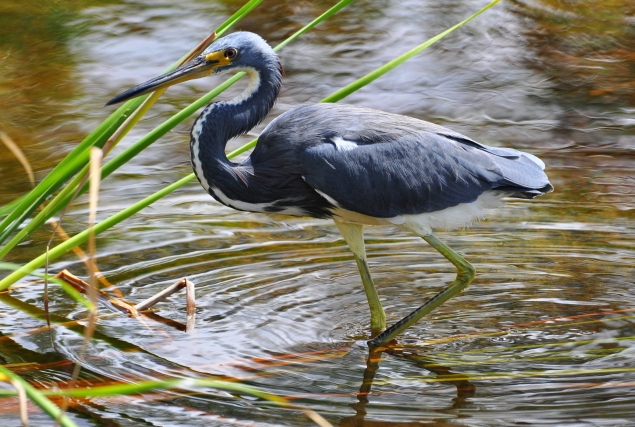
Tricolored Heron. This spring was the first time I got to see Tricoloreds sporting their indigo-colored lores of the breeding season. It's nice when a common bird is so damn crippling. South Padre Island, TX.


Is nice bird, no?


Philadelphia Vireos and I get along very well. I have been lucky enough to find myself in the right place at the right time over the years to find them relatively easily, from their breeding territory in North Dakota to their wintering grounds in Costa Rica. Photographed at South Padre Island, TX.


Look at them black lores! It is a little-known fact that Philadelphia Vireos actually enjoy a good crushing now and then. After this post, this fact should be widely-known.


I should probably fit in a "valley specialty" in here. Meet Buff-bellied Hummingbird, a relatively easy bird to find in spring. Not quite crippling but visually flavorful nonetheless. You can find them just about anywhere with some native veg in the lower valley, although they aren't as common in the winter. Photographed at Estero Llano Grande.

Buff-bellied, a biggish green and rufous hummer, is a member of Amazilia, a genus that is more at home in the tropics. Berylline, Cinnamon Hummingbirds (and Violet-crowned, as Matt Brady of the Bayou points out) are it's only relatives that have been documented north of Mexico. 

Sunday, April 6, 2014

Hoods Up...Abiding and Confiding...Foxtrot Oscar Yankee


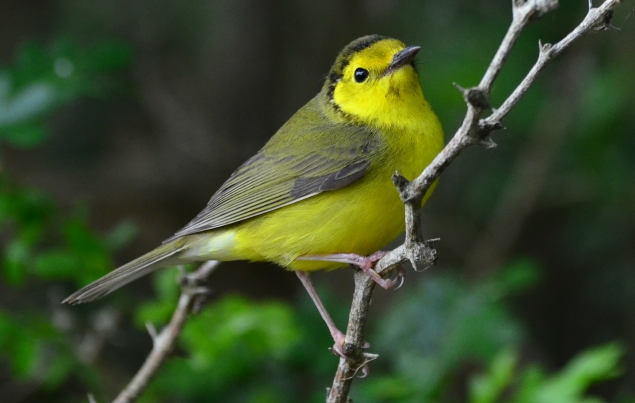
Do you like Hooded Warblers? I like Hooded Warblers. I like them numerous and fearless. They were the bird that was impossible to ignore at South Padre Island last weekend...I'll say it again, this is not a bad place to find yourself during the spring.


I like Hooded Warblers with Louisiana Waterthrush legs.


I like Hooded Warblers on the ground.


I like female Hooded Warblers that do not make a sound.


Ok, I'll chill on the Seuss. This was the only female HOWA of the day. Her hood? Modest. The buffet-style birding out there is something I recommend highly.


Northern Parulas were also being especially confiding on this celebrated day. I found one away from the hordes of birders that would hang out just a few feet from me.


I could get used to crushing warblers this hard. The birds reminded me of some of the ones I met on the Dry Tortugas...hungry to the point of not-giving-a-fuck if there were people there or not.


Look at this thing! So sick.


I just realized that there is a completely unrelated bird that has a similar style to the parula... the winning combination of blue, black, white and yellow is worn by Tricolored Heron as well.


Unlike parulas, they are skilled at fish-juggling.


Here's a different individual, with the bright blue lores of the breeding season.


The light was pretty harsh but the bird was abiding. This was off the boardwalk at the birding center. For many years I have heard tell of this boardwalk, and the rumors seem to be true...there are animatronic birds strategically placed throughout the marsh for quality observation.


I'm kidding about that. A joke was made...do not be alarmed. Perhaps this Little Blue Heron will appease you. They are not as fancy as a Tricolored, but not exactly cringe-inducing either.


Ah, the Clapper Rail. This posture makes it look especially kiwi-esque.


The abundance of Black-bellied Whistling-Duck in the region is truly something to reckon with. Talk about an adaptable duck.


Foxstrot Oscar Sierra/Foxtrot Oscar Yankee Tango Echo Whisky Alpha.


The convention center has a few signs posted to encourage birders and photographers (especially photogs) to not act like treacherous douchebags. While I was there some photographer got "chased off" from the convention center for essentially mangling one of the precious few planted trees in order to get an unobstructed photo of some bird (maybe this one). I then saw someone at Sheepshead fitting the same description get kicked out of someone's front yard while trying to follow another bird. It's like magic...put a camera in someone's hand, and just watch 2/3 of their brain shut off.

Sunday, November 11, 2012

A Lack of Pronounced Eye Ridges, The Umbrella Move, A Calming Calm


American Crocodile. In the United States, crocs are only found in extreme southern Florida...probably the easiest place to see them is in the marina area and Buttonwood Canal at Flamingo in Everglades National Park. Crocs can be told from gators by their pointed snout, lack of pronounced eye ridges, obvious teeth sticking out, and their preference for salt (and sometimes brackish) water.

How do you like that? Starting off a post with a nonavian organism? Yeah, we get pretty crazy around here, no question.

Now that we know exactly what a birder is, here's another slough of photos from the Everglades for your enjoyment.


I somehow managed to not photograph an alligator while in the Everglades this time, although we saw (and heard!) a few. Crocodiles are listed as "Threatened" in the U.S.


I did not expect Mrazek Pond to be particularly birdy, but there was a lot going on. This Tricolored Heron was feeding hyperactively right next to the road.


Yup, it even busted out the classic umbrella move. Reddish Egrets aren't the only waders that can dance. Nice primaries eh?


Showing off it's tricoloredness while Blue-winged Teal lurk in the shadows.


I really like how the water appears in this picture, even though the heron is a bit backlit. They really are striking birds.


Red-shouldered Hawk is another South Florida classic...it even has it's own subspecies (extimus). They are common and unwary in a lot of places. 


The hawk scans its sawgrassy domain.


The top end of the Buttonwood Canal, nicely framed by mangroves. You need a craft of water to get here...the calm water is indeed calming. Also worth mentioning are the hundreds of White-crowned Pigeons that flew over on the way to this spot.


I think this is some kind of Needlefish (Belonidae). They seem to be everywhere in South Florida and the keys, often right on the water's surface.


White-eyed Vireos are hard to miss in Florida, as with much of the southeast. Their songs are fun to hear, they seem to be gifted with a larger repertoire than other vireos. Whoever named them should get an award for common sense.

Wednesday, November 7, 2012

Everglader


Tricolored Herons are one of those birds I never tire of, they are simply too good looking. Check out that glowing purple nape. I'm glad I lifered with this bird at a young age...if I did it now, the shock could be too much for me to take.

After a week of Key West, Booby Brittany and I struck out for Everglades National Park for a change of scenery. As with my last trip there (also in October), the park was mildly to moderately birdy...because of abundant water within the park, concentrations of birds were few and far between. However, I did up pick up a substantial number of year birds, including a number of species I did not expect to get (i.e. Northern Bobwhite, Brown-headed Nuthatch, Barred Owl). Luckily, I did not relive the death march out to Snake Bight to scan for flamingos...if you ever want to experience a place that makes you long for death, you should try that trail out during the wet season. It is Florida's own Trail of Tears...completely brutal.

All photos in this post are from Everglades National Park.


I like how this Great Egret is slightly backlit...it makes that big bill glow like an avian jack-o-lantern, and makes the nape appear deceptively fuzzy.


An adult Green Heron along the Anhinga Trail; this skulker is just as approachable in parts as Florida as its bigger, flashier relatives.


An immature White Ibis. I don't know how Floridians chose Northern Mockingbird as their state bird, I would have gone the ibis route.


White Ibis stretch and shake.


Immature Broad-winged Hawk. Note the stubbier and (ironically?) narrower wings, which help separate it from the very similar immature Red-shouldered Hawk.


There be dragons...everywhere in Florida. This is a Halloween Pennant (Thanks to ABQbirding for the ID). I can see the appeal in getting into dragonfly listing, although I'm still holding off on that.


Ah, the Anhinga (year bird). This is another one of those classic southern species that really seem to liven up any place they occupy. Although superficially designed like a cormorant, they do their best to set themselves apart. On this trip, they were constantly croaking and bellowing from their mangrove perches. 

Female Anhinga. She reminds me of an old homeless lady in this photo for some reason. Look at the length of that neck! 


This stately Little Blue Heron was one of several misidentified birds given on the boat tour that leaves from Flamingo. Aside from bird problems, the dude giving the tour was corny as hell but had a lot of information on the park's recent history and mangrove forests. I also saw hundreds of White-crowned Pigeons from the boat, which left me in a state of shock and awe.


This Cattle Egret had a gimpy (maybe dislocated?) leg. I'm always impressed by handicapped wildlife that manage to beat the odds and keep on living...reminds me of the stubby Snowy Plover I saw earlier this year that had no feet.